



Marine genset powered by gas turbine
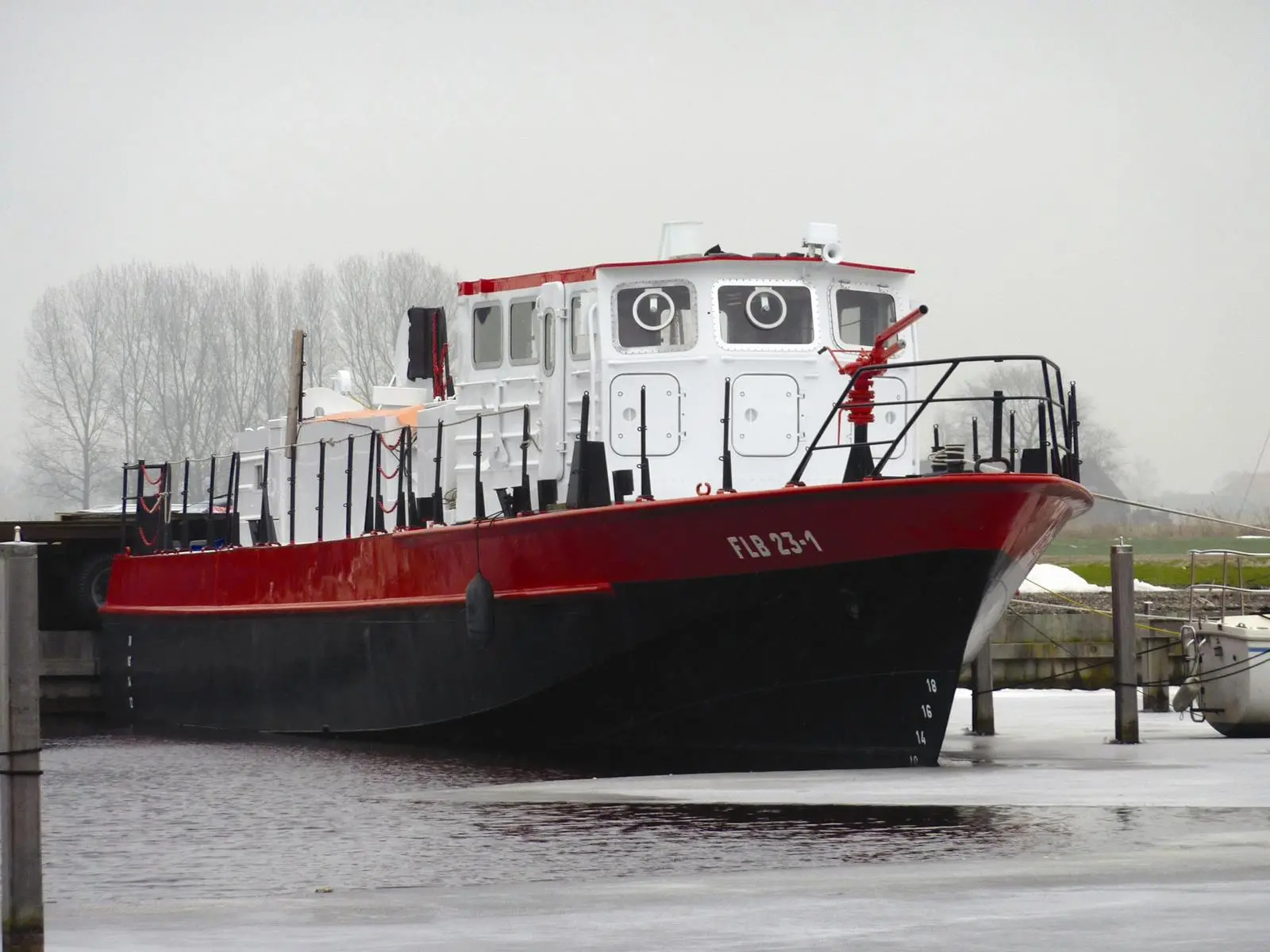
The compact unit comes in three sizes, 30kW, 65kW and 200kW and although larger than the generators commonly found on recreational craft, they are aimed as much at electrically-driven workboats as they are at superyachts. The first of this new generation of boats is on trial in The Netherlands and this electrically-powered craft will have considerably lower emissions than the current diesel powered vessels.
Behind this micro gas turbine development is Capstone Turbine Corporation. This American company has developed a design of compact gas turbine that shows improved economy compared with the normal gas turbines. Up to now, the company has marketed these turbine generators mainly for land-based applications where a compact design and low emissions are required. For marine use, diesel electric or turbine electric propulsion has proved popular on some types of ship but has not been feasible for smaller craft largely because of the low efficiency and higher emissions of such systems when operating under variable loads. Gas turbines are normally only efficient when operating at full loads but Capstone’s turbine development claims to have overcome this.
Capstone calls its unit a ‘micro-turbine’. It says that the system overcomes both the high fuel consumption and emission problems by incorporating a recuperation system into the turbine. The recuperation technology, where much of the waste heat energy lost in the exhaust can be recovered, is similar to that used in the latest Rolls Royce gas turbines being developed for military use. In the Capstone turbine the hot exhaust gases pass through a heat exchanger that heats the incoming combustion air and this is claimed to significantly increase the efficiency of the turbine at varying speeds. Not only that, but by passing through the heat exchanger, the exhaust is cooled thus partially overcoming problems arising from very hot exhaust gases.
The continuous rotation of the turbine shaft drives a compressor fan that draws in the air for combustion. After passing through the heat exchanger, the flow of this air is turned through 180° where it enters the combustion chamber where the fuel is injected. The hot gases from combustion are then directed through the power turbine that drives the single shaft that drives both the compressor and the output power shaft. In the Capstone design the whole unit is very compact and enclosed in the outer casing that forms the shell of the heat exchanger.
The Capstone turbine turns at the very high speed of 90,000 rpm and it is supported on air bearings that require no maintenance or lubrication. These bearings reduce noise and the absence of vibration contributes to low noise levels so the generator units are claimed to be both smaller and much quieter than conventional diesel powered generators. The very high speed of the turbine shaft has to be reduced to a speed suitable for the generator so a complex gearbox is required in the transmission.
The Capstone turbine can operate on a wide variety of fuels. Liquid fuels can include bio-diesel, kerosene and conventional diesel whilst the turbine can also operate on gas fuels such as LNG and LPG. In all cases the emissions from the turbine are low and since the combustion process is continuous there is a minimal amount of NOx in the exhaust, and soot particles are virtually absent.
For the generators being launched at Fort Lauderdale, Capstone has teamed up with the US generator manufacturer Reagan Equipment Co. The marine generator range, marketed under the Kilopak label, will include units for use as generators on board larger yachts to meet the domestic supply requirements but the same generators can form the basis of a hybrid diesel electric propulsion system where the electrical power is fed, first into a bank of batteries and then on to the main propulsion electric motors.
This is the propulsion system that has been fitted to the demonstration vessel built in The Netherlands for Electric Ship Facilities. The 23m long vessel is fitted with a 30kW turbine generator that supplies DC power for charging the bank of batteries. These batteries then supply the power to the propulsion motor, a system that allow the vessel to continue to operate under electric power alone when operating in highly emission-sensitive areas.
The cost of the Capstone turbines is higher that a comparable diesel installation, but Capstone is not saying by how much at this stage. Marketing is focusing on the low emissions, the low noise and vibration and the compact size. Whether these factors will compensate for the increased cost remains to be seen, but the benefits of the Capstone turbine could prove a significant advantage in applications like large yachts where cost tends to take second place to other factors.
Related Articles
 PROPULSION
 GENERAL NEWS
 GENERAL NEWS