



MOSS-TYPE SYSTEM FOR CAMERON LNG TRADE
A predilection of many in the Japanese shipping community for Moss containment technology has again been demonstrated by the completion of a new, dual fuel electric-powered LNG carrier deployed by Mitsui OSK Lines (MOL), writes David Tinsley.
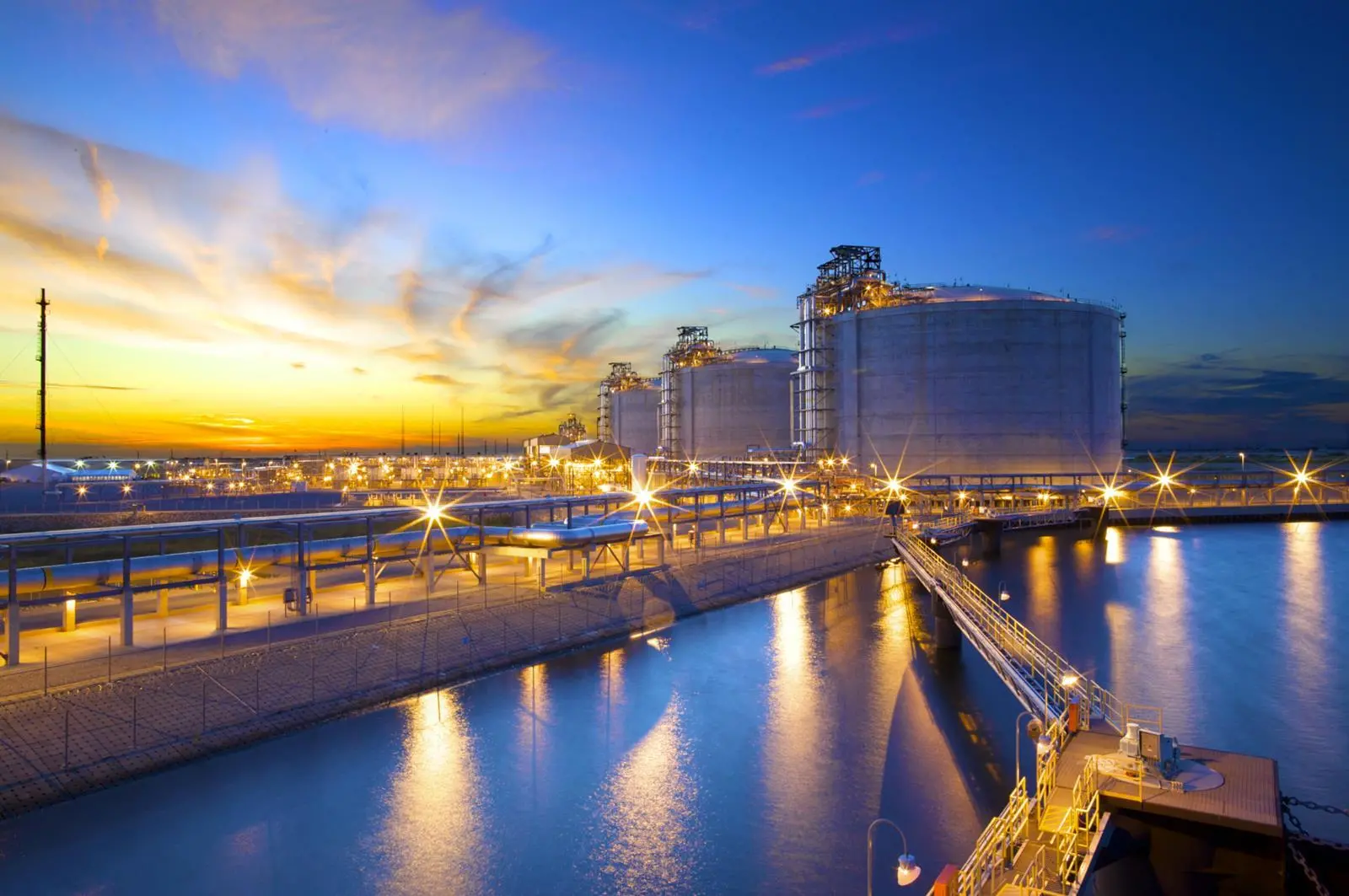
Handed over in December at the Sakaide yard of Kawasaki Heavy Industries on the Inland Sea coastline of Shikoku, the 156,000m3-capacity Marvel Pelican is the second of a pair of newbuilds ordered by an MOL subsidiary for charter to trading house Mitsui & Co. Over the long-term, the vessels will primarily transport shale gas-derived LNG procured from the Cameron project in Louisiana to the world market, while also undertaking liftings from other sources.
First-of-class Marvel Eagle has been in service since October 2018, and management of both ships has been entrusted to MOL.
While retaining key hull parameters to enable docking at major LNG terminals worldwide, notably an absolute length of marginally less than 300m, each vessel incorporates an optimised structural design approach on the part of KHI to achieve savings in overall ship lightweight. The easing of dimensional constraints realised by the opening of the new locks on the Panama Canal are reflected in the carrier’s beam of nearly 49m, the maximum for transit.
The four independent, spherical cargo tanks apply the licensed Moss design, used at sea in various iterations since the beginning of the 1970s, and accredited with a first-rate safety and reliability record and operational advantages that include partial loading at any tank filling level.
The Kawasaki Panel System has been adopted for thermal insulation of the LNG tanks, and is claimed to result in a cargo boil-off rate (BOR) of approximately 0.08% per day, among the lowest attained by the industry.
The dual fuel electric system confers fuel efficiency and flexibility over the ship’s operating profile, and the twin-drive arrangement, employing two electric propulsion motors and two propellers, offers high propulsion performance across a wide range of speeds.
GE Power Conversion’s scope of supply included the complete electric propulsion train, the high voltage(HV) switchboard and the alternators. The ship is equipped with five gensets of an aggregate, apparent power of some 36,500kVA, incorporating four-stroke, medium-speed prime movers that can burn LNG, heavy fuel oil (HFO) or diesel.
Each of the two induction motors has a maximum output of approximately 12,000kW, at a running speed of 511.5rpm, with interposing reduction gearboxes acting on the 820mm-diameter propeller shafts. The robustly simple, induction-based, AC propulsion motor system and high output power pulse width modulation (PWM) technology have been conceived to improve reliability and lower maintenance costs.
GE Power and Moss containment was also nominated for the 177,600m3Marvel Heron, completed to the order of the MOL Group by Mitsubishi Shipbuilding, and chartered to Mitsui & Co in support of shipments from the Cameron project and other trades. Construction was executed by the Koyagi division of Mitsubishi Heavy Industries (MHI) at Nagasaki.
While partially adopting electric propulsion, the powering arrangements differ markedly from those of the KHI-built Marvel Pelican type, as the chosen system is truly hybrid. It combines MHI’s proprietary UST re-heat marine steam turbine and LNG dual-fuel generator engines, designated the STaGE (steam turbine and gas engine) system, and an electric propulsion motor.
One of the two shaftlines and propellers is driven by the turbine and dual-fuel, medium-speed engine gensets, and one by the GE electric motor. Both the MR21-II steam turbine and the electric propulsion motor have a maximum power output of 13,000kW, delivered through reduction gearing.
Waste heat from the engines is recovered to heat the boiler feedwater, generating steam to drive the UST, realising a substantial advance in plant efficiency. Those gains are pronounced in relation to earlier steam turbines, which had long been the propulsion system of choice for LNG carriers, and the benefits are seen across the vessel speed profile.
Marvel Heron embodies a refinement on the Moss spherical design, whereby the four cargo tanks have an apple-like shape, with a larger upper section protruding above deck. The structural configuration results in an increased carrying capacity within the 49m beam parameter governed by access through the expanded Panama Canal.
The order for the ship was secured through MI LNG Company, a joint enterprise of MHI and Imabari Shipbuilding focused on LNGC design and marketing.
Charterer Mitsui & Co is a partner in the Cameron scheme, along with US-based Sempra Energy, Total of France, and Japan LNG Investment, a joint venture of Mitsubishi Corporation and the NYK Group. The export terminal is located on the Calcasieu Channel in Hackberry, Louisiana. The project encompasses three liquefaction trains which, on full completion, will have an estimated output of 12 million tonnes of LNG per annum, or about 1.7 million cubic feet per day.
PRINCIPAL PARTICULARS – Marvel Pelican
|
Shipbuilder |
Kawasaki Heavy Industries |
|
Length overall |
299.9m |
|
Length bp |
286.0m |
|
Breadth, moulded |
48.9m |
|
Depth, moulded |
27.0m |
|
Draught, summer |
11.8m |
|
Deadweight |
83,636t |
|
Gross tonnage |
128,917t |
|
Cargo capacity |
156,192m3 |
|
Propulsion system |
Dual fuel electric |
|
Electric propulsion motors |
2 x 11,980kW |
|
Number of generators |
5 |
|
Total generator capacity |
36,518kW |
|
Speed |
Approx. 19.5kts |
|
Class |
ClassNK |
|
Flag |
Panama |
PRINCIPAL PARTICULARS – Marvel Heron
|
Shipbuilder |
Mitsubishi Shipbuilding (MHI) |
|
Length overall |
297.5m |
|
Length bp |
293.0m |
|
Breadth, moulded |
48.9m |
|
Depth, moulded |
27.5m |
|
Draught, scantling |
12.9m |
|
Draught, design |
11.4m |
|
Deadweight |
97,654t |
|
Gross tonnage |
139,050gt |
|
Cargo capacity |
177,627m3 |
|
Propulsion system |
Hybrid steam turbine/dual-fuel/electric |
|
Steam turbine power |
13,000kW |
|
Electric propulsion motor |
13,000kW |
|
Speed |
19.5kts |
|
Class |
ABS |
|
Flag |
Panama |
Related Articles
 METHANOL
 GENERAL NEWS
 HYDROGEN