



MTU guards the Great Lakes
Protecting Lakes Superior, Ontario, Michigan, Huron and Erie is the job of the United States Department of the Interior’s US Geological Survey Center (USGS) and its Great Lakes Science Center. USGS has recently commissioned two new research vessels, the Kaho and the Muskie, both powered by MTU diesel engines.
Kaho and Muskie were purchased by USGS for the GLSC at a combined cost of $8.2 million, and were designed by Murray & Associates of Fort Lauderdale, and built by Great Lakes Shipyard in Cleveland, Ohio, under construction supervision by Alion Science and Technology. They replace two smaller, older vessels of the same names that were operating in Lake Ontario and Lake Erie respectively.
The new Kaho and Muskie are multi-purpose vessels equipped with wet laboratories and sampling, fish detection and analysis gear. This onboard equipment can collect, analyse, monitor and communicate critical information about fishery, aquatic and coastal resources. Quiet operation and low emissions to air and water are obviously important considerations for vessels engaged in this type of work, which MTU says led to the choice of twin MTU Series 2000 M72 8V Tier 2 engines, rated at 965bhp at 2,250rpm.
Don Barnhart, OEM application support at MTU distributor W.W. Williams of Cleveland, says: “USGS already uses MTU engines to power other research vessels, but these are the first MTU Series 2000s in the fleet and the first to be installed by Great Lakes Shipyard. Kaho and Muskie are also the first aluminium boats to be built by Great Lakes.”
The new research vessels are equipped to support the widest possible range of scientific sampling activities, with the propulsion and power plant systems designed for quiet operation. Twin propellers, a bow thruster, and hydraulic anchor winch provide a variety of options for stationary sampling.
Series 2000 engines were selected for the 21m long, 5.5m boats with design maximum speed of 17 knots. They carry six crewmembers for up to five days at sea, so space onboard is limited, which MTU says is another reason behind the choice. “The MTU engines were selected for their size relative to horsepower, fuel economy and low engine noise level. The compact 8V configuration was perfect for the vessels’ engine rooms, which were designed to be as small as possible to maximise room for the crew and equipment,” Barnhart explains.
Muskie’s Captain, Tim Cherry, says: “The MTU 8V-2000 M72 main diesel engines demonstrated excellent performance during the sea trials. These smaller and lighter engines for the delivered horsepower were a nice fit for our shallow draught, fast research vessel design. Observed exhaust emissions and engine vibrations were a lot lower than we anticipated during sea trials. The full speed ahead, astern, and crash stop sea trial tests went extremely smooth and exceeded all our expectations.”
A lot of attention is being paid to accidental introduction of alien species, notably in ships’ ballast water. However, ships are not the only culprits. Asian Carp was originally imported from China and Southeast Asia to consume algae in US catfish ponds. In the decades since their arrival, however, they have been voraciously eating and reproducing their way up the Mississippi River on their way to the Great Lakes. They can severely deplete the food supply of any freshwater waterway they inhabit by feeding on the plankton essential to sustaining native fish populations. One of the jobs for the GLSC and the new research vessels will be to detect the arrival of the carp.
The new Kaho and Muskie ensure that GLSC maintains its status as the only organisation in the US and Canada with a research vessel with deepwater capability on each of the Great Lakes. “We’ve been out there for almost a century and are often first to detect an invasive species,” says GLSC director Russell Strach.
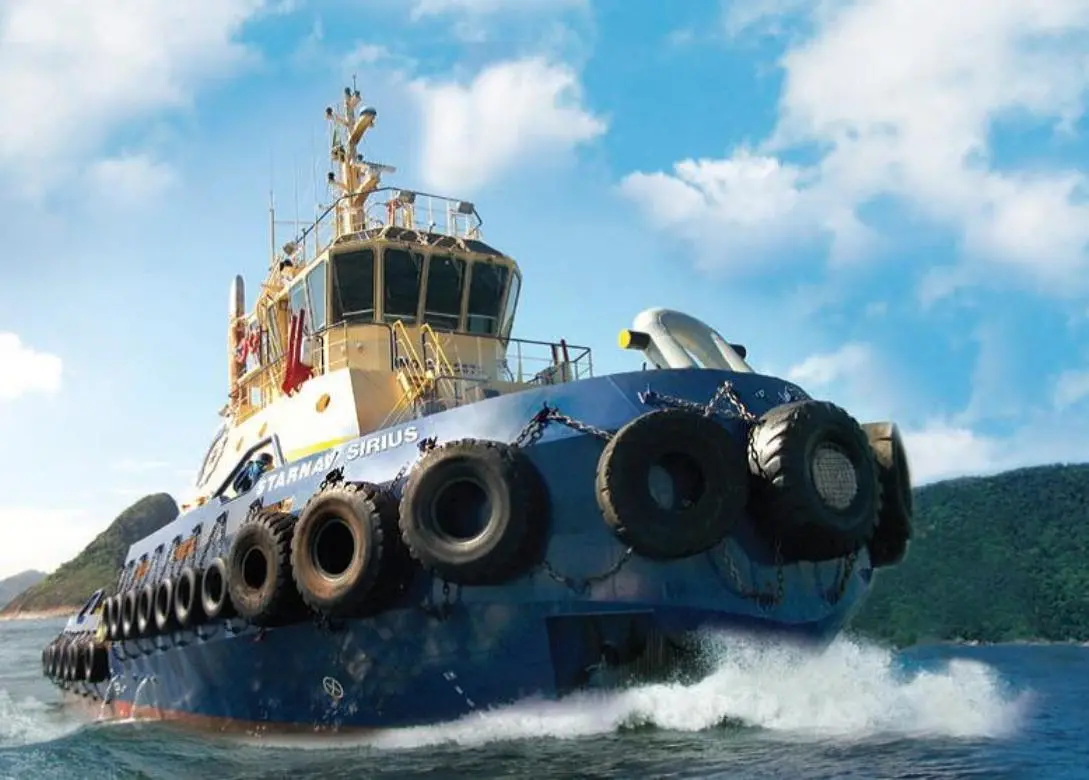
Meanwhile, in Brazil, Brazilian shipyard Detroit Brasil purchased four additional MTU series 4000 ‘Ironmen’ engines rated at 2,000kW at 1,800rpm from Tognum America. The four engines will power two tugs responsible for supporting platform supply vessels operating for Brazilian oil and gas producer Petrobras. The four engines are the second batch purchased by the Brazilian shipyard located in Itajai, Santa Catarina. Detroit Brasil previously introduced three similar line handling tugs of 70tons bollard pull with the same engine type for operator Starnav in Macae, Rio de Janeiro. Starnav is providing oil and gas offshore services to Petrobras and Repsol. The current fleet includes seven vessels, six of which are powered by MTU engines. Additional tugs are planned to be powered by MTU to increase the number of available vessels.
Related Articles
 PROPULSION
 GENERAL NEWS
 GENERAL NEWS