



New briefings back Arctic-wide HFO regulation
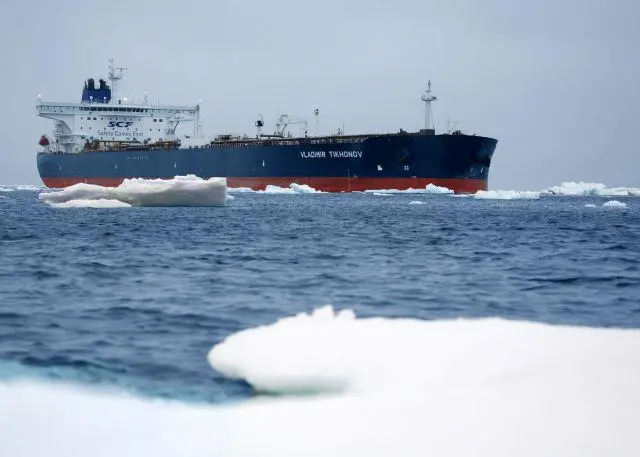
The five briefing papers, which look at flag state, ship type, ship owner, cruise ships and fishing vessels under the IMO Polar Code Arctic 2015, have been prepared for the European Climate Foundation by Bryan Comer PhD from The International Council on Clean Transportation (ICCT).
They reveal that in 2015 in the IMO Arctic, 2,086 ships operated for 2.6 million hours, traveling 10.3 million nautical miles, with 1.1 million tonnes of fuel onboard, collectively at any given time. These ships consumed 436 thousand tonnes of fuel and emitted 193 tonnes of black carbon (BC).
Arctic regulation
The briefings show that 889 of the 2,089 ships, or 42%, operated on HFO in the IMO Arctic in 2015. This represented 57% of fuel use by weight, 76% of fuel carried by weight and 56% of distance-weighted fuel carried. In total, 68% of the 193 tonnes of BC these ships emitted resulted from burning HFO.
Mr Comer’s flag state briefing shows that ships flew 65 flags in the IMO Arctic in 2015. However, ships registered in Russia consumed the most HFO by far in the IMO Arctic in 2015, distantly followed by Canada and Denmark.
Russian-flagged ships consumed over 140 thousand tonnes of HFO in the IMO Arctic in 2015, emitting approximately 74 tonnes of BC, nine times more BC than Canada, whose HFO fuelled fleet emitted approximately eight tonnes of BC.
Mr Comer said this is unsurprising when one considers that Russian-flagged ships represented 332 of 889, or 37%, of HFO-fuelled ships operating in the IMO Arctic in 2015.
However, HFO-fuelled ships registered to non-Arctic countries account for a substantial amount of HFO use and BC emissions, representing 28% of HFO use and 19% of BC emissions from all ships in the IMO Arctic.
Therefore, he said, it seems that a region-wide regulation that applies to the entire Arctic, regardless of flag, would offer the best protection against the risks of HFO.
In 2017, the ICCT published a report titled Prevalence of Heavy Fuel Oil and Black Carbon in Arctic Shipping, 2015 to 2025, which showed that while less than half of the number of ships in Arctic waters as defined in the IMO Polar Code operated on HFO, it represented 76% of the quantity of fuel onboard Arctic ships, since larger ships tend to use the fuel.
The Clean Arctic Alliance, a coalition of environmental non-profit organisations, has used this and other research findings to advocate for an end to the use of HFO in the Arctic.
Related Articles
 METHANOL
 MONITORING, CONTROL & DIGITALISATION
 MONITORING, CONTROL & DIGITALISATION