



New methodology predicts flooding risk
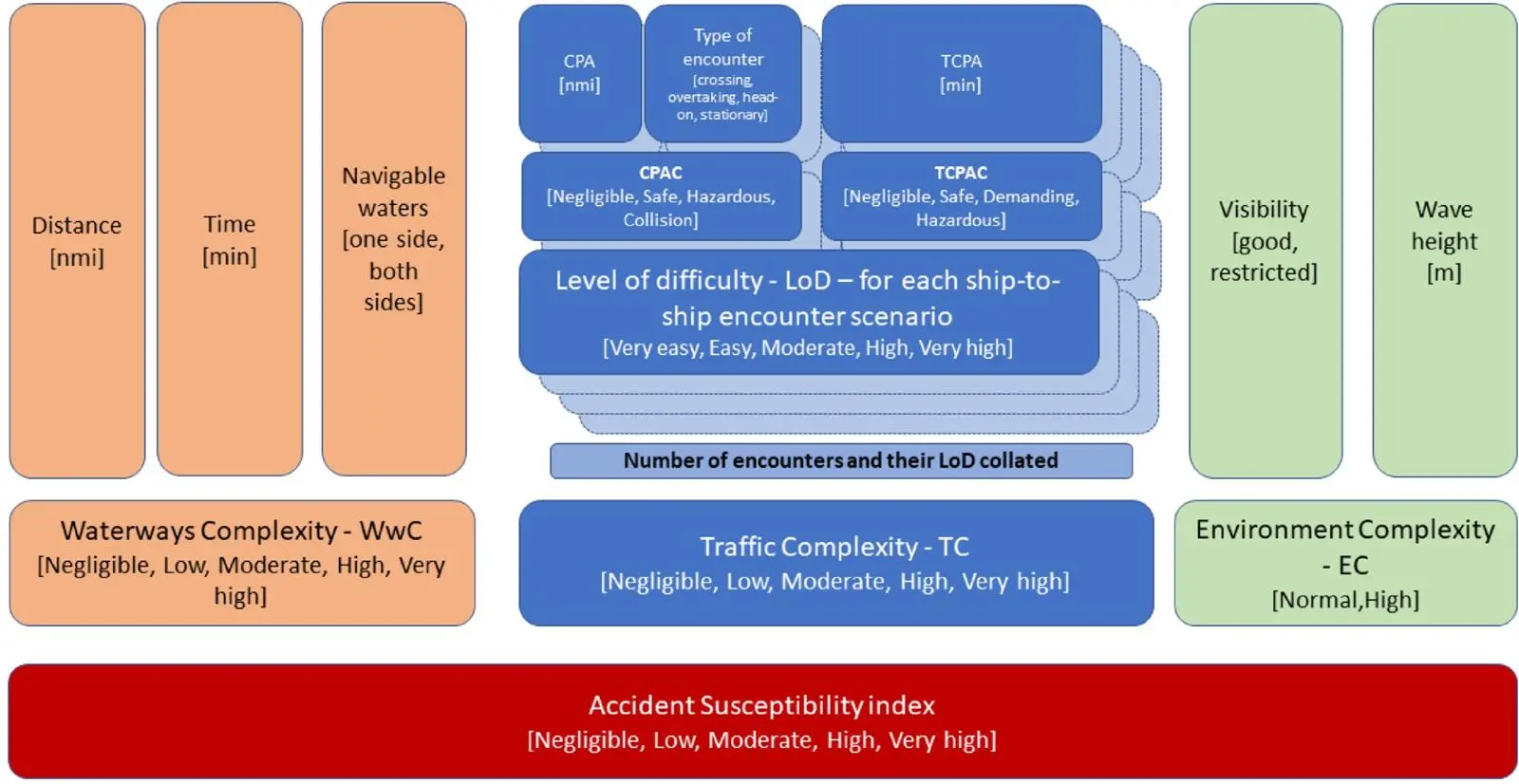
The researchers created an intuitive, objective, evidence-based method for evaluating the complexity and the level of accident susceptibility for any given ship-to-ship or ship-to-ground encounter.
Although solutions for vulnerability monitoring exist, they mainly stem from watertight door operations – a comprehensive framework for accident susceptibility assessment and monitoring is missing in the literature, says NAPA.
NAPA and researchers from Aalto University, Gdynia Maritime University and the Gdansk University of Technology developed a framework that would help meet this need by developing a comprehensive framework for evaluating operational accident susceptibility and vulnerability of passenger ships. The new method evaluates a ship’s susceptibility to collision or grounding based on the factors known to affect the navigator’s performance – but can be easily expanded to account for additional factors and operational conditions.
Navigator performance is governed by a number of factors, including mental workload, which tends to increase with the complexity of the situation. In the past, this complexity has usually been defined arbitrarily and taken as an explanatory variable in risk analysis, without an in-depth evaluation of the variable itself.
The researchers analysed historical voyage data from a cruise ship and a ropax ferry. This included AIS traffic data and bathymetric data from a large number of voyages, over several months of operation. They combined insights about potential hazards that the ships experienced with insights from navigators about how decision-making becomes complex in certain situations.
From this, they developed a model that calculates an accident susceptibility index in real-time for any situation the vessels encounter. The index was tested using data from both ocean and coastal voyages, and this revealed that the analysed ships operate with negligible accident susceptibility most of the time (87%). They face very high accident susceptibility 1% of the time, and for the other 12% of the time they face a mix of low, moderate and high accident susceptibility.
By analysing the flooding risk, either live onboard or from historical data, the index can boost situational awareness and alert navigators to the evolving complexity of a situation where, for example, heavy traffic is combined with shallow waters. Often these situations lead to extra team members being called to the bridge to assist, or even to the rerouting of the ship.
The modelling undertaken can also be applied to historical data, allowing ship navigational safety diagnosis and supporting the implementation of appropriate counter-measures, including improved safety culture.
The FLARE project started in 2019 and will continue this year.
The article is available here.
Related Articles
 ALTERNATIVE FUELS & LUBRICANTS
 GENERAL NEWS
 GENERAL NEWS