



Norway creates autonomous shipping test bed
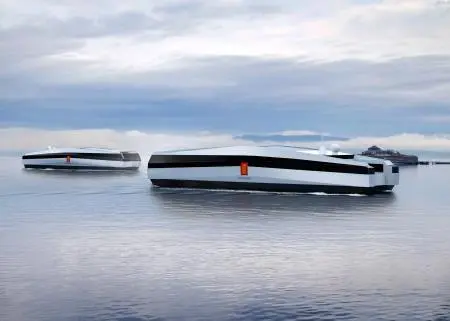
The Trondheimsfjord initiative will allow for the testing of technology required for autonomous vessels – and ultimately for the testing of autonomous vessels themselves – in an area with light traffic and an extensive maritime technology cluster. The project was established by the Norwegian Marine Technology Research Institute (MARINTEK), the Norwegian University of Science and Technology (NTNU), the Trondheim Port Authority, Kongsberg and Maritime Robotics.
Gard Ueland, president of Kongsberg’s Trondheim-based subsidiary Kongsberg Seatex said: “As far as we know, there are no such test sites of this kind in the world so the Norwegian Coastal Authorities are taking the lead in a changing maritime world. I believe we will see some massive changes in the future leading to smart ships that will make maritime transport safer and more efficient. We will also see technology that has the potential to enable fully autonomous cargo vessels. Much of this will come from Trondheim, thanks to the unmatched maritime expertise here and our autonomous vehicles test bed.”
Kongsberg will become a major user of the test bed in order to continue its development of sensors, software and systems that enable more autonomy for ships. In June subsidiary Kongsberg Seatex tested various new autonomous technology solutions in Trondheimsfjord, together with the NTNU and the Norwegian Defense Research Establishment. The testing included trials onboard the NTNU research ship Gunnerus.
The Autosea project will also use Trondheimsfjord as a test bed for studying sensor fusion to reduce the risk of collisions in autonomous vessels. The collaboration between NTNU, Kongsberg, Maritime Robotics and class society DNV GL will explore how technology including cameras, infrared and Lidar (laser based light detection and ranging) can be used alongside conventional radar to develop automated situational awareness tools.
Related Articles
 ALTERNATIVE FUELS & LUBRICANTS
 GENERAL NEWS
 GENERAL NEWS