



Norway endorses emergency repair patches
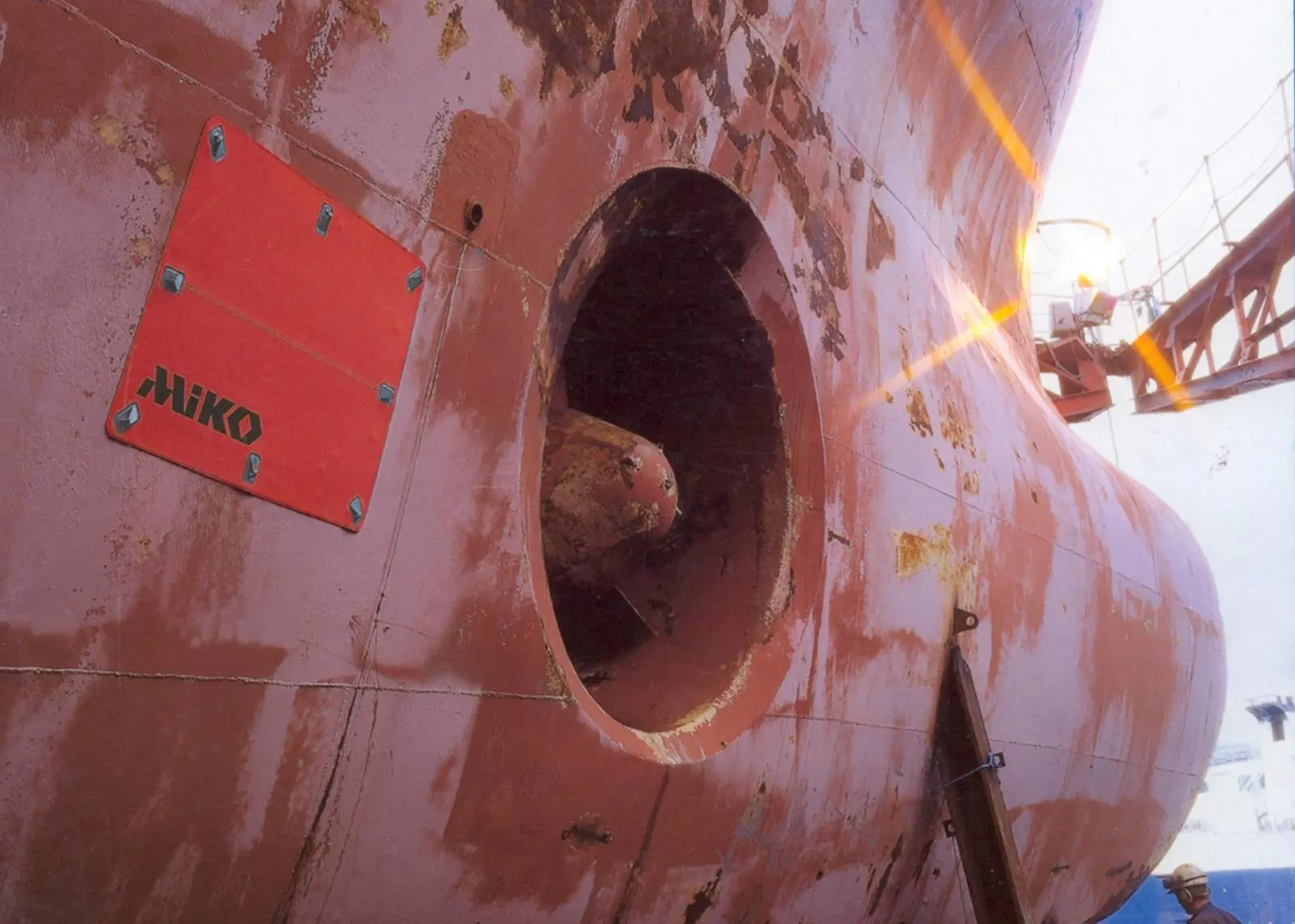
Under the latest (2013) agreement, Oslo-based Miko Marine undertakes to provide 24-hour technical support for the use of the company’s range of patches and for their provision whenever necessary.
Miko magnetic patches, in the form of ‘Salvage’ and ‘Tanker’ kits, are now carried onboard all principal NCA vessels following the organisation’s decision to extend their carriage to all five of its emergency towing vessels (ETVs). The agreement ensures that patches are available for making emergency repairs to vessels with damage or hull integrity problems that may have been caused by collision or grounding or by defective valves and seals. The contract includes an agreement for Miko Marine to provide emergency supervisory technical support in the use of its products whenever and wherever required.
Commenting on the order, Nicolai Michelsen, general manager of Miko Marine said; “We are very pleased to be able to supply the NCA with a product and a service with such obvious benefits. This is not a speculative gesture by the NCA but is one based on their hard experience that has repeatedly shown Miko magnetic and fabric patches to be capable of saving ships, livelihoods and the environment and we are proud to be able to work closely with them whenever the need arises.”
According to Miko, the NCA’s decision to renew its agreement with the company was reinforced by several incidents where Miko expertise and products prevented the loss of vessels in Norwegian waters; notably, a nuclear fuel carrier that was at risk of sinking off the coast of Norway in December 2010.
The Puma experienced a leak in its engine room while sailing south along the coast of Norway following its delivery of a cargo of spent nuclear fuel to Murmansk. The crew was unable to stop the flow of water into the engine room from a burst valve on a pipe supplying sea water to the ship’s sanitation system. The leak was, however, sealed by a magnetic patch provided by the NCA vessel KV Farm. It immediately stopped the in-flow of water and enabled the Puma to be escorted to Hammerfest for permanent repair.
Another major incident was narrowly avoided after a collision between two trawlers in the Arctic north of Norway. The Hundvåkøy was returning to port when it struck the Hordafor 4 and sustained major hull damage. The engine room flooded but the master successfully grounded his boat to prevent the total loss of the vessel and its cargo.
The NCA immediately sealed the large hole in the hull with a Miko magnetic patch. Both of the Coastal Administration vessels attending the incident were carrying a Miko salvage kit which included a 6m x 2m ‘hat shaped’ fabric patch which was used to cover irregular protruding damage that would otherwise inhibit the adhesion of a magnetic patch. As a result, virtually all of the boat’s catch was saved and the engine room was pumped dry. This enabled the Hundvåkøy to be refloated and towed some 15 naut mile to the NATO quay at Sørreisa for more permanent repairs.
The patch chosen for the repair was manufactured from a high strength fabric that combines polyester reinforced PVC with aramid. It is described as ‘hat-shaped’ due to its design as a shallow bag with a brim that is held securely against the hull beneath flexible aluminium strips that are fixed by divers using an HD 200 underwater stapling tool. The bag-like capacity of the patch enables it to cover any irregular tearing of the hull while the brim ensures a strong and watertight seal.
Miko says that its patches can be supplied individually to order or carried in packs that contain a variety of sizes. Salvage and Tanker kits each contain a range of patches that can provide temporary watertight repairs to hull damage caused by collision, corrosion or some other technical defect. They can also be used to seal damaged tanks to prevent oil escaping. The largest Miko fabric patch made to date measured 30m x 15m. Magnetic patches can be used to seal thruster tunnels and sea chests so that work can be conducted inside without the expense required to put the vessel in dry dock.
Related Articles
 EMISSIONS REDUCTION TECHNOLOGY
 ALTERNATIVE FUELS & LUBRICANTS
 ALTERNATIVE FUELS & LUBRICANTS