



Norwegian Yard Lands Cableship Contract
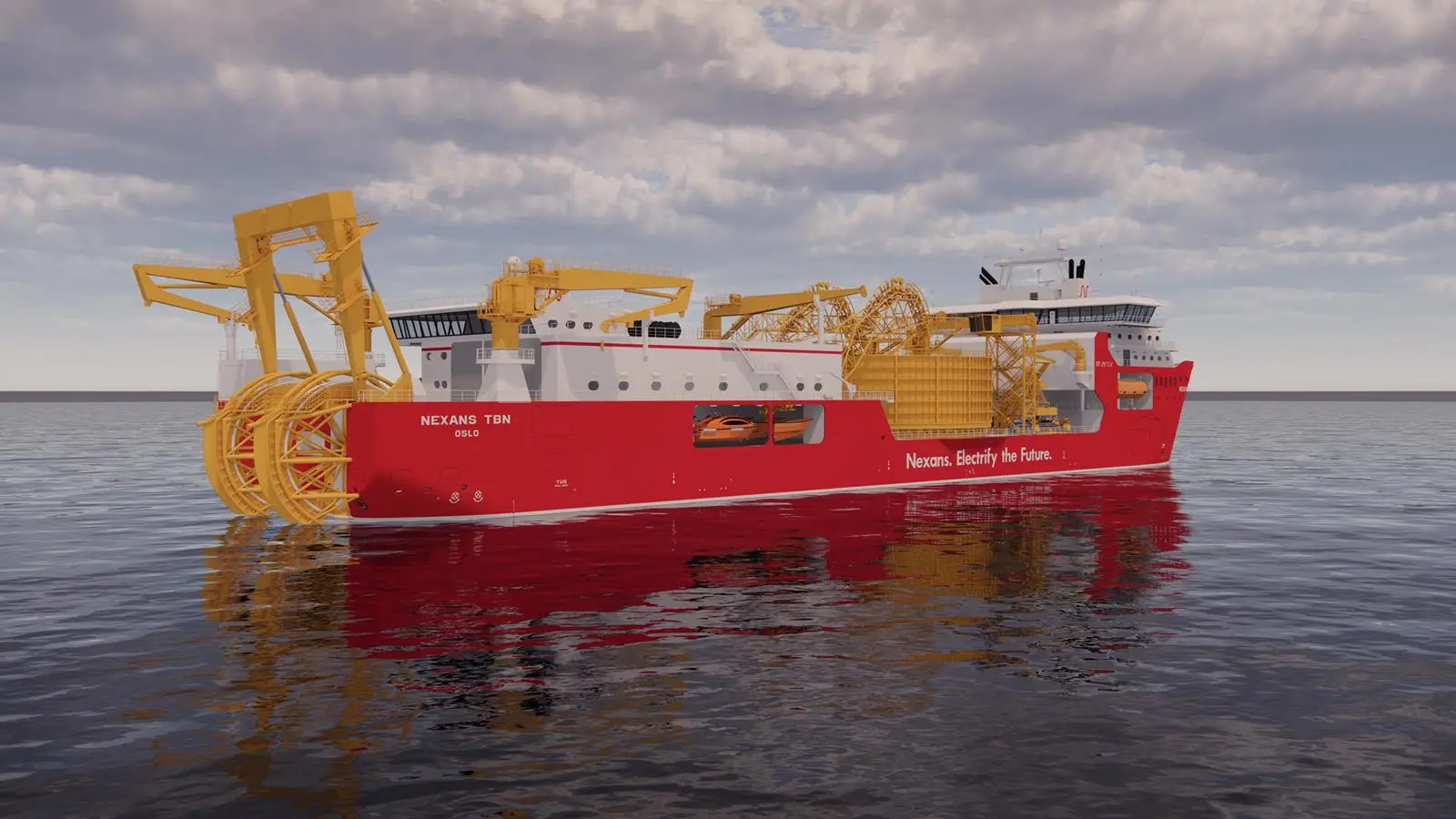
A derivation of the Nexans Aurora, completed by Ulstein in 2021 and ranked among the most technologically-advanced vessels of her type, the new DP3-class ship will take the concept further through design enhancements, increased capabilities, a ‘greener’ profile, and higher comfort.
Drawn up by Aalesund consultancy Skipsteknisk under the designation ST-297 CLV, the prospective 2026 addition to the fleet ascribed to Nexans Marine Operations of Oslo will carry out cable installation, repair and recovery. The design and engineering is keyed to ensuring work continuity and precision in challenging weather conditions, calling for manoeuvrability, station-keeping and handling systems of the highest order.
The newbuild will feature a split turntable on deck, capable of holding 10,000t of cable, an under-deck turntable with a 3,500t capacity, and a fibre-optic cable basket holding 450t, making for an all-up cable loading capacity of nearly 14,000t.
The vessel will have the means to lay up to four cable simultaneously, realising the levels of productivity increasingly required by customers, especially on large-scale, time-critical projects, and will host a large range of subsea tooling, including jetting and ploughing tools.
The DP3-class Nexans Aurora has a 21,000kW diesel-electric installation, based on six main gensets driven by Bergen medium-speed engines. The bid to reduce the follow-on vessel’s carbon footprint is reflected in the specification of an advanced, hybrid power system and machinery able to run on a biodiesel mix.
The latest investment has been spurred by demand prospects in the offshore renewables and interconnector markets, coupled with a succession of major cable supply and cable lay contract successes for Nexans.
Ulstein Verft had subcontracted the hull and initial outfitting of the Nexans Aurora to Polish shipbuilder and steel fabricator Crist Shipyard, whereupon the vessel was towed to Ulsteinvik for equipment installation and completion.
Related Articles
 ALTERNATIVE FUELS & LUBRICANTS
 GENERAL NEWS
 GENERAL NEWS