



PFF Live: Wind assisted propulsion is coming but regulation holds key
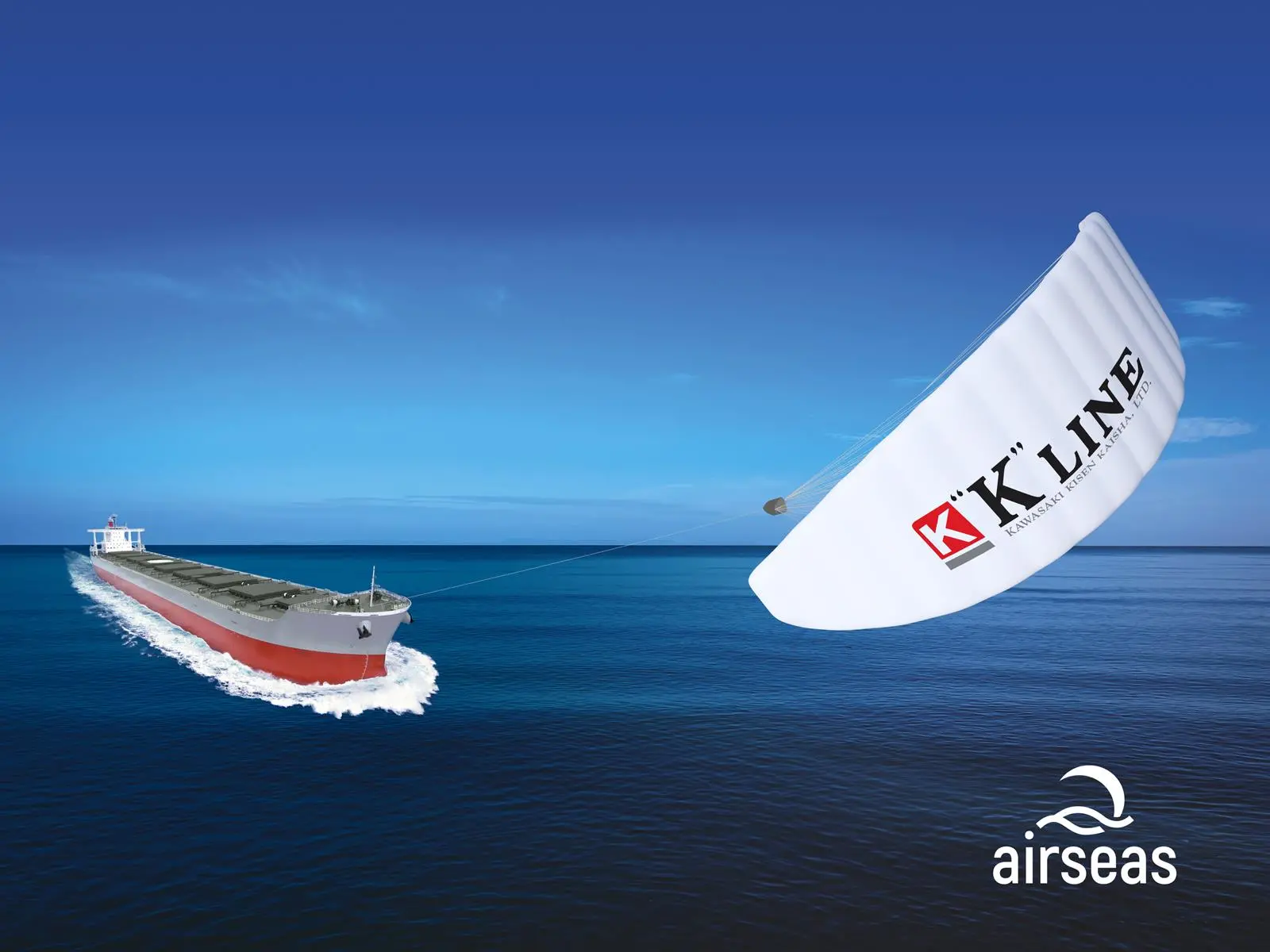
The forum brought together a panel including ship owners, a classification society and technology developers, chaired by Lars Robert Pedersen, deputy secretary-general of BIMCO. The representatives included Mr. Daisuke Arai, Managing Executive Officer, Containerships Division, Kawasaki Kisen Kaisha (K-Line); Roger Strevens, VP, Global Sustainability, Wallenius Wilhelmsen; and Aude Leblanc, Technology Leader, Sustainable Shipping, Bureau Veritas Group. Jarkko Väinämö, coo of Norsepower and Vincent Bernatets, ceo, Airseas, represented one of the oldest and one of the newest commercial solutions providers, respectively. Airseas’ Seawing solution was recently discussed here.
While the panel participants agreed that the wind propulsion sector has progressed in recent years, potential customers’ attention is shifting from the undoubted environmental benefits of wind as a renewable energy source to the technical challenges posed by integrating wind technologies onboard vessels.
Gavin Allwright, Secretary General of the International Windship Association (IWSA), noted that commercial installations aboard larger vessels were set to rise from 13 at present to over 50 by 2023. Allwright added that the EU forecasts that installations could reach 10,000 by 2030.
Roger Strevens noted that changes in the regulatory environment are in the pipeline and could have significant effects on the viability of commercial choices. Strevens gave the example of the 200 million tonne/year 0.5%S fuel market, which has emerged since 1 January 2020.
Operational experience
While Airseas and Norsepower cited positive testimony from shipowners about their experience of using their respective products, panel chairman Lars Robert Pedersen expressed a desire for ship operators to share their experience of working with wind propulsion installations directly. It is to be hoped that a shipowner might share their views during the Propulsion and Future Fuels conference proper in Hamburg in November.
Mr. Daisuke Arai discussed the commercial benefits for K-Line of operating Airseas’ Seawing, and noted that its ease of installation and limited impact on cargo capacity made it highly attractive as a potential solution. “We are very much looking forward to having Seawing flying on our ships in the very near future.”
Jarkko Väinämö of Norsepower cited positive feedback from one of its most recent customers, Sea Cargo, noting that the installation would reduce fuel consumption by around 25% over the year. Vincent Bernatets of Airseas agreed that an average 20% annual fuel saving was realistic, but added that the savings were vessel and route-dependent.
Wind modelling
However, measuring the potential energy savings from installations remains a technically challenging process, and requires the use of wind modelling concepts about which there is as yet no consensus agreement between classification societies, Aude Leblanc told the meeting.
The upcoming MEPC76 meeting is expected to consider a number of submissions around wind force matrices and wind probability matrices. A potential decision will have knock-on effects on a system’s effect on an EEDI rating.
Leblanc added that there was a separate need for existing rules governing sea trials to be looked at again to allow the efficiency of wind propulsion systems to be tested.
Nevertheless, BV’s recent rules on wind propulsion addressed the safety of the system and interactions with other systems onboard at the design review stage, while also focusing on materials. The rules also addressed survey regime and maintenance requirements during service.
A shipowner’s perspective
By contrast, Roger Strevens of Wallenius Wilhelmsen struck a note of caution during his presentation, noting that the technical feasibility of a solution was only one of five different aspects that needed to be considered before investing.
While the regulatory environment remained a key variable, operational and financial considerations also need to be taken into account, before even considering whether a solution was commercially viable. Leaving aside the intermittent nature of wind, Strevens warned that shipowners would need to be competitive against other providers operating on different fuels, taking into account potential changes in fuel supply in the future.
“It must be assumed in the future we will be competing against rivals that are relying on fuels, whether that is zero carbon fuels or carbon neutral fuels, you still have to assume that you will be competing against them.”
Related Articles
 ALTERNATIVE FUELS & LUBRICANTS
 GENERAL NEWS
 GENERAL NEWS