



Piston seals for high-viscosity cylinder oils
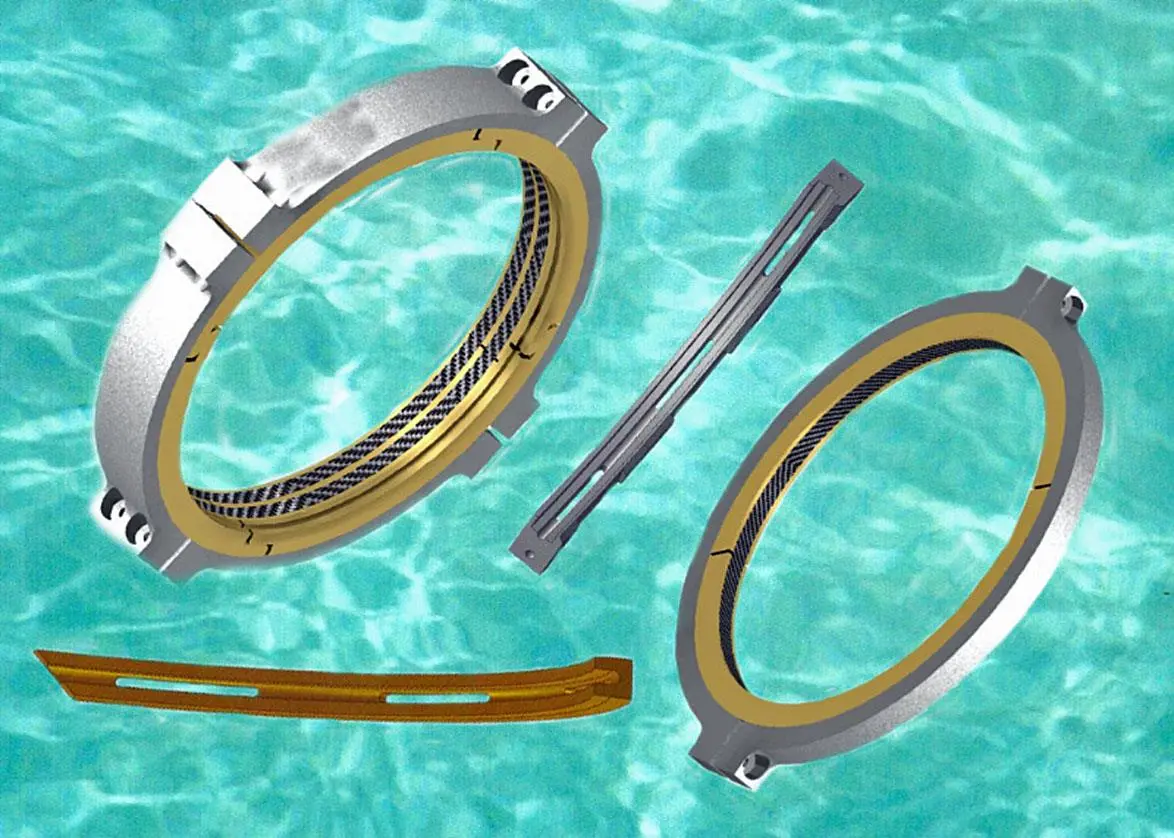
Slow steaming, changing fuel sulphur levels and cost considerations are forcing shipowners to look carefully at lubrication issues, while oil companies are developing oils for two-stroke crosshead engines with increased viscosity and base number to counter these potential problems.
Real difficulties could be facing every ship afloat today, and possibly into the future. These arise not only from availability and cost of low-sulphur fuels and their effects on cylinder lubrication, but also from the need to counter combustion problems resulting from retention of higher-viscosity cylinder oils in the ring sets.
Another potential problem area is system oil contamination. As long ago as 1995 this was highlighted in a paper presented by N E Chell, CEng, FIMarE of Lloyds Register at the CIMAC conference. This problem is still in evidence even after many design improvements and the total adoption of hardened piston rods. Many types of seal and scraper materials and designs have been tried, such as filled PTFE and polymer materials, which did not meet expectations. Even with hardened piston rods there are still leak paths through the stuffing box sets of seal/scraper rings. The conclusion reached at the time was contamination of the crankcase oil is primarily caused by leakage through the stuffing box system with system oil reaching the under piston area, with cylinder oil/fuel oil and particulates passing through to the crankcase.
When designing the RPDS Alpha seal, research over many years of seal failure analysis of two stroke crosshead diesel engines, reciprocating applications and experience of rotary seal analysis and failure was employed. There are problems with acceptance in the industry of non-OEM designs that deviate from current practice, but it is more important than ever to create a total barrier to prevent crankcase oil contamination. As the newer cylinder oils are expected to be in the SAE40/50 range then it is essential that the cylinder oils and crankcase oils do not coalesce as the possibility of earlier engine malfunction will increase with the increased viscosity of the crankcase oils. With the new generation of increased viscosity cylinder oils, if the piston rod stuffing box fails, so does the engine.
Daily oil use is generally reckoned to average around 5litre/cylinder, but in practice this is nearer to 12litres. So a seven-cylinder engine can use 84litre/day, a cost of over $161. A recent set of readings from a vessel with only 11,000 hours operation on its 12-cylinder engine showed a daily usage of 140litres.
To find the effectiveness of any seal/scraper system, a finite oil analysis should be taken prior to installing a new system; this gives the oil footprint at the time of change. Further analysis of a ‘sludge’ sample from the under piston area will confirm the mix and what it includes, generally the mix is crankcase oil, cylinder oil, fuel oil and water, plus detritus from combustion and engine wear.
Such contamination is problematic because the crankcase oil and cylinder oil are totally incompatible. When the two coalesce then the engine performance will be affected. Asphaltenes from fuel oil contamination will form deposits on the hot parts of the engine and specifically in the piston cooling chamber, creating hot spots that will cause piston crown failure. High contamination levels cause high oxidation, leading to possible sludge deposits on high temperature zones. Increased viscosity can affect the oil flow through bearings resulting in increased bearing temperatures and the likelihood of oil oxidation.
RPDS Alpha is designed to prevent cylinder oil and crankcase oil from mixing in either the under piston area or the crankcase sump. Dependent upon the engine make and model type the seal scraper ring system varies from either two or three top rings with the scraper set in the lower box which can also house a wiper ring if required. Compared to conventional systems there are no gaps in the top seal/scraper ring sets; this helps prevent cross contamination. The scraper rings are designed with a 45° scarfe that directs oil flow from the piston rod to the castellated sections of the carrier rings. The top seal rings can be either pure graphite, in a specially designed holder ring, or can accommodate a PEEK polymer material. The scraper carrier ring includes a small oil reservoir which allows oil to flow to the sump without any restriction. The scraper rings are set to constantly deflect the oil scraped off the piston rod through to the underside of the carrier rings. Each ring gap is opposed at 45°, unlike conventional segments which generally have parallel gaps of 5-10mm, offering easier flow to the under piston side and down to the crankcase sump.
The holder rings incorporate scraper lips so the top ring has five scraper rings and ring 2 has two scraper lips. When using either exfoliated graphite or PEEK polymer there is a micro transference of graphite to the lips and to the piston rods which helps to lubricate the piston rod, and to prevent adherence of under piston detritus during the scavenge cycle. Another advance in seal scraper ring is the uni-holder-scraper-seal arrangement which reduces the number of component parts required to fit into reduced space in stuffing box housings.
The cost of these seals is no greater than the OEM system, and a return on investment should be achieved within four to six months. The RPDS Alpha system can save up to 70% of system oil, help maintain a clean crankcase, help keep piston crowns clean, and, because engine temperatures are maintained for longer, emissions should be kept at design levels. Even with higher scavenge pressures the system should maintain the barrier required to prevent cylinder oil and crankcase oils from mixing.
Related Articles
 PROPULSION
 GENERAL NEWS
 GENERAL NEWS