



Propeller blade and nozzle upgrade pays off for dredger operator
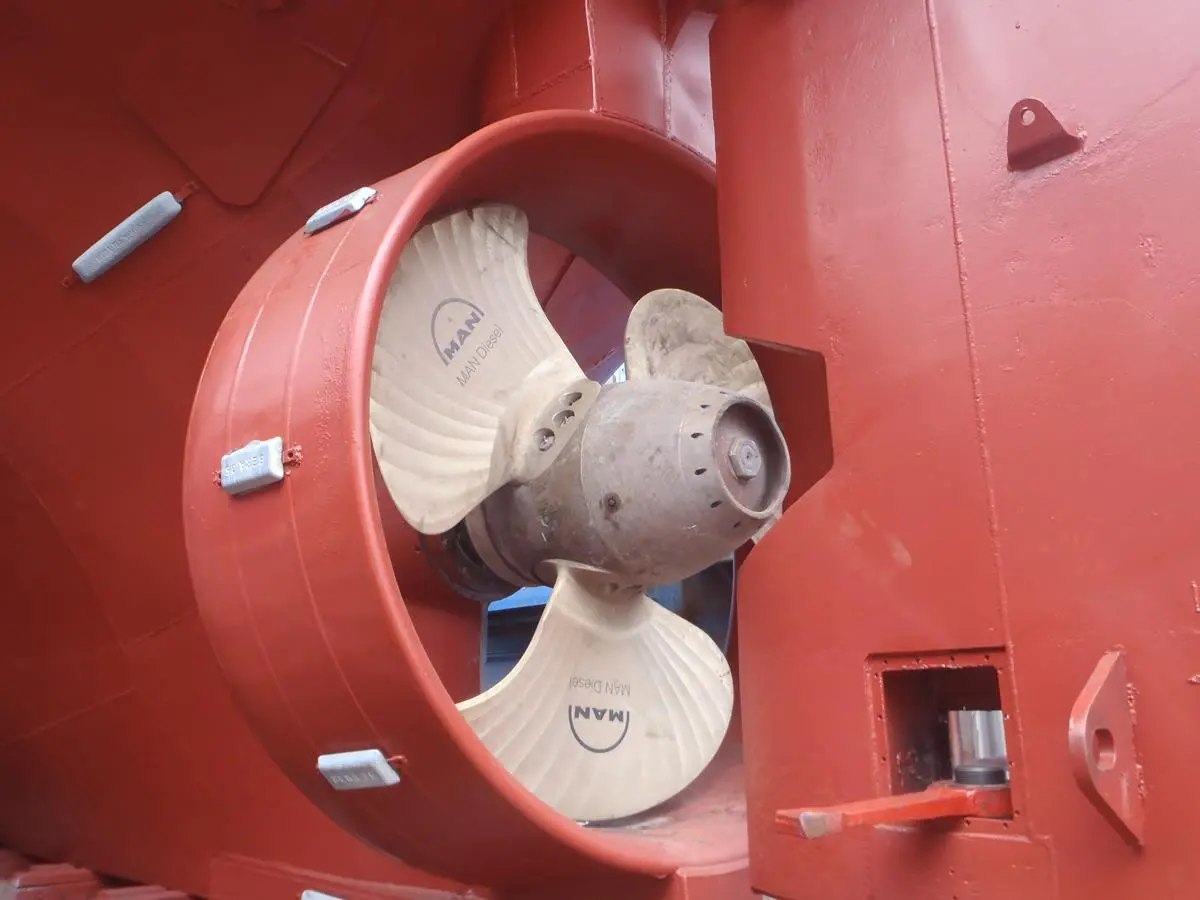
NCC is carrying out a project for energy optimization of its five-ship fleet, and In connection with this, the company contacted MAN PrimeServ at the beginning of 2012 with an enquiry regarding upgrade possibilities for its existing vessels’ propellers and nozzles.
As a starting point, NCC and MAN PrimeServ investigated the effects of such an upgrade on the 1983-built Baltic, which had given problems in the past. During the Baltic’s long operational period it had constantly suffered from propeller and aft-ship vibrations resulting in high noise levels in the accommodation. Eventually the nozzle broke loose from the hull.
In January 2012, the PrimeServ retrofit department in Frederikshavn entered a dialogue with NCC chief superintendent, John Jeppesen, on the design of new propeller blades and a new, customised propeller nozzle – with the priority being increased propulsion efficiency and fuel savings. The propeller-blade design chosen was a medium-skew blade profile for ducted operation with a MAN Alpha AHT nozzle – customised with a length/diameter ratio of 0.5. The new nozzle and blades were installed in April 2012 while the vessel was docked at Svendborg Shipyard, Denmark.
Since April 2012 the ship has been in operation with the new propulsion equipment. Feedback from the chief engineer and the operational crew indicates a much improved performance. Mr Jeppesen confirms: “The measured fuel consumption reduction is 14% and the noise level in the accommodation is reduced by 10dB together with an effective reduction of vibrations. Also, the ship’s manoeuvrability in harbours has been improved.”
The financial aspect of the project has proved attractive for NCC; MAN PrimeServ estimates that the fuel savings represent a potential payback period of around 18 months.
NCC is basically a Nordic construction company, the shipping subsidiary of which operates five sand and gravel dredgers to keep its large infrastructure projects supplied with aggregates. Collectively, the NCC fleet dredges some 2million tonnes of raw material per year. The dredgers are of varying sizes, with loading capacities ranging from 340m³ to 1150m³. Three of the vessels are ISM and ISPS certified.
MAN says that its Alpha propellers cover a power range from 4,000kW to 40,000kW, with fixed pitch and controllable pitch versions in four and five-bladed executions. The propellers can be designed and optimised to suit a large number of different ship designs and applications, including cargo vessels, ferries, cruise ships, offshore vessels, tugs and work boats to fishery and naval vessels. The propellers seem well suited to dredger applications, with Alpha propulsion fitted to a number of large dredging ships such as Jan de Nul’s Cristobal Colon and Leiv Eiriksson, both of 46,000m³ and capable of dredging to a water depth of 155m. Another very different, but equally notable, reference is the ro-pax ferry Tanit, featured in The Motorship, December 2012. The ship, with 78,300bhp engine power, recently started in service for CTN between Marseilles and Tunis. MAN Diesel & Turbo says that to date its has produced more than 7,000 Alpha-branded propellers since it supplied its first CP propeller in 1902. The Alpha design was patented in the following year 1903.
Related Articles
 EMISSIONS REDUCTION TECHNOLOGY
 ALTERNATIVE FUELS & LUBRICANTS
 ALTERNATIVE FUELS & LUBRICANTS