



R-R powers world’s largest gas ferry
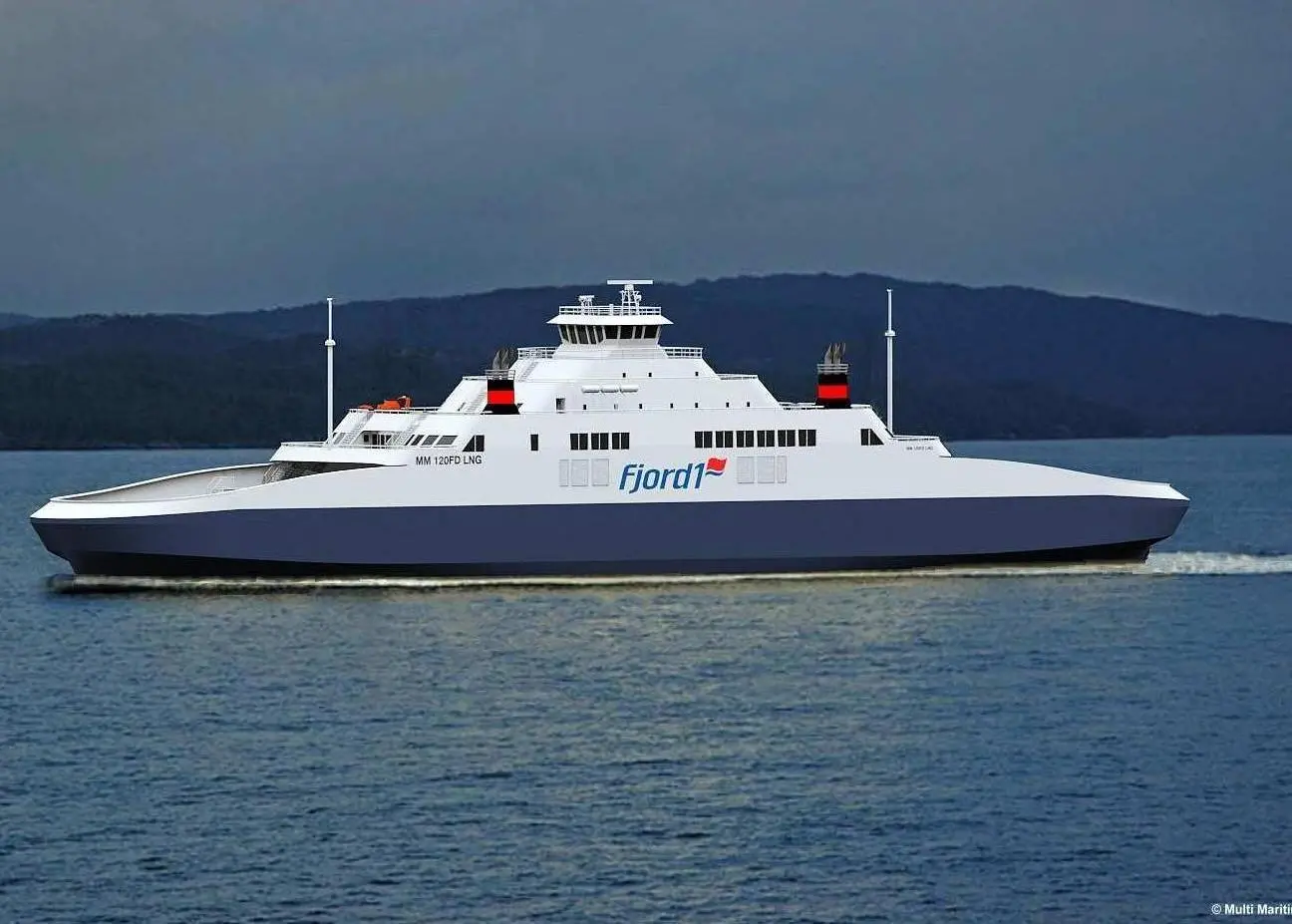
On completion, the 20 knot-plus ferry (see The Motorship, September 2010, p8) will primarily serve the busy Arsvågen-Mortavika route forming a link in the main road system on the west coast of Norway between Bergen and Stavanger. Five ferries powered by Rolls-Royce gas engines fuelled by LNG already operate these services.
“In planning the new ferry, Fjord 1 called for a substantial increase in efficiency,” explained Matias Mork, sales manager, Rolls-Royce merchant vessel system solutions. “The Rolls-Royce Azipull thrusters, two at each end of the vessel, have pulling propellers and streamlined underwater units which turn the swirl energy from the propeller water into useful thrust. They are a key to raising efficiency, in combination with the latest LNG-fuelled gas engine design from Rolls-Royce. A significant improvement was found on the final model testing compared to existing ferries,” Mork said. The designer, Multi Maritime, developed the hull form using extensive studies and tank testing, undertaken in cooperation with Rolls-Royce, to optimise the hydrodynamic integration of the AZP100 azimuth thrusters and the hull.
Three Bergen C25:33L9A nine cylinder gas engines power the four thrusters through an electric transmission. The C-series is a recent design of gas engine, now going into production, taking over from the older K series fitted in the existing five ferries on these routes. It uses the same successful lean burn combustion principle but incorporates newer engine technology. The result, compared with conventional ferries burning liquid fuels, is claimed to be a major reduction in CO2 and NOx emissions and the virtual elimination of soot and sulphur emissions. A Bergen C-series diesel genset is to be installed to power the vessel in case it should need to serve as a reserve ferry on routes without gas supply, or in emergency.
The contract to build the ferry was won by Fiskerstrand BLRT, a Norwegian registered joint venture between Fiskerstrand Verft in Ålesund, Norway, and Western Shipyard in Klaipeda, Lithuania. The vessel will be 129.9m long and 19.2m beam with a deadweight of 1,300 tonnes, giving a capacity of 242 cars or its equivalent of 22 trucks plus cars on two decks, and it will be certified for 600 passengers.
Related Articles
 ALTERNATIVE FUELS & LUBRICANTS
 GENERAL NEWS
 GENERAL NEWS