



Regulation needed to spur emission-free vessels
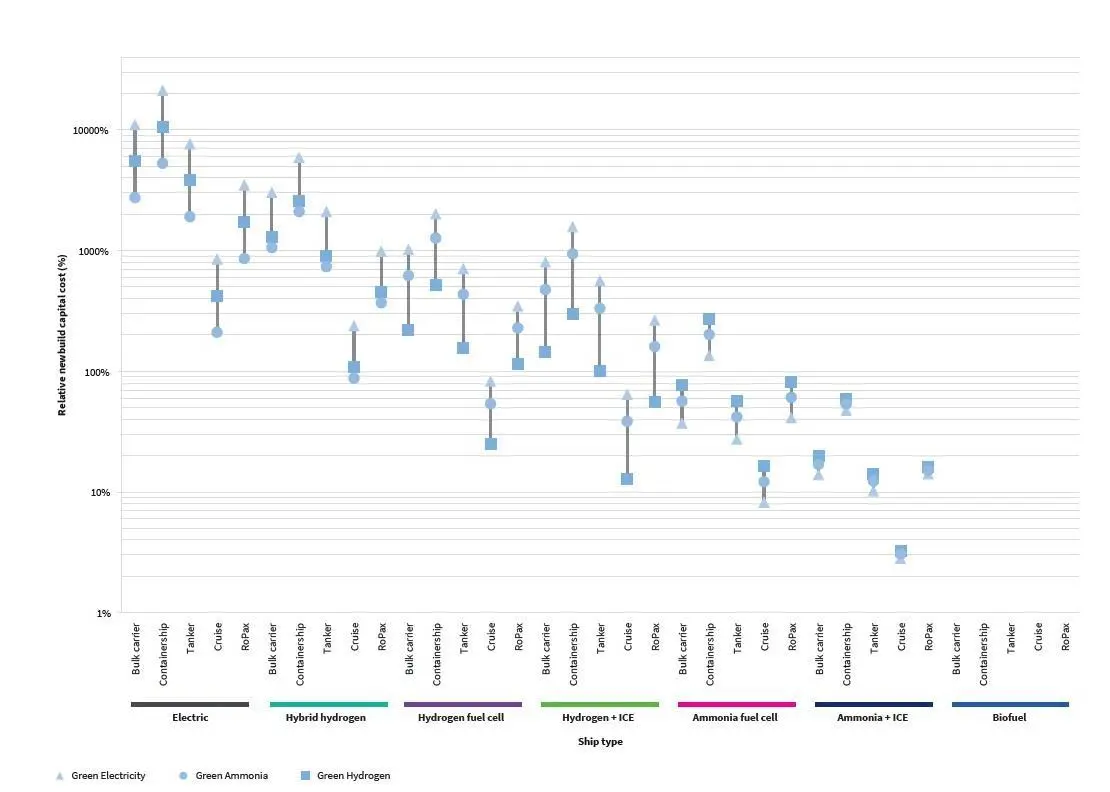
The authors argue that ZEVs will need to be entering the fleet by 2030, and forming a significant proportion of newbuilds from then, if any greenhouse gas emissions reduction strategy for shipping is to be in line with Paris Agreement ambitions.
But none of the seven technologies studied – biofuels, electric ships and hybrid hydrogen arrangements as well as hydrogen and ammonia fuel, via either fuel cells or internal combustion engines – will be more competitive than conventional shipping (using heavy fuel oil) by 2030.
“We all have a clear responsibility to ensure actions are taken to drive our operational emissions to zero at a pace matching actions taken across the rest of the world and other industry sectors,” Katharine Palmer, global sustainability manager, Lloyd’s Register. “By assessing decarbonisation options we identify the drivers that need to be in place to make them a competitive solution.”
The report examines the technologies applied to five ship types and across several future energy scenarios. It notes that some of the technologies – chiefly fuel cells, hydrogen storage and batteries – are evolving rapidly and will become more affordable quickly. However, the authors note: “If this gap does not close then there may be a need for regulatory intervention in the near future, to drive the viability compared to conventional fossil fuels.”
For those in shipping with niche access to a low-cost supply of zero-emission fuel or energy sources, or an ability to pass on a voyage cost premium to a supply chain that values zero-emission services, the price gap may already be closed.
Tristan Smith of UMAS added: “This report demonstrates the potential solutions for shipping’s zero emissions transition. By sharing the findings, we hope it can provide inspiration and focus for shipping’s collective efforts to ensure zero emissions happen swiftly and with minimal cost and disruption to trade.”
The report can be downloaded here.
Related Articles
 ALTERNATIVE FUELS & LUBRICANTS
 GENERAL NEWS
 GENERAL NEWS