



Reprieve for owners or manufacturers?
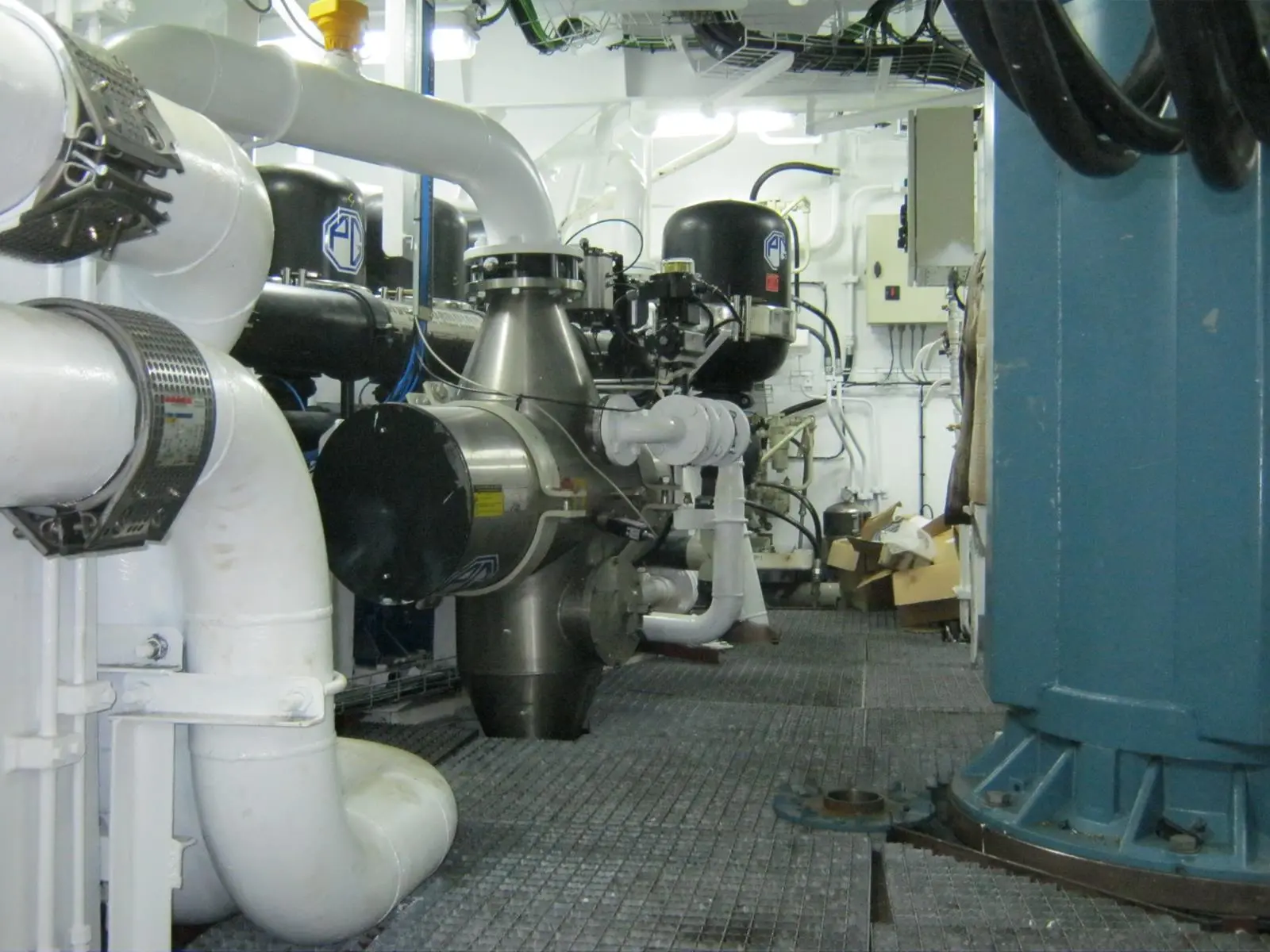
The latest resolution from MEPC65 recommends that ships built before entry into force of the ballast water management convention must fit a certified system by their first International Oil Pollution Certificate renewal survey after the date of entry into force of the convention, i.e. beginning 12 months after full ratification.
“It is noticeable that this is purely an attempt to spread the burden and ease the pressure on shipyards in order to facilitate implementation of the convention,” says Janet Strode, general manager of the International Parcel Tanker Association (IPTA). “It does not acknowledge the concerns expressed by industry about the ability of available systems to cope with ambient conditions in different parts of the world despite them having been approved by the IMO, or the possibility of owners and crews being penalised despite investing in a system in all good faith and maintaining and operating it properly. Many of the IMO member states remain in denial about this aspect of the current situation.”
Claus Usen Jensen, Senior Vice President of the technical division of Torm, believes that the extra time should be put to use by equipment manufacturers. “The manufacturers that we have today do not have solution that fit our operational needs because they do not have any piece of equipment that is able to deal with rivers, deltas and the sea,” he says. Mr Jensen has reviewed many systems. “Each manufacturer tells me they have tested it according to the guidelines. Can you deal with our operating profiles, I ask. They normally say ‘no’.” Additionally, there is no single device that can deal with the volumes of ballast water used by the company’s tankers and bulkers. “Hopefully equipment manufacturers will use the implementation delay in order to innovate more. As the customers, we are pushing them all the time and it is not that they are unaware of these issues.”
Another concern for Mr Jensen is the lack of a way of checking the biological efficacy of ballast water treatment systems on board so that ships’ crew can monitor performance and prepare for port state inspections. “Without this, we are working blind.”
Thome Ship Management is not against the convention, or the result after implementation, but asks for more time to adjust and understand this major change.
“I believe that the revision in the timeline is a wise proposal by the committee. In reality, no one was really ready to go ahead yet,” says CEO Carsten Ostenfeldt. “People are still trying to make sense of the implementation and to understand the technology needed to get the certification done. The industry needs to be assured that the system works and should get more time do that. Despite having 20+ type approved systems on the market, very few or close to zero, have actually been proven in reality and in the demanding environment that ships are in at the moment, and it can have huge consequences if it turns out that the technology is not matured sufficiently.”
There are enough examples of systems which have been withdrawn from the market and even systems which have been installed, but did not work as intended, and that has to be avoided, he says. “No one can afford such costly mistakes in today’s market. On top of this there have been a lot of doubt around the confirmation of compliance, so even with the very honourable goal of saving our globe, the reality is that the industry – herein included lawmakers, countries, suppliers and ship owners – are not ready to implement this efficiently.”
The Australian Shipowners’ Association (ASA) understands the reasons for the delay but does not want to see early adopters penalised. Many members of the association already have plans to fit equipment in their docking cycles, says Angela Gillham, the association’s manager of industry operations. “But it is a lot of money to spend when you are not sure whether the convention will ever enter into force.”
Tim Wilkins, environmental manager at Intertanko, is positive about the MEPC65 agreement that type approval documentation should include details of all testing undertaken. He believes it is a positive step towards gaining shipowner confidence and allowing them to make informed purchase decisions. While he, and many other shipowner representative groups, would have preferred opening up the G8 guidelines for type approval to change, this expansion of type approval documentation at least makes it clear that shipowner concerns are valid and could be used for the basis for contractual agreements about system performance. “It is not the best solution, but it is better than what we had before.”
Wilkins believes it is now up to member states to lobby those yet to ratify the convention. “We feel that the member states have taken a lot of what we’ve said very seriously and have acted on those things. It is time to move forward.”
Manufacturers have also responded to industry concerns. DESMI claims the first UV-type system to be IMO-tested on land in fresh water. Severn Trent De Nora has sought out many testing opportunities. After the initial testing at the University of Washington, the Naval Research Laboratory and the land-based testing of the commercial version against the G8/G9 guidelines at NIOZ, the company also tested at MERC Maryland and on the US DOT owned/California State Lands Commission training vessel Golden Bear. The company also has its Balpure system in the US Coast Guard STEP program operating during every ballasting operation.
Optimarin put its three leading filter suppliers – Boll & Kirch, Filtersafe and Filtrex – to the test at Goeje Island in South Korea. Filter performance is critical to the operation of all vessels across the globe. “Shipowners and operators have expressed concern about such risks, so this is our way of tangibly demonstrating just how good our filters perform, under the most demanding environmental conditions,” said Tore Andersen, Sales and Marketing Director at Optimarin. The filters, all of which have capacities of 500m3/h, were placed on a moveable barge anchored out at sea. Each filter was then tested for two hours a day over three days. Although the water conditions were prone to rapid changes, the filters coped extremely well and maintained complete performance integrity, says Optimarin.
Some manufacturers are streamlining their equipment. RWO’s CleanBallast system uses disk-filtration technology combined with advanced electrochemical disinfection. The filters were generously sized, says the company, which has since reduced the number of filter housings, and therefore system footprint, without impacting shipboard performance. Alfa Laval has made substantial changes with their PureBallast 3.0 model and the company is therefore redoing the IMO type approval process. Land-based and onboard type approval testing is underway, with formal type approval expected in Q4 2013.
Many manufacturers now believe the convention is ready for ratification. “Having attended the MEPC and BLG Meetings since 2010, I understand that there was genuine concern on the part of the shipowners about their ability to get suitable equipment and to install it in time to meet the convention requirements,” says Tom Mackey, senior consultant at Hyde Marine. “I also feel that a great deal of time was lost and damage done to the environment over the past decade since the convention was first adopted in 2004. I believe it was necessary for those with both viewpoints to compromise and reach a consensus on these issues and I think that was finally accomplished during MEPC 64 and 65. Hopefully, the convention will be fully ratified within this year and will come into force during 2014.”
Shipowners and manufacturers alike have articulated the view of a 2014 entry into force. In particular, the outcomes of MEPC65 could stimulate Panama to act. Panama could singly meet the remaining requirements for entry into force. However, despite all the news stories circulated to this effect, it is by no means certain. Asked if any of the outcomes, including the fact that Arsenio Domingo of Panama has been named the next MEPC chairman, would really lead to enough ratifications for entry into force, David Tongue, director of regulatory affairs at the International Chamber of Shipping, says “No”.
“I don’t think [ratification] can be jumped on until we get a suitable G8 and we get an agreement on the type of sampling analysis to be used for compliance because what we’ve got at the moment is simply introducing any form of testing through the back door.” This is not in accordance with the agreement of MEPC that any sampling used for compliance should be consistent with that used for type approval. The wording of the two year moratorium goes completely against this, says Mr Tongue.
The situation is compounded by the US position on compliance testing. The US does not support the concept of a port state, a priori, giving up enforcement discretion. Agreeing to not use sampling results as the basis for a criminal sanction, regardless of the circumstances, is not something the US will accept. To make this position clear, the US reserved its position when the approach was proposed by BLG 17, and then again when it was agreed by MEPC65. Otherwise it might be perceived that the US would not use sampling results in enforcing its own domestic requirements.
Related Articles
 METHANOL
 MONITORING, CONTROL & DIGITALISATION
 MONITORING, CONTROL & DIGITALISATION