



Rolls-Royce unveils eco pod propulsion system
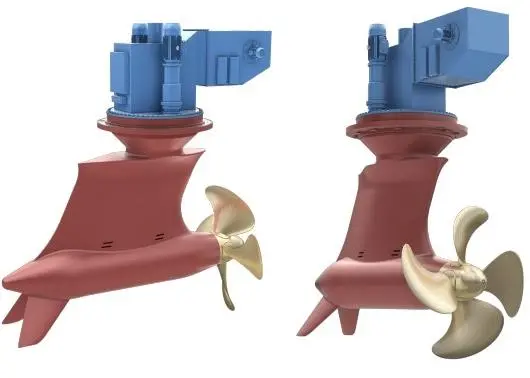
The compact ice-class pods for the 1.5 MW to 7 MW power range have a low oil content and double barrier seal solution for minimal environmental impact. They are also optimised for performance through their compact design and high hydrodynamic efficiency. The new Twin Tail improves the unit efficiency further, as well as reducing noise and vibrations.
Kevin Daffey, director of engineering & technology for marine at Rolls-Royce, said: “We see the pod as a great product that will take on some of the mechanical propulsion systems out there.
“We base all of our technology on permanent magnet technology. The reason that we use permanent magnet technology is first of all it’s highly efficient. So, we’re getting something in the region of 99% efficiency through the motor drive train.”
Precise propulsion
The pod’s low noise and vibration offers quiet operation which is useful for applications such as research vessels, he said.
“The application’s thrust is very smooth, fast and precise,” he added. “There are very few moving parts here, so it is very low maintenance and high reliability. And we could get a much lower aspect ratio which allows us to get a very narrow diameter on the hull, which gives us extra hydrodynamic efficiency.”
The pods are delivered in a system with Rolls-Royce’s Active Front End Converters, either fed from a conventional 690V system or through transformers on a medium voltage distribution system, such as the company’s SAVe Step solution. The different Rolls-Royce SAVe electric systems are designed to fit a various range of vessels, giving an enhanced diesel-electric performance that is optimised for each shipowner’s use.
Batteries from the SAVe Energy portfolio can be integrated into the SAVe systems to perform load smoothing on the engines and increases the redundancy in the propulsion system.
The SAVe system can then deliver continuous power to the pods, allowing a power-generating capacity reduction by up to 30%. This means the pods could operate on battery power alone when in harbour, or for limited periods with zero emissions, dependent on the battery capacity.
Related Articles
 ELECTRIFICATION AND BATTERY HYBRIDS
 BATTERIES, SUPERCAPACITORS, FUEL CELLS AND OTHER ENERGY STORAGE TECHNOLOGY
 ELECTRIFICATION AND BATTERY HYBRIDS