



Rotor sails reduce tanker fuel costs
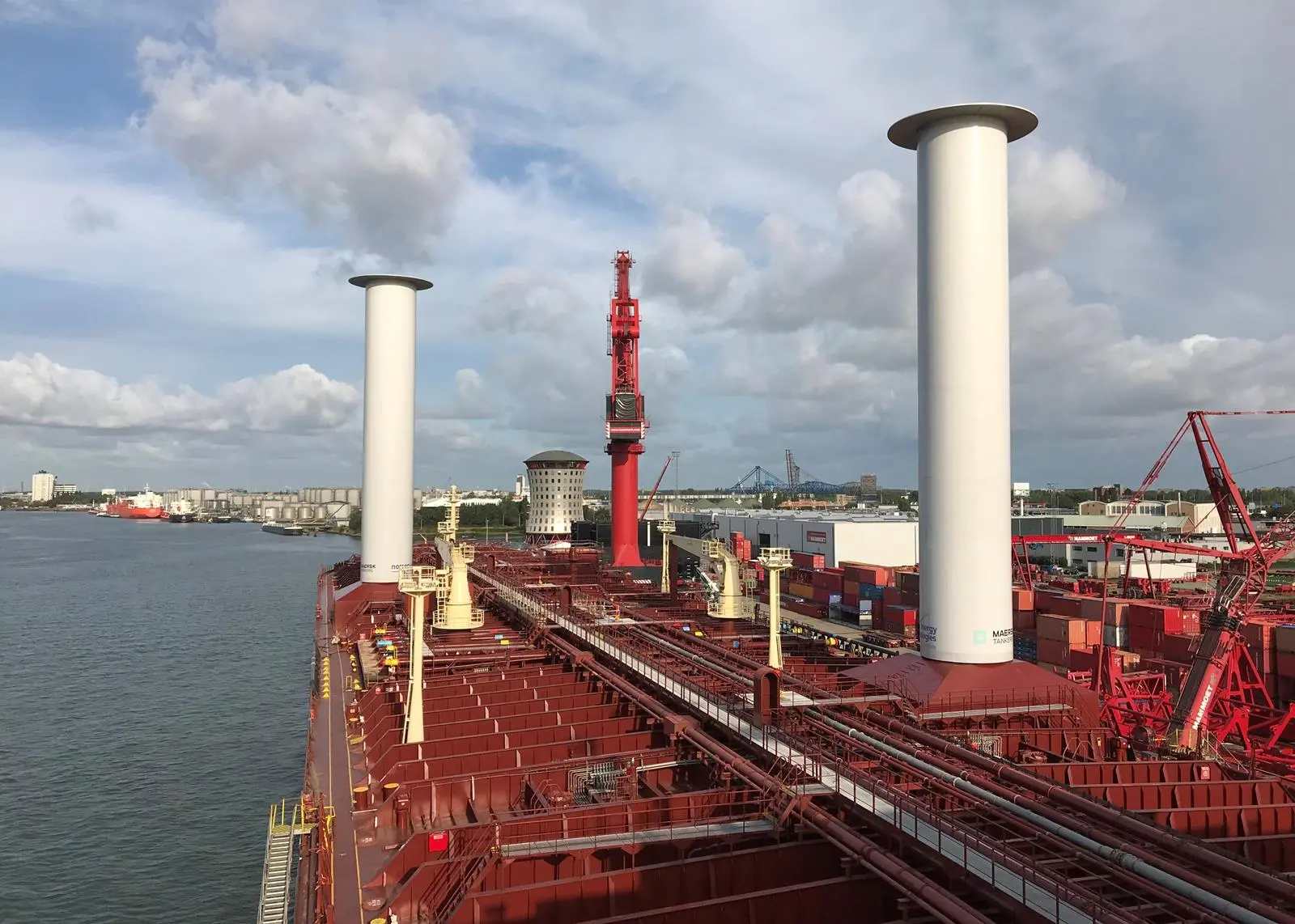
Norsepower Oy Ltd is working with Maersk Tankers, Energy Technologies Institute (ETI) and Shell Shipping & Maritime to test the mechanical sails, which are 30 metres tall by five metres in diameter and spin to create a pressure differential that propels the vessel forward. They will provide auxiliary wind propulsion to the Maersk Pelican, optimising fuel efficiency by reducing fuel consumption and associated emissions by an expected 7-10% on typical global shipping routes.
Tommy Thomassen, chief technical officer at Maersk Tankers, said: “This project is breaking ground in the product tanker industry. While the industry has gone through decades of technological development, the use of wind propulsion technology onboard a product tanker vessel could take us to a new playing field.
“This new technology has the potential to help the industry be more cost-competitive as it moves cargoes around the world for customers and to reduce the environmental impact.”
Fuel-saving
Andrew Scott, programme manager HDV marine and offshore renewable energy at ETI, explained: “Auxiliary wind propulsion is one of the few fuel-saving technologies that is expected to offer double-digit percentage improvements. The technology is projected to be particularly suitable for tankers and dry bulk carriers, and this test will assist in determining the further potential for Rotor Sails in the product tanker industry.”
The sails were installed on the Maersk Pelican in the port of Rotterdam. They have completed land testing and are the first Rotor Sails to be Class approved for use on a product tanker vessel. Lloyd’s Register will analyse the performance data during sea testing.
Related Articles
 PROPULSION
 GENERAL NEWS
 GENERAL NEWS