



Scandlines extends electric propulsion plans
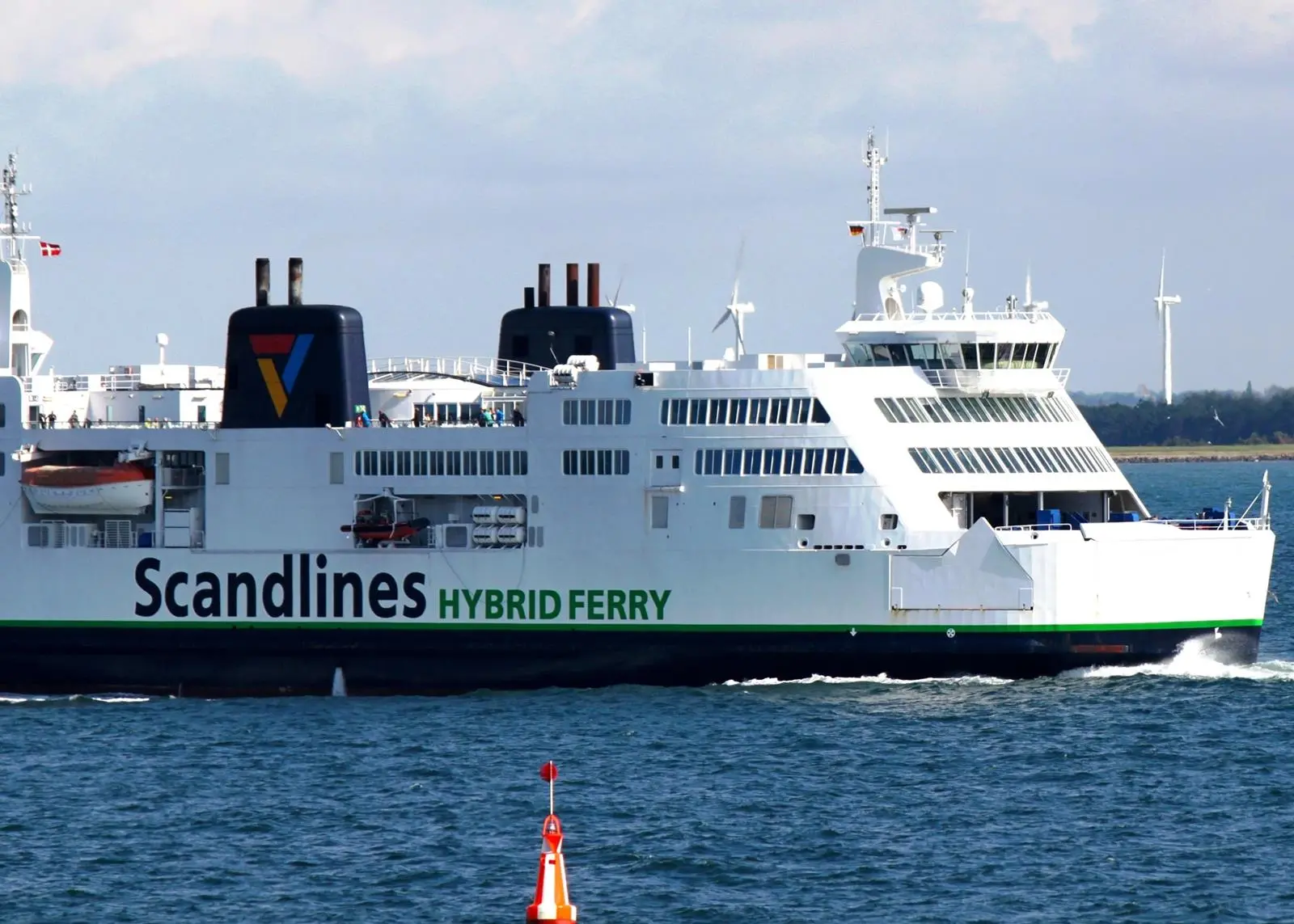
In 2013 the company introduced ground-breaking hybrid propulsion systems on its busy Puttgarden-Rødby Beeline route linking Germany and Denmark. Four ferries on that route combine MaK 8M32/6M32 diesels with Siemens energy storage systems (ESS) of 2,593kW capacity and Corvus battery packs.
Those hybrids are being joined in November and early next year on Scandlines’ Rostock-Gedser route by two new, longer hybrid ferries Berlin and Copenhagen.
Now Scandlines operations head Claus Nikolajsen says that “in just a few years, perhaps in 2018 or 2019” Scandlines wants to take the next step and operate ships on the Beeline “electrically and completely emission free”.
Scandlines communications manager Anette Ustrup Svendsen told The Motorship that the ‘zero emission concept’ was still under development. “We are earmarking €50-60 million for this,” she said, adding that an investment of this size would be unique in international shipping.
She said that as well as batteries, wind and hydrogen were propulsion possibilities and noted: “In order to switch completely to battery operation there are still a few technical and economic problems to solve.”
The 142m Scandlines ships on the Beeline cross in just 45 minutes and have just 15 minutes in port to recharge. “This would have to be automatic,”she said, noting also the need for suitable shore-based recharging facilities.
She acknowledged that all-electric drive on the much-longer Rostock-Gedser route was not possible. The new hybrid Berlin and Copenhagen are also 20m longer and would need significantly more battery power.
Here again however, Scandlines is seeking solutions. “We are working on a system to provide electric propulsion near coasts and diesel drive at sea,” she said.
Related Articles
 PROPULSION
 GENERAL NEWS
 GENERAL NEWS