



Scandlines hybrids add fouling protection and cooling
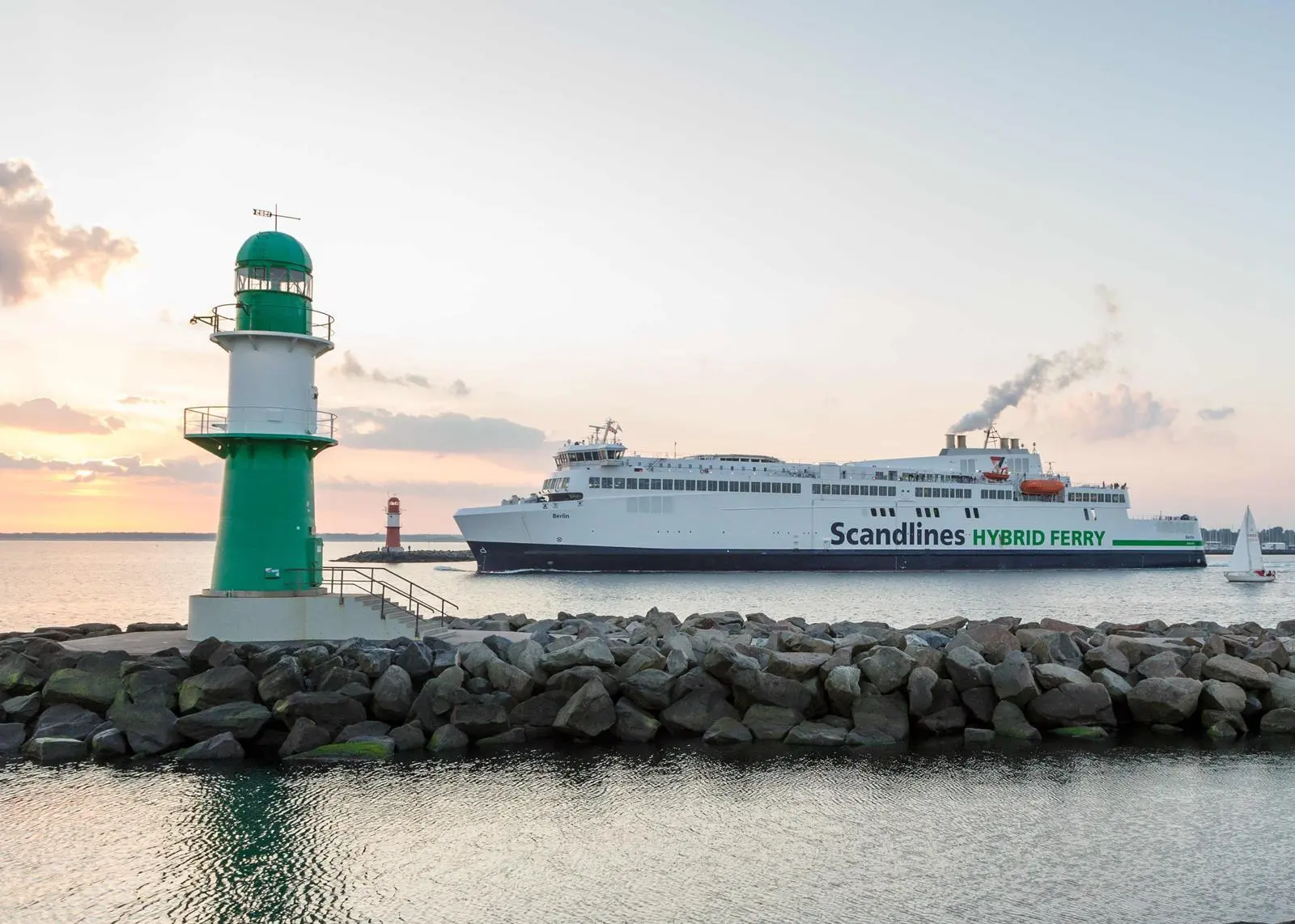
The diesel-electric ferry Berlin is now equipped with Hasytec’s Dynamic Biofilm Protection system, which uses ultrasound through up to eight transducers to disrupt fouling on the ship’s hull. The system replaces conventional cathodic protection, which releases copper into the sea.
According to Scandlines, the system also optimises its seawater cooling systems during summer, when the temperature of the Baltic Sea rises and ferries travel faster due to the increased demand. Reducing maintenance demands for the seawater cooling system benefits both safety and environmental performance.
The company is in the process of installing the system on Copenhagen, the sister ferry of Berlin on the Rostock-Gedser route since 2016.
Meanwhile on Princess Benedikte, a hybrid ferry sailing the Rødby-Puttgarden route, Scandlines is employing a prototpye system from COOL4SEA that uses surplus heat from the ship to cool its batteries.
“The cooling system is well in line with Scandlines’ green agenda, as we save some oil that would otherwise be used to produce electricity for the refrigeration plant. At the same time, there are no operating costs associated with the new plant,” said Carsten Johansen, senior chief engineer, Scandlines.
Traditional refrigeration plant is a significant contributor to overall emissions of carbon dioxide (CO2) and often contains large quantities of harmful refrigerant gases and other chemical compounds. The COOL4SEA system harnesses surplus energy from other ship power processes, such as waste heat in the cooling water generated by the ships main and auxiliary engines, to create the electricity needed to provide cooling.
“The challenge of using absorption cooling at sea lies in the fact that the process usually does not withstand movements and vibration,” said Christian Fonnesbæk Jensen, engineer and co-owner, COOL4SEA. “We have developed a motion-resistant system, and we’ve tested it all the way up to 45 degrees, so it can withstand all scenarios at sea.”
After a successful trial on Princess Benedikte, COOL4SEA hopes to commercialise the system by the end of 2018.
Related Articles
 ALTERNATIVE FUELS & LUBRICANTS
 GENERAL NEWS
 GENERAL NEWS