



Second generation BWT launched
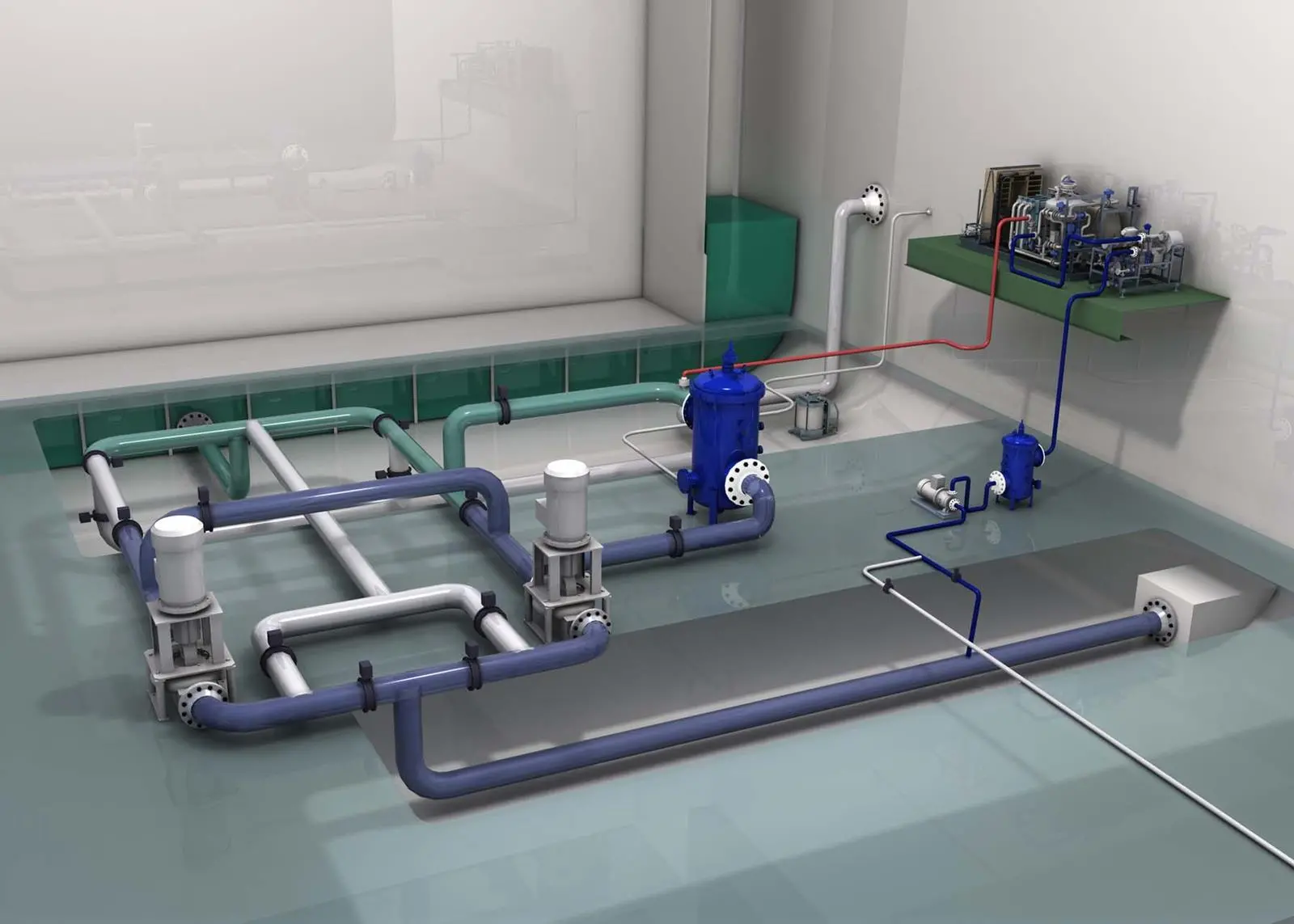
The current version, which the company refers to as the ‘Mark I’ technology, is targeted at large vessels of Suezmax size and above, but the simpler Mark II will appeal to operators of medium-sized ships, as well as providing an attractive retrofit prospect, according to sales director Tor Atle Eiken. The current system comprises four steps – filtration, cavitation, disinfect ion and oxygen stripping. This has been cut to just two in the MarkII version; an improved filter system does away with the need for separate cavitation units, while oxygen stripping is now optional.
Consequently the pipework is drastically simplified, and energy requirements are significantly reduced. Because the pressure loss is much smaller, the standard ballast pumps can be retained (with a modification to the impellers) in 90% of cases, and existing gensets and steam boilers will be able to cope with the new system’s energy requirements. Eiken says that the reduced component count and simpler installation will add up to savings of around 50% in installed cost, and offer considerable savings in operational cost too.
The same heated water membrane electrolytic disinfection unit as used in the current version is used in the Mark II, while the filters are of a new organic type with 40 micron screen, offering 99.5% efficiency, which compared with the previous inorganic 50 micron filters, with 40%-70% efficiency.
The optional nitrogen super-saturation oxygen stripping module is claimed to cut corrosion and oxidation of ballast tank coatings. This, says Eiken, extends coating life well beyond the IMO PSPC lifecycles – some other systems which add chemicals such as chlorine or ozone can have an adverse effect on coating life.
The new system will be formally launched at Nor-Shipping 2011, and full DNV type approval is anticipated in September 2011.
Related Articles
 ALTERNATIVE FUELS & LUBRICANTS
 GENERAL NEWS
 GENERAL NEWS