



Ship operators can expect cost increases
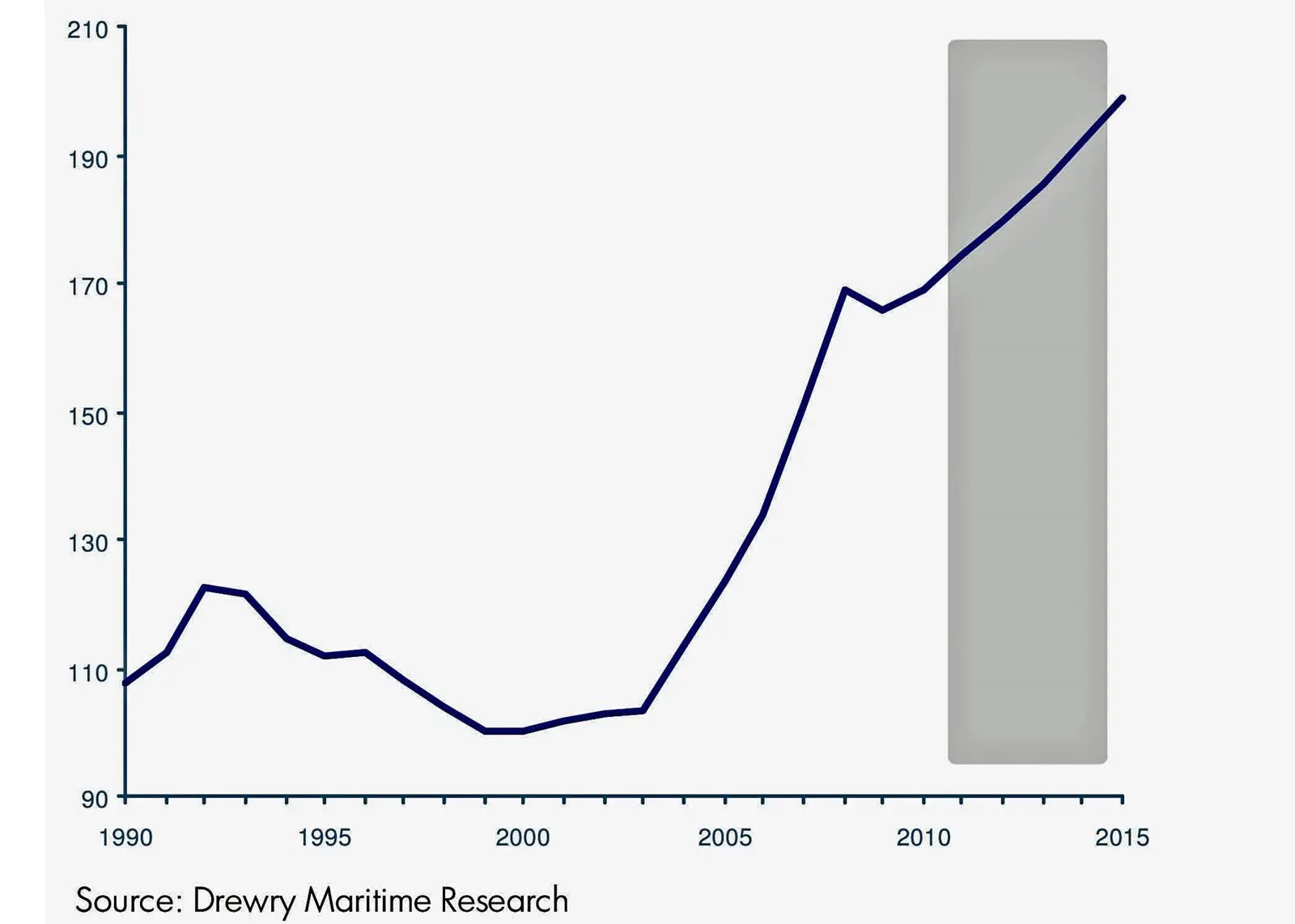
The detailed analysis covers eight vessel sectors and over 35 different sizes of vessel plus detailed operating budgets for a range of oil tankers, chemical tankers, gas carriers, dry bulk vessels, container vessels, ro-ro, general cargo and reefer vessels.
Drewry says that if it was not bad enough that demand in the shipping markets has not recovered, commodity price rises have put more than a little pressure on ship operating costs. Fleet owners and managers are certainly feeling the squeeze in 2011. In 2010, vessel operating costs overall remained static, but in 2011 commodity price increases are pushing up lube oil, repair and maintenance costs. With higher insurance charges, overall costs are forecast to rise by between 4% and 6%, depending upon vessel sector.
The report recognises that low market demand has kept wage levels down, so manning costs have not risen. This has also had the effect of narrowing the gap between demand and supply for experienced seafarers, a continual problem over the last few years. However, as more newbuilds come on stream, the gap will no doubt widen again forcing wages up. With the next STWC round as well as ILO MLC regulations cutting in, owners and managers will come under wage and staff cost pressure.
Hull and machinery insurance premiums have barely risen, but with vessel values becoming more stable following the drop in recent years, the outlook points to premiums rising to reflect the pressures on the insurance market. P&I cover has become relatively cheaper, and this trend is set to continue, except in the offshore sector where some high-profile incidents have led to reported ncreases of up to 40% in P&I rates.
Increased commodity prices, particularly steel, have affected the cost of repair and maintenance, while the rise in oil prices has meant more expensive lubes, paints and coatings. In a difficult market, owners and managers have been looking for the best prices and increases in yard capacity, mainly in China, have helped this cause.
Again, there is a concern that lube prices could become disconnected from oil prices and so a significant increase in lube prices could be on its way. Those owners and managers that had pinned down lube prices with forward contracts may find those agreements run out this year and so the cost benefit will likely disappear.
More pressure is expected from regulatory issues such as SOLAS Chapter V, which mandates immediate fitting of ECDIS and BNWAS equipment to newbuildings, and will affect all ships in time. Tighter sulphur emission controls for vessels sailing within ECAs are raising fuel costs and have increased the need for record keeping.
Drewry says that fleet operators know that the many conventions that abound on safety, emissions and manning will result in increased costs. Like low demand and high commodity prices, regulation is a brutal fact of maritime life.
Related Articles
 ALTERNATIVE FUELS & LUBRICANTS
 GENERAL NEWS
 GENERAL NEWS