



Shipping leaders commit to green H2-based fuels
The statement included commitments by both MAN Energy Solutions and WinGD to ensure that manufacturing volumes will be available both for newbuilding and retrofit, in-line with the IMO’s revised strategy “striving for” ambitions.
The joint commitment, signed at COP28 by thirty leaders, includes targets for fuel use, fleet development and port infrastructure to help bring the nascent green hydrogen industry to scale.
The commitment by MAN Energy Solutions and WinGD extend to accelerating the R&D efforts of machinery and equipment to enable the use of green hydrogen and hydrogen-derived fuels both on land and for marine transportation.
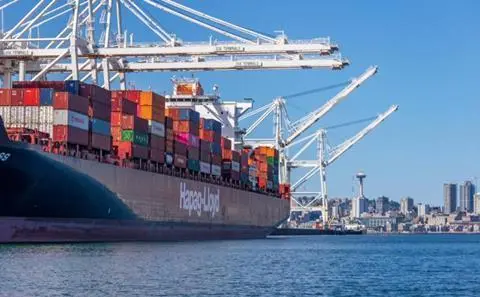
Port infrastructure is key with fuel supply present at ports on both sides of shipping routes, something that will require significant international cooperation and investment, says Sam Cho, Port of Seattle Commission president and co-chair of the Northwest Seaport Alliance.
“Green corridors focusing on cruise to Alaska and cargo with the Republic of Korea are already underway,” he said. “A critical next step is to look beyond our own port, and to ensure that our strategies align with future planning and investment in fuel supply in our region and around the world,” he added.
As part of the commitment, green hydrogen producers will need to produce 5 million tonnes of green hydrogen feedstock for the production of low-emissions fuel for use by the shipping sector by 2030. The equates to around 29.8 million tonnes of ammonia or 28.1 million tonnes of methanol. This demand is expected to rise to 90 million tonnes of green hydrogen feedstock by 2040 (536.4 million tonnes of ammonia, or 505.8 million tonnes of methanol). Over the longer term, a decarbonised global shipping sector will become one of the largest-demand sources for green hydrogen, projected to account for approximately 15% of total demand by 2050.
The commitment noted that renewable fuels produced from natural gas with carbon capture to abate emissions might have a transitional role during the scaling up of fuel supply.
Ports and bunker suppliers have added their support, committing to invest in infrastructure and safety projects to support re-fuelling of ships with green hydrogen and its derivatives.
Signatories are calling on governments to follow suit and support private sector collaboration with ambitious fuel standards and clean fuel mandates.
To date, 41 governments have developed national hydrogen strategies but further action is needed, says the sector.
Related Articles
 ALTERNATIVE FUELS & LUBRICANTS
 GENERAL NEWS
 GENERAL NEWS