



Size and safety set tanker trends
The Nobel brothers were also responsible, in 1903, for the first tankers to use internal combustion engines. The first seagoing diesel-powered tanker, the 4,570dwt Mysl, was built by their competitors, the Merkulyev Brothers in 1908.
By the time The Motor Ship appeared, tankers were an established part of the world fleet but they were small by modern standards. A record was set in 1928 when Bremer Vulkan delivered the 24,185dwt C O Stillman; it remained the largest tanker for 14 years.
Since the 1960s, tanker development has revolved around size and safety. With the closure in 1956 of the Suez Canal, the size restriction it imposed was gone and larger ships were needed to achieve the economies of scale necessary to offset the route round the Cape. This culminated in the 564,763dwt Seawise Giant, delivered to CY Tung in 1979 by Sumitomo Heavy Industries. The largest tanker ever built was eventually converted for floating storage in 2004 and scrapped in 2009.
For much of their history, tankers were associated with oil spills. The International Tanker Owners Pollution Federation (ITOPF) has kept statistics since 1970 and, for each decade, the average number of spills per year has reduced. In the 1970s, there was an average of 78.8 spills per year, peaking at nearly 120 in both 1974 and 1975. Since 2010, the average has been 6.2 spills per year.
ITOPF owes its existence to the 1967 110,000dwt Torrey Canyon oil spill. MARPOL was also born out of the Torrey Canyon disaster. At that time, oil pollution was governed by the OILPOL Convention, which did not address accidental spillages, and the IMO Council met in 1969 to consider Torrey Canyon’s implications. This led, in 1973, to the International Convention for the Prevention of Pollution from Ships, which incorporated OILPOL. In 1978 a protocol was added, creating the International Convention for the Prevention of Marine Pollution (MARPOL 73/78).
Another safety concern with tankers stemmed from the number of explosions during tank cleaning, especially as ship sizes grew. It came to a head in December 1969 when three tankers exploded during tank cleaning: the 207,000dwt tankers Marpessa and Mactra and the 219,000 dwt Kong Haakon.
Shell, which operated Marpassa, found that droplets of washwater create static electricity when they hit steel tank sides, potentially causing explosions in large tanks. One solution was to fill tanks with inert gas but another, developed by BP, was crude oil washing (COW), which involves circulating heated cargo at high pressure to remove oil from tank sides. In 1978, COW equipment was made mandatory for newbuilding tankers of 20,000dwt or more through a protocol to MARPOL.
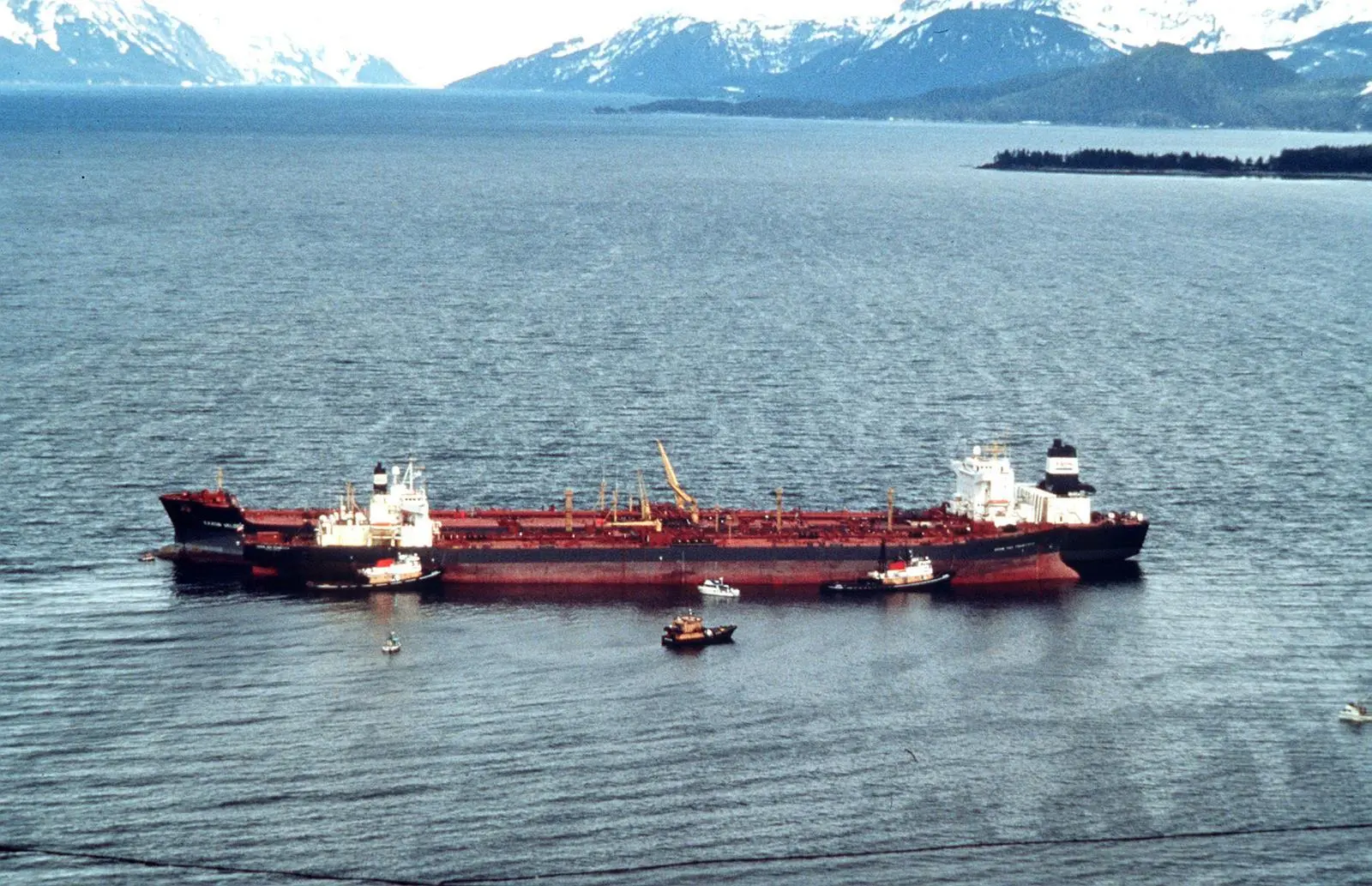
A number of other important tanker design developments have stemmed from accidents: the Exxon Valdez grounding in 1989 led to the US OPA 90 legislation, which phased out single-hulled tankers in US waters, and was followed by amendments to MARPOL and new European regulations that extended the requirement worldwide.
Looking ahead, crude oil tankers may give way to more flexible concepts, according to DNV GL vice president and tanker expert, Olav Tveit.
DNV GL has developed a new class notation for such ships, which were published in July 2019 and came into effect on 1 January 2020.
But some uncertainty surrounds the medium term outlook for tankers, as structural shifts in the transportation sector could impact a significant proportion of end-user demand. The UK consultant Maritime Strategies International warned in a 2019 report that, under one of its scenarios, “tanker demand would fall by slightly more than a third” by 2050. It makes no forecast about resulting design changes, but these would appear to be inevitable under such a scenario.
Tanker design has come a long way in the past 170 years. It seems set to go a long way again in a fraction of that time.
Related Articles
 METHANOL
 GENERAL NEWS
 HYDROGEN