



Sludge handling cut, and short payback time
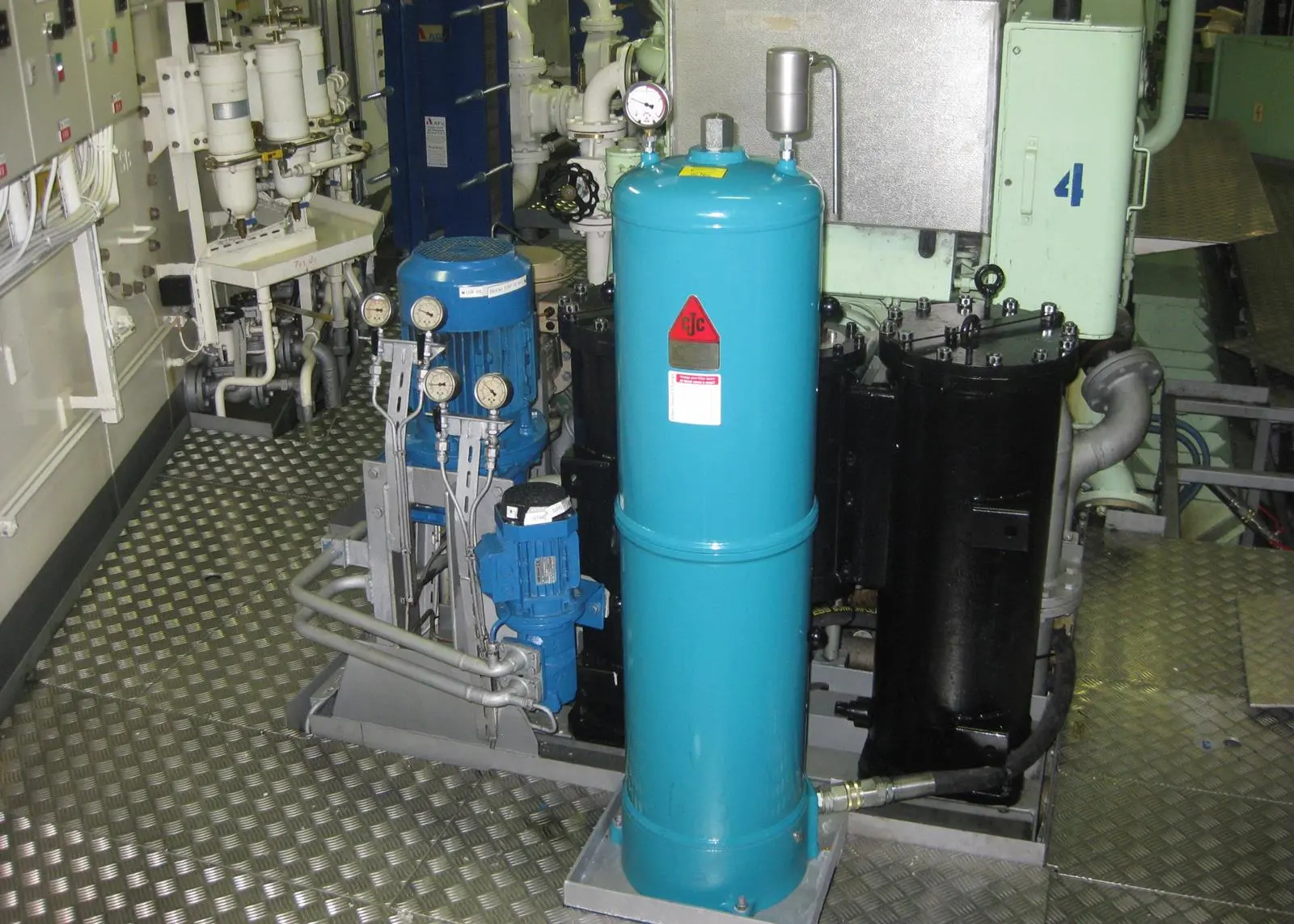
Implementation of comprehensive oil filter systems from C.C.Jensen for lube oil and diesel oil on board several of Bourbon Offshore Norway’s supply vessels is said to have eliminated sludge problems and significantly reduced the need for oil changes. Furthermore, considerable savings were made on manpower. Unexpectedly, it proved an even better investment than anticipated, by paying off in less than a year. The company says that oil filtration, compared to traditional solutions like centrifuges and purifiers, has several advantages when it comes to reducing the impact on the environment.
Oil has to be clean to work properly, regardless of its purpose. In the maritime world problems caused by sludge, soot, water and particles in lube oil and diesel oil, cost operators and ship owners manpower and money every day. There are two prime problems. Firstly, sludge, water and particle contamination of the oil increases wear and tear and often leads to breakdowns. Secondly, getting rid of sludge is very costly. As part of the removed sludge consists of oil that has to be replaced by fresh oil, this results in further expense and environmental issues.
Traditionally, sludge and particles have been addressed by cleaning the oil. This can be done either by separating or purifying, in a centrifuge for example, or by filtering the oil. Modern and effective offline oil filters have been found capable of removing water and small particles with almost 100% efficiency.
One operator experiencing excellent results with filtering both lube oil and diesel oil is Bourbon Offshore Norway, operating a range of supply vessels servicing the offshore and oil industry. The company had experienced problems with dirty engines and high levels of insolubles in the oil, despite frequent use of installed centrifuges. After installing a series of oil filters, the results impressed several of the company’s experienced chief engineers: ”There are several advantages with these types of filters”, explains chief engineer Brunvoll of Bourbon Surf. “The lube oil is cleaned in a much better way than with a centrifuge, which gives us cleaner oil and consequently a cleaner engine on the inside with all the advantages this gives to all moving parts of the engine. And I’m also compelled to mention the sludge thing. With these oil filters the sludge problem is practically eliminated”.
The sludge problem was a major concerns for one of Brunvoll’s colleagues, Lars Inge Klauset, chief engineer on Mistral. Apart from the damaging impact on the machinery, sludge is very costly to store and dispose of, amounting to several hundred cubic meters in a year:
“These two centrifuges produced enormous amounts of sludge”, Mr. Klauset says. “Part of this sludge is lube oil, and this means that we will also reduce our consumption of lube oil considerably by installing the oil filters. By getting rid of this amount of sludge, we will also save money for spare parts for the incinerator and the bilge water system, and diesel for burning off this sludge – not to mention the positive effect on the environment.”
Apart from the economical and environmental advantages of reducing sludge, there is a further gain in that service intervals can be extended.
Sludge forms a major operating cost for many ship types. It has to be stored properly on board, and removal is only possible at harbor, at a considerable cost. Additionally, there is the cost of replacing lost lube oil in the system. Choosing filters rather than centrifugal separation can prove attractive for an increasing number of operators
Maintenance company Øwre-Johnsen of Trondheim, with over 60 years experience in the maritime and offshore industry, has seen customers turning to oil filtration in order to minimise engine wear and eliminate sludge problems:
“The advantages of implementing an oil filter solution already in the design process is obvious”, sales manager Lauritz Lyngsnes of Øwre-Johnsen points out, “but actually the oil filters are easily retrofitted, and the installation can be performed by the engine room crew at no greater effort. In fact, we are often told that much of the pipes and valves from the centrifuges can be used with the oil filters”.
The solutions for Bourbon Offshore Norway and other customers of Øwre-Johnsen were delivered by C.C.Jensen, which claims wide experience of filtration in various industries including 60 years in the maritime market.
Each CJC oil filter can be supplied with different filter types according to the specific needs and oil types, and each filter can easily be fitted in the engine room, probably more simply than most centrifuges. The overall cost of filters is competitive, as proven by Island Offshore vessel Island Challenger. The investment was NOK 192,000, with saving over the first year of NOK 329,000. Chief engineer Harald Kvande concludes: “if this is not good business, I don’t know what is…”
Related Articles
 PROPULSION
 GENERAL NEWS
 GENERAL NEWS