



Stena Line to finalise full-electric Stena Elektra design by 2022
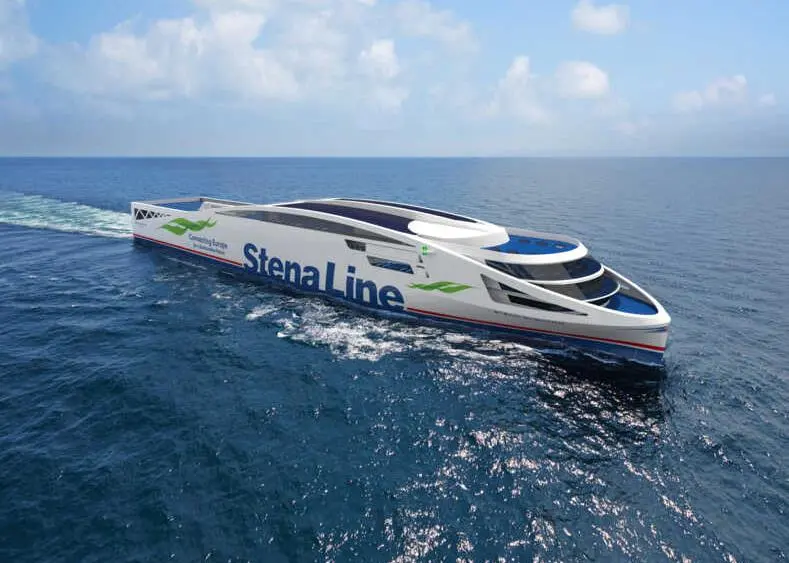
The plans were announced during a a press conference in which the Port of Gothenburg announced plans to reduce environmental emissions by 70 percent by 2030. The ‘Tranzero Initiative’ venture also included the Port of Gothenburg, Sweden’s largest container port, along with Volvo Group and Scania.
As previously reported by The Motorship, the design will be based on Stena’s Stena Elektra concept, and will be the first fossil free RoPax vessel of its size, measuring approximately 200 metres and combine a passenger capacity of 1000 with 3000 lane metres freight capacity.
The vessel will be built from high tensile steel to lower the weight and increase efficiency, and it is estimated the vessel will run on battery power for approximately 50 nautical miles. The battery capacity will need to be approximately 60-70 MWh and the vessel will be charged in port.
“This will be a huge step towards fossil free shipping”, said Niclas Mårtensson, CEO Stena Line Group and member of the Swedish Government Electrification Commission.
”The electrification of shipping has only just began. We see a great potential for both battery hybrids and battery powered vessels on several of our short-sea shipping routes in the future. But, it takes more than the electrical ships, we also need to develop the infrastructure and charging possibilities in the ports and terminals in the same pace and that is a reason why collaborations projects like this are so important,” said Niclas Mårtensson, CEO Stena Line.
Freight flows mapping
The ‘Tranzero Initiative’ is also focused on the 1m truck transports and the 55,000t of carbon emissions generated from road transports to and from the Port of Gothenburg each year.
“No single organisation or individual holds the key to meeting the challenges ahead of us. Collaboration is crucial and we are pleased to bring on board two of the world’s largest truck manufacturers and the world’s largest ferry company. With our collective expertise, breadth, and market presence we can make a real difference,” said Elvir Dzanic, Gothenburg Port Authority chief executive.
The companies involved will introduce a series of interlinked measures designed to accelerate the switch to fossil-free fuels. This task has already commenced with a needs analysis and mapping of freight flows as part of the commitment to offering the market the right products and establishing a fossil-free fuel infrastructure to support this development.
Gothenburg Port Authority will produce the necessary infrastructure and access to fossil-free fuels for heavy vehicles, including electric power, HVO, biogas, and hydrogen gas.
Volvo and Scania will put commercial offerings in place for their heavy truck customers, ensuring that in time land transport becomes fossil free in accordance with the goals laid down by the port.
Related Articles
 ALTERNATIVE FUELS & LUBRICANTS
 GENERAL NEWS
 GENERAL NEWS