



Study highlights cost of lengthy port stops
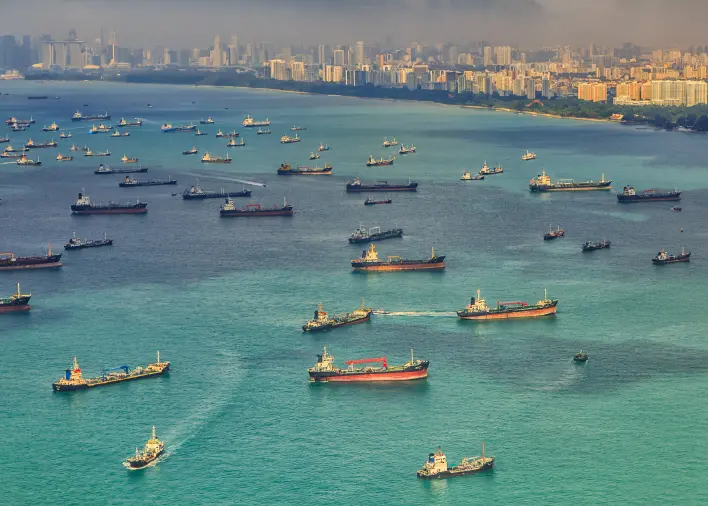
Analysis of the global fleet in 2017 showed that cargo-carrying vessels spend 37-54% of their time in stationary operation mode depending on ship type, with oil tankers spending the most time at port and container and bulk carriers spending the least.
The findings also show that the cargo vessels burn 15% of their fuel while stationary. This leads the authors of the study, released as part of DNV GL’s Maritime Forecast to 2050 and the broader Energy Transition Outlook, to suggest that addressing this inefficiency could substantially improve global fuel consumption and emissions from shipping.
“There is most likely potential for the existing fleet to improve its effectiveness by reducing stationary time, potentially allowing the fleet to lower overall fuel consumption by reducing sailing speed,” the report noted.
Digital solutions could hold the key to solving this problem, the authors said, while noting that “another area for fuel savings is to reduce ships’ consumption of energy while they are being unproductive waiting for transport work”.
Rapid decreases in the consumption of carbon-based fuels will be required if shipping is to meet ambitious greenhouse gas targets set by IMO. The report anticipates that total energy use in shipping will increase from 13-15EJ (exajoules) for the period 2016-2035, thereafter decreasing to 11EJ by 2050 – equivalent to 270 million tonnes of oil.
DNV GL anticipates that the shipping greenhouse gas targets will be met. It predicts that by 2050, 39% of shipping energy will come from carbon-neutral fuels and 23% from LNG and LPG. Electric batteries will be on a third of all ships, contributing 5% of the market’s energy demand.
The report can be downloaded here. A full review will be included in the October print issue of The Motorship, out soon.
Related Articles
 ALTERNATIVE FUELS & LUBRICANTS
 GENERAL NEWS
 GENERAL NEWS