



Study proposes two-part GHG intensity factor calculation
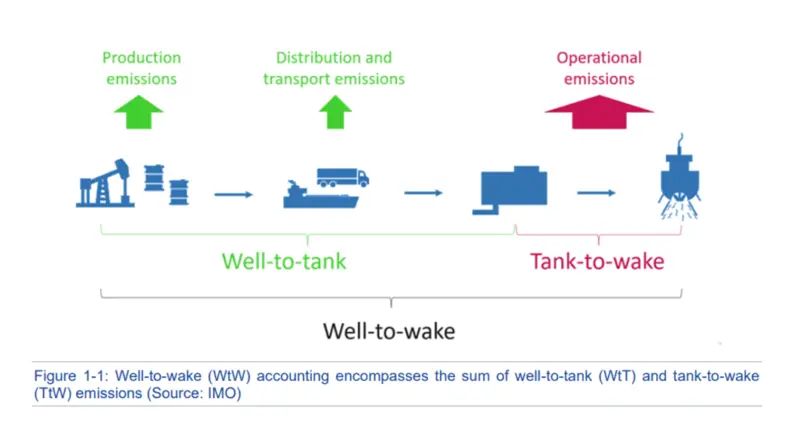
The study, undertaken by Ricardo Energy & Environment, mapped existing standards, regulations and calculation methods and tools, covering Well to Tank (WtT) and Tank to Wake (TtW) emissions. The researchers used three case study fuel pathways to evaluate methodological differences: synthetic methane (e-LNG) using renewable energy, ammonia utilizing carbon capture and storage (CCS), and biodiesel (hydrogenated vegetable oil) from soybeans.
The study noted that the Fuel CO2 factor used in Carbon Intensity Indicator (CII) calculations only consider the CO2 emitted by the vessel and not non-CO2 emissions from use or emissions during fuel production. “The current regulations are reasonable for existing liquid fossil fuels (where the majority of emissions are in the form of CO2 from combustion). For other (future) fuels, where emissions occur throughout the production chain, there is a growing understanding that all relevant GHG emissions should be taken into account on a WtW basis.
“It would be possible to apply life cycle principles for the fuel to a fuel GHG intensity factor covering WtW, calculated per unit of fuel. The factor should be representative of the fuel production pathway used, which may be specific to the region or production facility. The factor may also need to reflect the different emissions characteristics of different powertrains (such as 2/4 stroke, exhaust treatment), and so the factor may have two parts – calculated for WtT and TtW.”
The report also noted that some future fuel pathways may include the use of carbon capture and storage. As the carbon capture efficiency of plant can vary during operation, some monitoring and approval may be required for “blue” fuels.
The report has been submitted to the upcoming Intersessional meeting of the Working Group on reduction of GHG emissions from ships (ISWG-GHG 11) that will take place from 14 – 18 March, 2022. ISWG-GHG 11 is working on the on the development of Lifecycle GHG and carbon intensity assessment guidelines for marine fuels (LCA Guidelines).
The full study is available here.
Related Articles
 ALTERNATIVE FUELS & LUBRICANTS
 GENERAL NEWS
 GENERAL NEWS