



Succeed with science or survive with art?

1. OVERVIEW
Marine operators have long relied on operations as an art.
The maritime industry is tradition-bound and deeply conservative to change. Marine operators have a long history of relying on experience and gut feel. Operational decisions are often supported by silos of data and a mindset reflecting ”operations as an art.” This leads to islands of excellence across some vessels, but significant performance variability across the fleet. Global market fluctuations are forcing reorganization and depletion of experienced personnel. This is having a knock-on effect on predictability and excellence of performance.
Market dynamics are forcing a shift to operations as science.
The marine industry is being challenged to improve visibility and predictability of its vessel operations. Gut-feel methods should transform into data-driven methods for predictability of operations on each vessel. Experience-based methods should transform into systemized methods for repeatability across the fleet. These transformations enable a sustainable shift from operations as an art to operations as a science. Companies that make a deliberate shift to operations as a science can succeed, while the companies that hang on to tradition bound view of operations as an art can, at best, hope to survive. The expectation is that the former will be preferred, given safety and efficiency improvements over gut-feel based operations. This competitive gap widens in the face of rapid market fluctuations and competitive dynamics in the marine industry.
2. OPERATIONS AS AN ART: A SUBJECTIVE APPROACH
Gut-feel decisions lead to performance variability.
Traditionally, marine operators have relied on workforce expertise and equipment human-machine interfaces (HMI) to make operational decisions. Examples include operating equipment at optimal load profiles, avoiding sudden spikes in load, timely responses to changes in vessel operating conditions and fuel optimization. The decisions can vary based on workforce expertise and available information. Such issues are further compounded by fragmented adoption of new technologies. Across each vessel and the fleet, this can lead to significant performance variability.
Time-based maintenance is out of step with actual equipment health.
Marine operators follow schedule-based equipment maintenance to respective manufacturer recommendations. This could mean over-maintenance of under-utilized equipment (wasteful spend) or under-maintenance of over-utilized equipment (unplanned downtime). Over-maintenance directly adds to operational expenses. Such over maintenance and unnecessary human intervention exposes the equipment to increased potential for failure. The potential for failure is increased after maintenance due to lack of control on strict adherence to OEMs’ detailed maintenance procedures. Repeated unplanned downtime could impact revenue in lost output, contractual penalties or brand reputation.
Over-scrutinized operations or over-maintenance are overburden.
Marine operators often address performance and maintenance inefficiencies with over-scrutinized operations or over-maintenance of equipment. The former burdens operational efficiency and the latter burdens maintenance costs. These anomalies lead to uncertainties in business planning and fleet-wide resource allocation. Analysis of centralized data can be used to provide a rationalized approach to avoid the burdens imposed by over-scrutinized operations and over-maintenance.
deliberate shift to operations as science can succeed, while the companies
that hang on to a tradition-bound view of operations as an art can, at best,
hope to survive.”
3. INDUSTRY DYNAMICS ARE FORCING A SHIFT
Marine operators in the exploration and transportation segments in particular are dealing with changing market dynamics in their respective segments.
Offshore exploration: The oil industry has entered a new era of market disruption, and its supply chain is being transformed:
- Immense pressure to reduce costs across every link of the supply chain;
- The deepwater segment is not immune to this pressure. If anything it has a direct impact on all marine operators in this segment as the growth in the number of assets was originally driven by the increased activity in deepwater.
- The oil industry will have to learn to “do more with less.” Nimble, efficient operators gain competitive advantage.
- Demographic shifts will see a dilution of skills and experience but stakeholder delivery expectations will continue to increase.
- An integral aspect of reducing costs in the offshore sector will be rationalization of risk. This means a shift from a culture of absolute risk aversion to risk tolerance of non-process safety related risks.
- The ability to achieve effective risk rationalization decisions can be augmented by leveraging data analytics: “better data leads to better quality decisions.”
Transportation: The carrier industry is impacted by margin pressures and changing competitive dynamics. Hence there is a need to optimize vessel operations and reduce performance variability across the fleet:
- Cruise: Facing constant challenges to grow revenue per passenger in light of environmental regulation, fuel cost fluctuations and advances in hotel amenities. Need to balance costs, brand reputation, rapid obsolescence of hotel amenities and shifts in global markets..
- Cargo: Over-capacity, sub-optimal business models and operational inefficiencies across cargo life cycle are forcing a race for efficiencies and market share. Need to balance costs, shifts in global opportunities, a shift from “silo accountability” to an expanded scope of “supply-chain accountability” (pickup, loading, transport, unloading and delivery logistics). Think FedEx supply-chain efficiencies applied to the cargo business!
4. THE CASE FOR ACTION: SHIFTING FROM ART TO SCIENCE
Digital technologies and big data analytics have enabled a rapid shift of consumer and enterprise markets into data-driven businesses. There is an opportunity for marine operators to leverage the same technologies to make the leap from gut-feel to data-driven operations.
Expectations of greater transparency require a structured method of operations.
Evolution of sensor and communication technologies coupled with ubiquitous connectivity has enabled greater visibility and transparency in consumer and enterprise markets. This led to an “always-on” supply chain and has transformed how business is optimized. In the upstream oil and gas sector, specifically in exploration, oil companies are seeking similar transformation of their supply chain. They demand greater visibility to their offshore contractor progress and insights into issues that could impact achievement of goals. In the marine transportation sector, shipping companies expect similar visibility to each ship, further extending the scope to end users or shippers of cargo.
The emergence of “always-on” supply chains will encourage all participants to be operationally efficient and lead to better business outcomes. Operations as an art and the associated black-box thinking cannot survive such increased scrutiny. Marine operators have no choice but to evolve their operations.
Business models are ripe for disruption.
Marine supply chain transformation is likely to affect traditional business models in many ways. Value-based pricing, performance-based incentives or fixed rates are being explored.
Changing workforce demographics is depleting “art.”
With the aging workforce and widespread layoffs leading to a dilution of experience, hitherto reliance on gut feel must transform to systemized, data-driven operations. Without such methods, existing fleet-wide performance variability will only get worse.
Digital technologies offer the potential for enable predictable and repeatable performance. Innovative sensors, big data analytics and new insights have produced transformative efficiencies in consumer, manufacturing and other market segments. For example, consumer advertising shifted from static reports and expertise-based advertising to real-time, data-driven advertising. The same technologies can help transform the marine segment to data-driven operations and a consistent system or fleet-wide performance.
5. OPERATIONS AS SCIENCE: AN OBJECTIVE APPROACH
What is operations as a science?
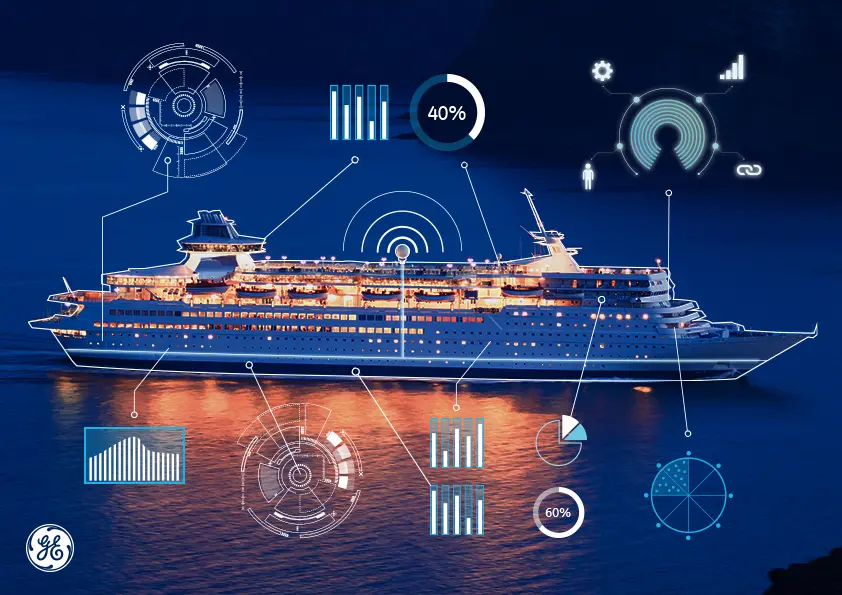
Operations decisions are made based on centralized data, built on knowledge management systems, with accurate insights into operational anomalies and enabling better decisions for appropriate corrections. In such a systemized method, the workforce delivers predictable operational excellence without undue reliance on experience. An example would be automobile technicians guided by software diagnostic systems. These systems collect data from various automobile sensors, provide accurate insights into performance or reliability issues and suggest corrective actions. Complex expertise of automobile mechanic functions has been systemized through software solutions for accurate assessment and actions by mechanics of varying expertise.
Data is the first mile foundation for science.
The journey to operations as a science is jump-started by data. Operations data has traditionally been confined to equipment silos and in some cases data access is controlled by equipment manufacturers. Hence, marine operators are limited in their ability to aggregate vessel-wide equipment data. This has unfortunately led to a situation where the industry, despite being data rich, has sometimes been decision poor. This must change. It is essential that marine operators not only own the equipment they operate but can fully access the operational data they produce. Having adequate data is a critical first step.
Transforming operations to a science is an evolutionary journey based on the following steps:
- Centralized data: Establish a single source of truth for vessel-wide equipment data.
- Harmonize data: Ensure clear connection to equipment and desired data quality.
- Diagnose health/condition: Use real-time insights into equipment health to fine-tune performance.
- Predict health: Use predictive analytics and insights into equipment reliability for condition-based maintenance (shift from schedule-based maintenance).
- Optimize decisions: Use above methods of equipment health for data-driven decisions on performance optimization and maintenance costs reduction.
- Systemize excellence: Systemize these methods across the fleet for consistent operational excellence.
6. THE ROAD TO TRANSFORMATION
The right start, with executive commitment and organizational alignment.
Transformation to operations as a science requires commitment from executives and alignment across an organization. Executive commitment starts with an aligned vision, active sponsorship, targeting specific outcomes, assigning ownership and ensuring an evolutionary journey towards specific business outcomes. Organizational alignment starts with participation of functional leaders (operations, maintenance), timelines for project milestones and an operational rigor for ensuring progress (bi-weekly updates, monthly meetings).
Transformation to a science-based approach will lead to a better business performance only if the approach is embraced across the entire organization. Failure to do so would enable a fragmented adoption that could result in an expensive regression to another form of art.
Clarity of initial scope and desired business outcomes accelerates the evolution.
Operations as a science has the potential to enable significant business outcomes: lower maintenance costs, fuel efficiency, enhanced workforce productivit, and fleet-wide business planning. It is important to define and quantify desired business outcomes. This leads to better organizational focus and enables a phased approach for achieving the business outcomes. It is important to start small and maintain focus for first implementation on quick results. The first vessel should have the right profile to demonstrate the impact of data-driven decisions quickly. That profile spans data access, data use, existing metrics and target outcomes. Success on first vessel energizes solution proliferation across the fleet.
Need to update existing processes and decision methods
This shift to data-driven operations has to be achieved in the context of various stakeholders – their existing key performance indicators (KPI), their daily decision methods and their management reporting rhythms. Stakeholder-relevant dashboards offer a path of least resistance to systemize the shift. The dashboards provide vessel-wide aggregated view in near real time (beyond the equipment silos). They provide visibility to KPI-centric operational anomalies, insights into the KPI drivers and potential corrective actions. Hence, stakeholders can leverage dashboards as part of their daily decision process. The dashboard visibility extends beyond vessel to the shore to enable collaborative discussions based on a consistent view across ship and shore. Operational and executive reviews could also shift from compiled reports to real-time dashboard reports.
7. THE BENEFITS
You cannot improve what you cannot measure.
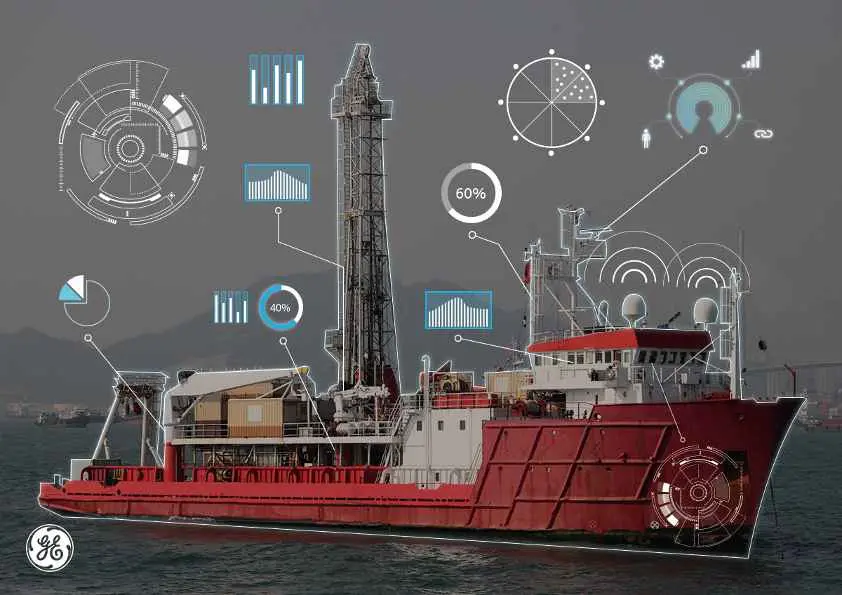
As part of the transformation, marine operators should analyze and quantify potential benefits, establishing targets and ensuring desired outcomes. The following tables show a sample approach and potential metrics for each marine segment:
|
Offshore drilling – The numbers per vessel |
|
|
Spend |
Aspirational improvements (assumed examples) |
|
Annual maintenance per vessel |
20% reduction |
|
Average reliability issues, non-productive time |
10-30% reduction |
|
Drilling productivity, KPI delays |
Optimization |
|
Transportation: The numbers per vessel |
|
|
Spend |
Aspirational improvements (assumed examples) |
|
Annual maintenance per vessel |
20% reduction |
|
Average downtime |
20% reduction |
|
Load/unload mile delays |
Improvements |
8. SUMMARY
Late adopters must be quick adopters.
With the fast-paced changes of globally connected economies and shifting regional opportunities, marine operators need to transform themselves to be efficient, predictable and nimble. They need the ability to deploy the right resources at the right opportunity and monitor operational excellence anytime, anywhere.
Many other industries have responded to their market changes by leveraging digital technologies and transforming their operations.. Following this trend, ‘late adopter’ marine operators must leapfrog as ‘quick adopters” of digital technologies. Given the present industry dynamics, continuing to treat operations as an art may at best help them survive. However, transformation to operations as a science will not only help them succeed but will enable them to redefine competitiveness.
Those that move fast will finish first.
Related Articles
 ALTERNATIVE FUELS & LUBRICANTS
 GENERAL NEWS
 GENERAL NEWS