



Tanker JIP outlines medium-term options
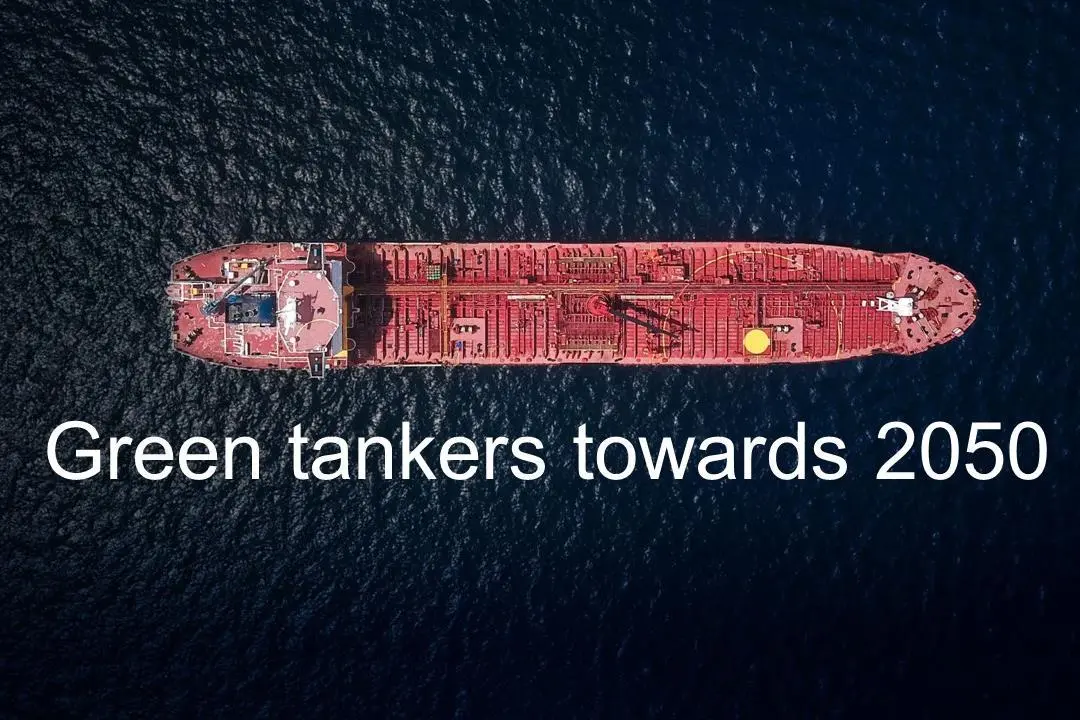
The results of the second phase of the “Green tankers towards 2050” project explores the possible options for a 50,000 DWT MR tanker to comply with incoming IMO & EU greenhouse gas (GHG) regulations over the lifetime of the vessel.
In 2019, DNV and HHI group launched the first phase of the “Green tankers towards 2050” project, which focussed on developing low and zero carbon pathways for VLCCs and MR tankers. In the second phase in 2022, HMD, HGS and DNV studied the design and operational options of a 50,000 DWT MR tanker and presented potential pathways towards two compliance goals: Meeting current IMO GHG reduction targets in the lifetime of the vessels and reaching full decarbonization by 2050.
“We believe our research results, including engineering and operational solutions, will support ship owners in developing their future strategy for ship operations and fleet renewal,” said Inho Lee, Head of engineering basic design department of HGS.
During the seminar, HGS introduced retrofit solutions for carbon dioxide reduction and showed how digital transformations can improve operational efficiency. HMD demonstrated how their latest 50K MR tanker design, with LNG dual fuel and Wind Assisted Propulsion System (WAPS), could lead to a 50% reduction in attained EEDI compared to the EEDI reference line. In addition, HMD projects that the new design can exceed the CII C grade ranking into 2040.
“The data analysis of MR tankers built by HMD and currently in operation were showed to be highly efficient in real world conditions,” stressed Yi Hyo Chung, Head Engineer at HMD. “We are confident to offer ships that both meet or exceed future environmental regulations, while remaining economical over the long-term.”
DNV conducted an assessment of the economic potential of different fuel strategies using the DNV FuelPath Model. This resulted in an estimation of the total cost, under a variety of possible fuel price and regulatory scenarios.
“By applying DNV’s FuelPath Model to MR tankers, DNV found that MR tankers can operate on very low sulphur oil (VLSFO) until the early 2040’s, while meeting the current IMO ambitions,” explained Christos Chryssakis, Business Development Manager at DNV Maritime. “However, as IMO requirements can become stricter, or we see the introduction of regional regulations to reduce emissions, fuels like LNG and methanol can offer additional flexibility and options for compliance. Furthermore, the use of wind assisted propulsion systems can help reduce a vessel’s environmental footprint,” he added.
“As a trusted partner of HHI group for some fifty years, DNV is pleased to present the results of this joint study which offers a practical vision and path to compliance for future MR tankers,” said Vidar Dolonen, Regional Manager DNV Maritime Korea & Japan. “The maritime industry is facing the grand challenge of decarbonization, but by working together as an industry, embracing fuel flexibility, and consulting with expert partners we can help shipping reach its destination.”
Related Articles
 ALTERNATIVE FUELS & LUBRICANTS
 GENERAL NEWS
 GENERAL NEWS