



The adventures of Hercules
The narrowly averted exit of Greece from the European Union earlier this year brings to mind the major contribution that Greek pioneers have made to the global shipping industry. A so called ‘Grexit’ would have jeopardised that ongoing contribution, and a potentially game-changing collaborative research project – funded largely by the European Commission (EC) but coordinated under Hellenic auspices – might also have been left in ruins.
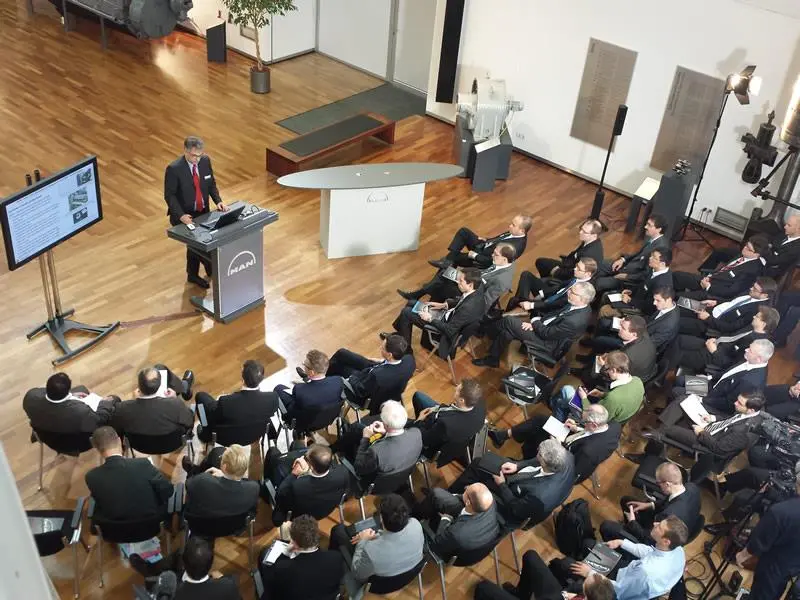
The follow up to the 10-year HERCULES (High-efficiency Engine Research on Combustion with Ultra-Low Emissions for Ships) initiative, partly funded by the EC’s Horizon 2020 programme and managed by the National Technical University of Athens, was confirmed in July. HERCULES 2 will feature collaboration between 32 companies and universities – including MAN Diesel & Turbo and Wärtsilä (representing around 90% of the ship engine market) – in an attempt to develop solutions towards a “fuel-flexible marine engine that is optimally adaptive to its operating environment”.
With funding of €25 million (with €19 million provided by the Commission), the three-year project will seek to develop and prototype solutions in four areas: Fuel flexibility and switching; materials for high-temperature engine components; controls to maintain engine performance across lifespan; and combined exhaust gas after-treatments. The demonstrable success of the first HERCULES project should provide a solid base for further developments in engine technology.
Just one example of that success is the emissions-optimised lubrication concept developed and tested under work package nine of HERCULES-C – the last three-year leg of the first project, concluded earlier this year. The work group first overcame methodological challenges in measuring lube oil losses and their contribution to exhaust emissions (CO2, hydrocarbons and particulate matter). It then developed a new ‘inner lubrication system’ for two-stroke engines to lubricate the cylinder liner-piston ring interface.
Advances were also made in piston ring pack optimisation, and an optical monitor capable of quantifying the impact of oil degradation on lubricant parameters was developed. In total, the new lubrication concept resulted in a reduction in lubrication losses exceeding the targeted 30%, thereby helping to reduce lube oil consumption – and its contribution to emissions – significantly. The new concept, tested at full scale on a Wärtsilä RTX-4 low-speed diesel engine, is one of several major developments from the first HERCULES project.
Another working group focused on developing computer-aided combustions optimisation. The group was steered by MAN Diesel & Turbo, the Graz University of Technology and Karlsruhe Institute of Technology. It looked at ways to improve engine processes and components through computer modelling, including examining waste heat recovery systems and optimum strategies for combustion with exhaust gas recirculation (EGR) systems.
As part of that work, an on-site engine optimiser was developed and used to configutre a fuel booster injection valve. A waste heat recovery model was developed to study the potential of optimising total energy efficiency, and then tested on a MAN 6S80ME-C9.2 engine with EGR. And a numerical modelling approach was developed for dual-fuel engines to simulate processes including combustion, NOX creation and knocking – helping to optimise multiple engine parts. The latter sub-project led to efficiency increases of up to 2%, and emissions reduction of up to 10%. The system has already been integrated into MAN’s daily engine development work.
In other work areas the partners also made great strides. In particular they:
• Achieved significant reductions in fuel consumption through advances in low-temperature combustion, combustion optimisation, advanced engine control and pressure-based, cylinder-specific monitoring;
• Developed concepts that resulted in emission reductions (NOx, PM and HC) beyond current and foreseeable regulatory requirements, with a focus on exhaust after-treatment, turbocharging efficiency and multi-fuel combustion; and
• Made strides to minimise the efficiency decrease in two- and four-stroke engines over the course of their lifetime, developing concepts to advance turbocharging systems, engine controls and monitors, and engine tribology.
There has been no reporting yet on how ready these concepts are for market. But given the important role taken in the project by major engine manufacturers, many of these advances – or derivatives of them – are likely to feature significantly in the design of future engines. If HERCULES 2 is as productive as its predecessor, this remarkable exercise in partnership is likely to contribute significantly to greener, more efficient engines emerging over the next few years.
Related Articles
 PROPULSION
 GENERAL NEWS
 GENERAL NEWS