



The Motorship’s special report on ammonia
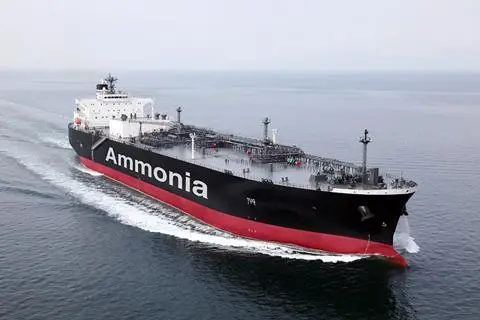
Offering a carbon-free combustion profile, zero sulphur oxide and particulate emissions, and the potential for up to 90% lifecycle greenhouse gas (GHG) reduction when produced renewably, ammonia stands at the forefront of the industry’s strategy to meet the International Maritime Organization’s (IMO) ambitious decarbonisation targets.
This transition is not without complexity however. Ammonia presents a unique set of operational, safety, and regulatory challenges that distinguish it from other low- and zero-carbon alternatives. Its high toxicity, corrosiveness, and relatively low flammability demand rigorous safety protocols, robust tank and fuel systems, and extensive crew training. Despite these hurdles, the marine sector is already responding. Major classification societies such as Lloyd’s Register, DNV and ABS are establishing new safety frameworks, including recommended practices and risk-based assessment models, to guide early adopters through this evolving landscape. Regulatory momentum is also building, with amendments to the IGF Code underway to accommodate ammonia and hydrogen-based fuels.
Technological development is progressing rapidly. Engine manufacturers, including WinGD, have advanced ammonia-compatible propulsion platforms such as the X-DF-A two-stroke engines, which are designed for efficiency, compliance, and safety. These engines, set to enter commercial operation from mid-2025, are capable of meeting IMO NOx requirements without exhaust after-treatment, leveraging innovative combustion strategies to manage nitrous oxide emissions. Meanwhile, HEROSE and other component suppliers are engineering fuel system hardware specifically for ammonia’s unique properties, supporting retrofitting and newbuild options alike.
Infrastructure and supply chains are also maturing. With over 250 ammonia terminals already in operation worldwide and a legacy of safe handling in the fertilizer and chemical sectors, ammonia’s global availability is a key advantage over other alternatives such as hydrogen. Industry interest is shifting from conceptual exploration to real-world implementation, with orders for ammonia-ready vessels already emerging, particularly in the bulk carrier segment. These early adopters are helping to define bunkering protocols, develop port infrastructure, and establish operational norms.
Beyond combustion engines, ammonia is gaining traction as a fuel for gas turbines and fuel cells. Projects across Europe, Asia, and Australia are exploring green ammonia’s potential, aligning with broader Power-to-X strategies that harness renewable electricity to produce zero-carbon fuels. While current production remains largely grey—relying on fossil fuels—the scale-up of green ammonia facilities is now underway, with significant investment from both public and private sectors.
Ammonia is not a panacea. Opinions remain divided due to concerns over toxicity and combustion characteristics but the fuel remains less technologically mature than methanol. Yet, its compelling advantages—carbon-free emissions, established infrastructure, compatibility with multiple propulsion technologies, and scalability—make it a cornerstone in the maritime decarbonisation toolkit.
This special report offers a deep dive into the opportunities, challenges, and technological pathways shaping the marine ammonia landscape. As the industry steers toward a net-zero future, ammonia may well prove to be not just another alternative, but the first truly green ship fuel ready to reshape global shipping. Especially if forecasts from the likes of the International Energy Agency prove accurate.
Related Articles
 AMMONIA
 AMMONIA
 AMMONIA