



The sinking of waste water technology
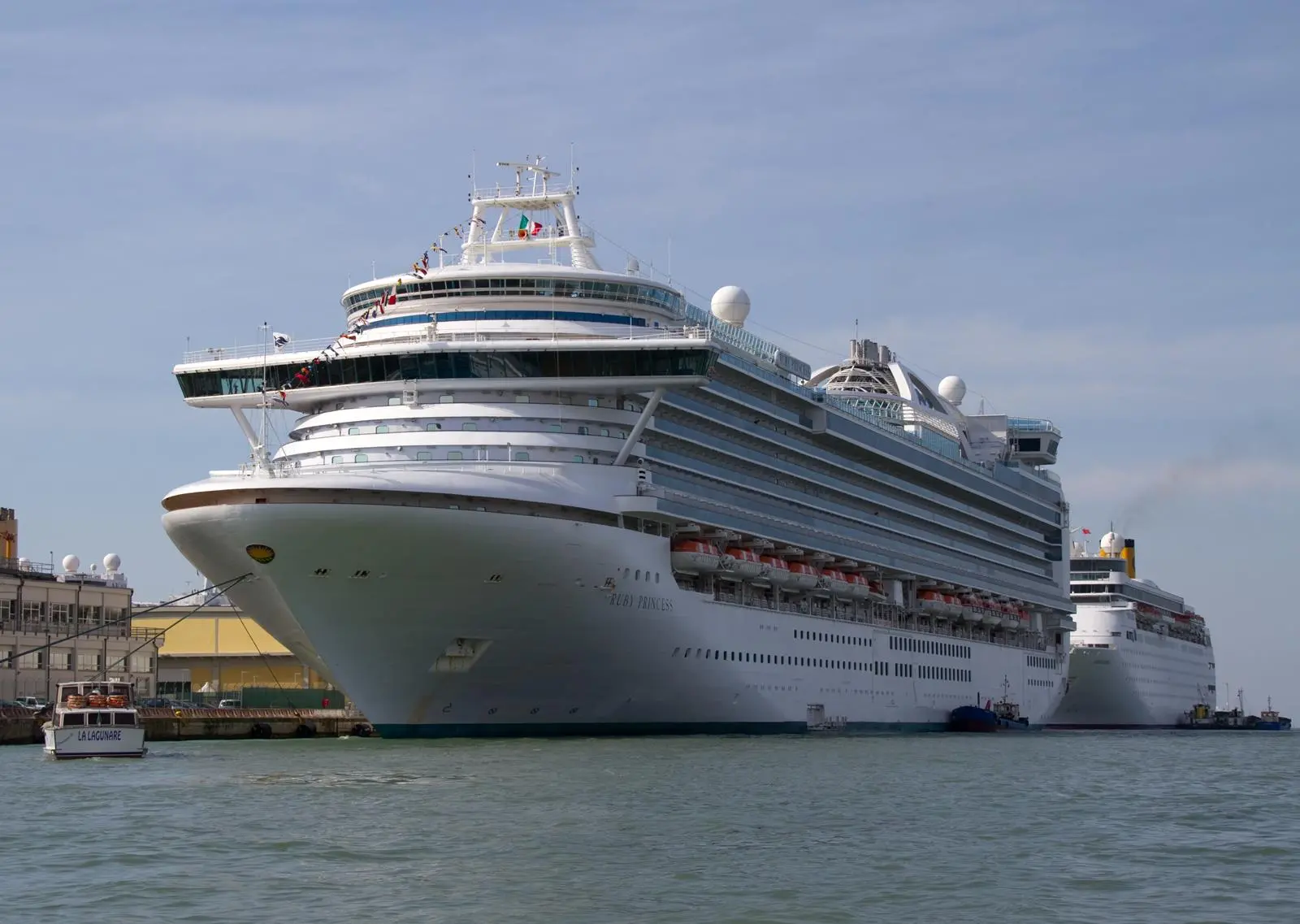
It’s not the discharge limits that are not ambitious enough in themselves, in fact the standards set by Marpol annexe IV have actually been tightened three times over the last decade, and these, along with their USCG counterpart “are actually very good”, says Wei Chen of Wärtsilä, “on paper”.
But he adds, unfortunately “it has no provision for this marine rule to be effectively implemented. Evidence shows that the practice is very poor indeed and the gap between the target and what is actually getting discharged is widening”.
Two surveys, one carried out by Alaskan authorities on cruise ships in the early 2000’s and the other in which the Port of Rotterdam which looked at nearly a hundred merchant ships, showed “shocking results” says Dr Chen: the discharge was similar to untreated domestic sewage.
The problem is that while all ships have had type approved sewage treatment plants (STPs) for decades “the key difference between land and marine regulations is that on land you have very good enforcement, environmental agencies will send people out to take samples, and most importantly there are consequences to exceeding the limits”.
By contrast “we tend to stop at the installation of type approved STPs” in the marine industry, he says. “Of course people have realised the regulations are not being taken that seriously, the operators therefore won’t spend time on anything where there’s no check or pressure to comply. Consequently the shipyards buy the cheapest technology with no attention to its environmental compliance performance, and the vendors’ offering has to match this.” So the standard of output from these STPs, he says, has steadily declined. In fact Washington State’s recent petition to declare the Puget Sound a no-discharge zone runs: “…legal, treated sewage discharges contain fecal bacteria concentrations that are many times higher than the state water quality standards…”
The single, notable exception to all this has been Alaska: following its survey results the state started to take action and even though it’s been going it alone, Dr Chen says its influence has helped move some – not all – technologies forward. One result has been investment in those previously mentioned AWT systems; “Alaska demanded the treatment of both grey water (kitchen, sink and shower waste etc) and black water (sewage) – and because of this, the technology vendors, including Wärtsilä, had to come up with solutions that could treat 10 times the flow within the same footprint,” he says. “This usually means pushing wastewater through a bioreactor membrane… however it’s advanced technology and does entail both higher costs and more man-hours,” says Dr Chen, adding: “If – if – it’s designed and operated correctly.”
But according to Dr Chen, AWT solutions are now suffering the same fate as the earlier STPs, since once away from Alaska there’s no enforcement. Some responses to this state of affairs have been nothing less than cynical: “I’ve already found some AWT systems on the market which have a gap at the top of the partition between the clean and dirty water sides of the tank,” he says explaining it’s been arranged so that if the crew choose not to turn the system on, the untreated section simply fills up and then spills over into the treated side, allowing it to be discharged.
Further (while giving organisations like CLIA their due in demanding much better standards of their members), he says an increasingly common practice is to no longer AWT-treat sewage in its entirety: instead partially processed sewage is released overboard in order to cut operational costs.
More rules
Despite the existing shortcomings, recent years have seen other regulatory moves: 2012 saw the designation of the Baltic as a Special Area under Annex IV, which adds new discharge requirements for passenger ships – although he says in reality those ports are having a hard time providing adequate waste reception facilities that can take even the revised 200 tonnes per hour discharge rate.
The gap has left more for onboard technology to take care of. But has this push in one area helped the overall picture? “Yes… and no,” says Dr Chen. It has meant that Wärtsilä, along with a handful of other technology suppliers, developed nutrient removal plants. To be honest, these plants, while working well on land, are “challenging” to keep in good condition onboard, as he explains it all rests on keeping a careful balance between a variety of microorganisms.
However, there is another option that takes the pressure off the ports and leaves everybody happy, says Dr Chen. “Don’t mix the black and grey water, treat it separately in two AWTs. The resulting treated black water will be around one tenth of the total flow, about 100 tonnes per day for a 5,000 passenger cruise ship, and this amount the Baltic reception facilities can handle.” The other 900 tonnes of grey water is, after treatment, able to meet discharge standards for release into the Baltic, even though grey water pollution is yet to be regulated by IMO.
It’s going to be more expensive in the short term – of course – but he reckons that it will future-proof cruise ships which after all have a 30 or 40 year life, and he thinks that having peace of mind on this is well worth it for the owners “just in case IMO decides to control grey water pollution from ships or MEPC decides to implement Annex IV effectively in its newly introduced Special Areas in a few year’s time…”
While Dr Chen understands shipowners could be justifiably nervous about enforcement, he points out that Alaska has managed to effect a turnaround without being particularly heavy-handed. Rather than detaining ships or demanding payment of fines, the Alaskan authorities simply issue letters of violation outlining when the discharge limits have been exceeded: “It’s enough to make behaviour change,” he says.
And if nothing happens and the present regime continues? Well, there are two issues that follow from this. One is that the industry will continue to be burdened by what he calls “aspirational rules” where since there is no reality check, policies move steadily away from what’s happening onboard and, perhaps worse, there’s a consequent loss of faith by the wider community.
The second is that present, good AWT systems will slowly succumb to industry pressure to cut corners, with polluting discharges being effectively legalised in the sensitive regions the regulations are designed to protect.
By Stevie Knight
Related Articles
 METHANOL
 MONITORING, CONTROL & DIGITALISATION
 MONITORING, CONTROL & DIGITALISATION