



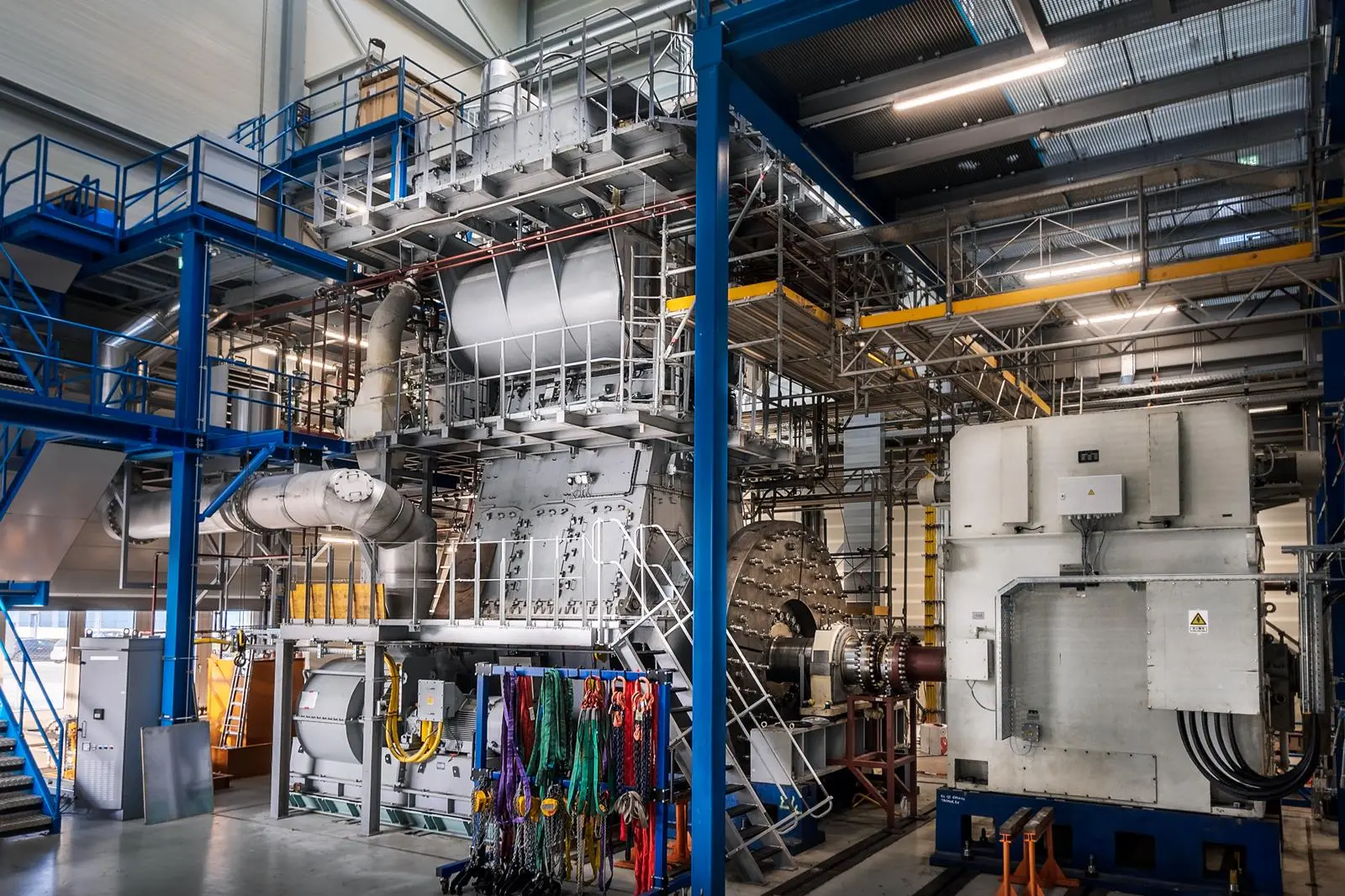
The WinGD X-DF-A dual-fuel engine
Unlike conventional diesel-based marine fuels, ammonia is virtually free of sulphur oxide (SOx) and particulate matter (PM) emissions. This makes it a viable low emission means for achieving the International Maritime Organization’s (IMO) greenhouse gas (GHG) reduction targets. However, to achieve optimal sustainability, it should be produced from renewable energy sources, such as wind or solar power, rather than from natural gas or coal energy sources, to make so-called ‘green’ ammonia. When produced in this way using renewable energy, ammonia can deliver lifecycle GHG emission reductions of up to 90 percent compared to traditional fossil fuels.
WinGD’s ammonia-fuelled engine development commenced in 2019, since which time testing has been ongoing, to the point that the company’s first commercially available ammonia-fuelled engines will be delivered from mid-2025 onwards.
The engine
The X-DF-A ammonia engine platform is based on the diesel-cycle concept that has been well‑established for several decades on WinGD’s diesel-fuelled engines. New innovative technologies have been developed to inject and burn ammonia in the most efficient way, controlling and minimising engine out emissions. Huge efforts have also been undertaken to develop the entire fuel handling and safety concept, which is especially challenging due to the characteristics of ammonia as fuel.
The first WinGD-designed X-DF-A ammonia-fuelled engines, in 52 and 72-bore sizes, will be delivered in mid-2025. The company plans to roll-out 62 and 82-bore versions in 2026, and then short stroke S versions of the engine in 2027. The short stroke engine versions are ideal for vessels with a shallow draught, small propeller diameter, or low main deck height.
In developing the engine, the toxic and corrosive nature of ammonia needed to be carefully considered. Safety concerns were, therefore, high on the agenda. Another major issue to be addressed was to determine how ammonia combusts in 2-stroke relevant conditions. For this a full-scale dedicated Spray Combustion Chamber (SCC) was built to enable combustion parameters to be observed under realistic two-stroke engine conditions. The tests in WinGD’s specifically designed SCC have been the base of all subsequent development, and have been an essential element in delivering the commercially available engine.
Single-cylinder testing, which allowed rapid validation of the ammonia combustion system under engine conditions, was also an important step in the programme. Performance and emission predictions based on this and later rig testing, were subsequently confirmed via full-load engine testing. The full-load testing was carried out at the company’s Engine Research and Innovation Centre in Winterthur, Switzerland. These tests validated the effectiveness of the full-scale engine, turbocharger configuration, and control system when operating with ammonia fuel.
A technically sound solution
Data from the specific combustion tests was used to refine simulations of ammonia combustion in the test engine, helping WinGD to calibrate its own simulation models and derive clear design specifications. It has also shown that it is possible to stay below a 5 percent pilot fuel rate, which has been the target from the beginning.
Ammonia combustion in a diesel-cycle engine comprises a series of combustion stages. Starting with the compression stroke, the air inside the combustion chamber is compressed by the piston, raising its temperature and pressure. This high pressure and high-temperature environment is crucial for igniting the pilot and subsequently the ammonia fuel.
Ammonia is then injected into the engine’s combustion chamber as the primary fuel. The injection system ensures proper atomisation, interaction with the pilot flame, and the mixing of ammonia with air for efficient combustion. For ignition and combustion, a small amount of pilot fuel is injected into the combustion chamber. The pilot fuel spray ignites due to the high temperature and pressure, initiating the combustion process.
Once the pilot fuel ignites, the heat generated ignites the ammonia fuel injected into the combustion chamber, interacting with the pilot fuel spray. The ammonia-air mixture combusts, releasing energy and generating work on the piston. After the piston has moved downwards during the power stroke, the combustion gases expand through the opening exhaust valve and are subsequently scavenged by new charge air from the intake ports to the exhaust valve. The cycle then repeats.
Ammonia emissions from the WinGD X-DF-A ammonia-fuelled engine are below 10ppm, while nitrous oxide (N2O) emissions are below 3ppm. Nitrogen oxide (NOx) emissions for ammonia operation are well below those generated during diesel use. Crucially, the low emissions are achieved without the use of exhaust gas after-treatment, allowing WinGD to confirm that no ammonia slip catalyst (ASC) is needed to operate the engine with ammonia fuel.
Sebastian Hensel, WinGD’s vice president R&D, points out that “The WinGD X-DF-A is an extremely efficient and technically sound lean-burn Otto cycle engine. When operating with ammonia fuel, it will typically have extremely low NOx emissions, and is therefore fully compliant with the updated IMO NOx Technical Code (NTC 2008), which represents a means to certify the compliance of marine engines with NOx emission levels. What is more, there is no NOx trade-off, meaning the engine cannot be tuned for lower consumption at the cost of increased NOx emissions.”
An emphasis on safety measures
Appropriate safety measures have been implemented throughout the ammonia supply system. These include leak detection systems, emergency shutdown systems, double wall barriers, ventilation, and fire suppression systems to ensure the safety of the crew, the vessel, and the environment. Monitoring and control systems are employed to ensure the proper functioning of the ammonia fuel supply system. Sensors are used to monitor parameters such as pressure, temperature, flow rate, and fuel quality.
Because of the toxicity of ammonia, crew members need to be fully trained on safe handling procedures, the use of personal protective equipment, and emergency response protocols. WinGD has addressed the issue of safety, both in the design and development of the X-DF-A engine and in its training methodology. The company also takes an open and transparent approach to making it clear to owners and operators that modifications and additional engineering work are needed for ships to be capable of operating with ammonia-fuelled engines.
A risk assessment, such as HAZID, is also mandatory for ammonia engines. There are several design precautions and countermeasures recommended in class rules and based on IGC Code provisions.
“WinGD holds training courses to provide detailed information on all aspects of working with ammonia fuel, with a strong emphasis on safety. Furthermore, the company is already actively assisting operators and maritime academies in preparing training syllabuses for the use of ammonia as a marine fuel,” explains Sebastian Hensel.
Responding to market demand
Alternative fuels are widely seen as being key to decarbonising the marine sector, with ammonia as one of the leading future-fuel candidates. The market demand for ammonia-fuelled engines is, therefore, developing rather quickly, as is the expanding fleet of ammonia carrier vessels.
“Unfortunately, the marine market is currently faced with geopolitical uncertainties and trade disputes which may affect the appetite for newbuild vessels. For example, we can’t yet anticipate the effects of increased tariffs and port fees, and the impact of the potential trade war between the USA and China. Nevertheless, we feel very confident that the demand for ammonia-fuelled 2-stroke engines will continue to grow regardless of the current situation,” says Sebastian Hensel.
WinGD has secured some 30 orders to date for ammonia-fuelled X-DF-A engines, with sizes ranging from 52- to 72-bore, for a range of vessels including bulk carriers, gas carriers, container vessels and oil tankers. The first engines will be delivered from mid-2025 for ammonia carriers owned by Exmar LPG, and bulk carriers operated by CMB.Tech. The ships are to be built in Korea and China. These ammonia engines will be the first low-speed ammonia engines to be delivered for commercial ships, marking the beginning of a new era for the shipping industry.
A number of orders, scheduled for delivery in 2026, have also been booked. These include the engines for seven 25,000m3 and 41,000m3 LPG/ammonia carriers ordered by Tianjin Southwest Shipping. The vessels will deploy 6-cylinder versions of the 52-bore X‑DF‑A engines and are scheduled to enter service from Q3 2026. Also booked is an order for X-DF-A engines to be installed to two Aframax tankers being built for Singapore based ship owner and operator AET. These will be the first such vessels to operate with ammonia fuel-capable DF engines. The order builds on previous cooperation between WinGD and AET to enable clean-energy ship operations.
As Sebastian Hensel explains: “Our well-structured development approach, along with a strong focus on innovation, has paid off. After intensive efforts to understand the principles of ammonia injection and combustion, we are ready and well prepared to respond to market demand with a high quality platform of dual-fuel ammonia-ready engines.”
Related Articles
 AMMONIA
 AMMONIA
 AMMONIA