



Tidal optimisation offers bunker savings
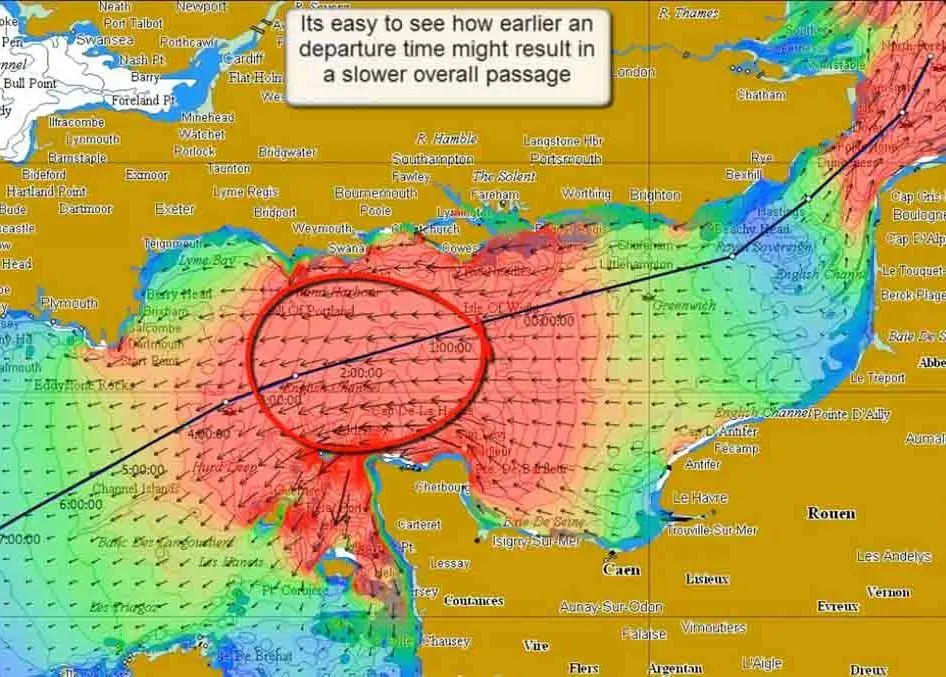
The company says that in simulations developed for transits through the English Channel, a time difference of 12.8% was shown between ‘best case’ and ‘worst case’ passage times when using optimal tide and current (based on an 8,000TEU container ship steaming at 21knots). This, says Tidetech, is the equivalent of about $9,400 of bunker costs saved on one journey.
Tidetech managing director Penny Haire said tidal optimisation was a major development for efficiency and sustainability in shipping: “It’s clear that no stone is being left unturned in the drive to improve efficiency of shipping… the influence of tide and current is an obvious challenge to address. The reason it’s not been addressed before is that the information just hasn’t been available… now it is and can make a significant difference if applied correctly.”
Tidetech adds that speed optimisation using accurate tidal stream data differs from weather and route optimisation in that it is about choosing the best time to transit a passage where a choice of route is limited or restricted (channel transits, controlled shipping lanes, ferry routes, etc). With route restrictions and the presence of tides, efficiency is found in timing the journey relative to current/tide – leaving/arriving at the right time to take advantage of best current and optimising speed to maximise the positive effects of the current.
Using the English Channel as an example, timing a vessel’s arrival at the entrance to the channel correctly means the ship can make the most efficient passage through the Channel by going with the optimal flow of water. Tidetech’s English Channel simulation shows the best case transit at slow steaming speeds of 19knots is 32 minutes faster than the worst case transit at 21knots. Based on an 8,000TEU container vessel, this is a difference of about 35.8 tons of fuel (or approximately $25,000).
Related Articles
 ALTERNATIVE FUELS & LUBRICANTS
 GENERAL NEWS
 GENERAL NEWS