



Ulstein hands over another seismic ship
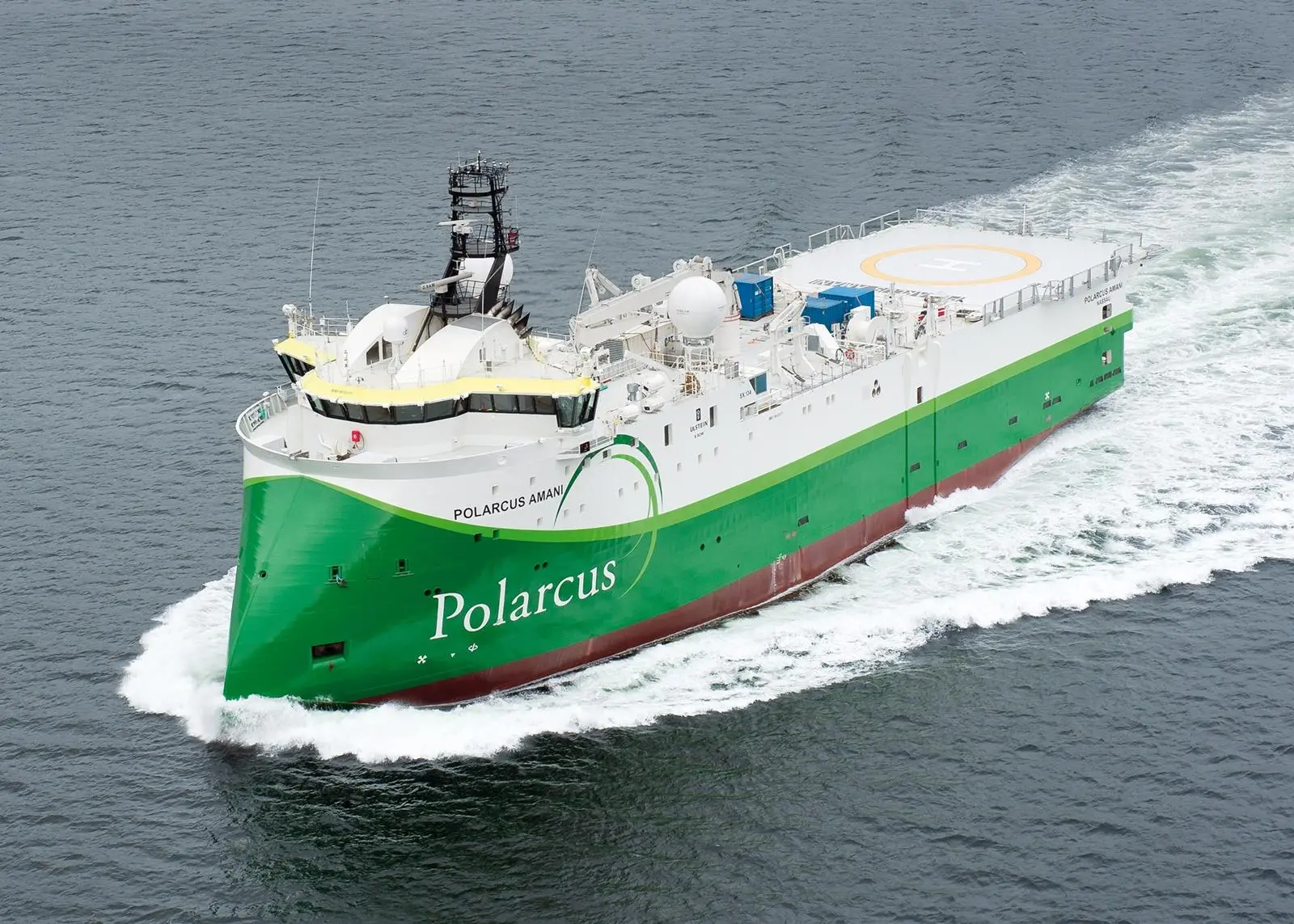
This is vessel number seven in the Polarcus fleet of X-bow seismic vessels, though the first to be built at Ulstein’s own yard in Norway. A sister vessel is due for delivery in about three months’ time. Ulstein also delivered switchboards and the communication and information system Ulstein Com.
Polarcus Amani is designed and built for operations in arctic waters. She carries the ICE-1A* and Winterized Basic notations from DNV, and can operate in first-year ice of up to 1m thickness without the assistance of icebreakers. The entire vessel is ice-reinforced with thicker ribs and skin plates. She has de-icing and ice-preventing systems at critical tanks and pipelines, and propellers, gears and thrusters are dimensioned for withstanding operations in ice. Escape corridors and rescue equipment are protected against icing during arctic operations. Although 3D seismic acquisition will only take place in ice-free, or possibly bergy water conditions, the arctic qualities of the vessel enables it to move through ice on her way to and from the survey area, or remain in icy areas waiting for ice to clear, increasing the operational window of the vessel.
Environmental considerations led to the choice of a diesel-electric propulsion system, a double hull, also bilge water treatment and ballast water cleaning systems. Polarcus Amani is designed to operate on low-sulphur MGO and is fitted with exhaust catalysts. The ship carries the NNV ‘Clean Design’ notation.
The X-bow design is claimed to offer superior seakeeping performance in bad weather and add to crew comfort, and the 92m x 21m ship is built according to the IMO SPS (special purpose ships) safety code. She has a towing pull of 82 tons in seismic operations and a maximum speed of 17 knots.
Related Articles
 ALTERNATIVE FUELS & LUBRICANTS
 GENERAL NEWS
 GENERAL NEWS