



Ulstein introduces X-BOW for RoPax designs
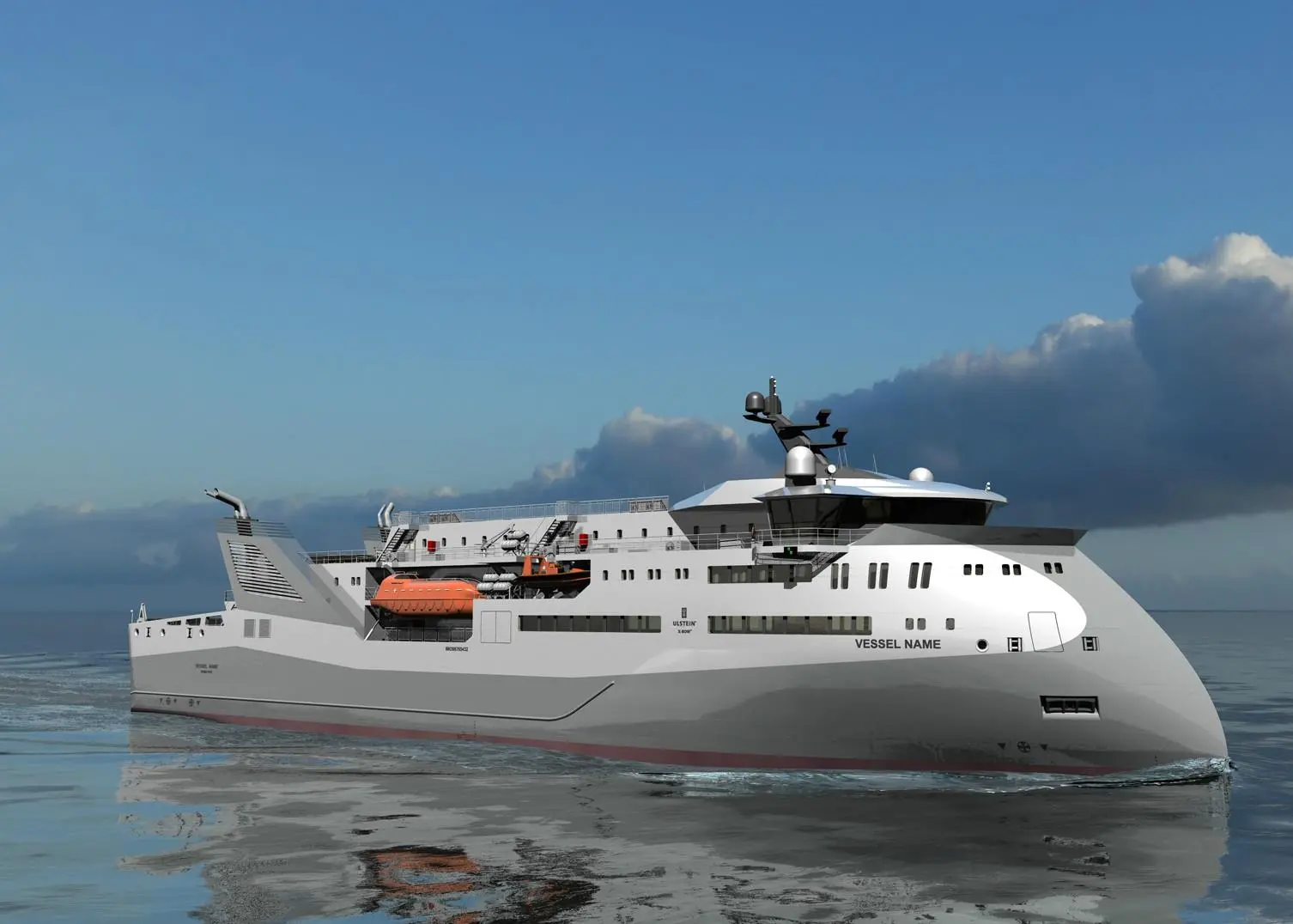
Many RoPax vessels operate in harsh areas, for which the X-BOW was originally designed. An X-BOW vessel at the same speed and weather conditions will use less power than a conventional bow vessel. The X-BOW hull line is a proven solution used in a number of different market segments, and leads to improved seakeeping, and reduced speed loss and fuel consumption, hence a reduced environmental footprint.
The ‘compact’ concept introduces higher flexibility with respect to vehicle logistics on board the vessels. The propulsion system of the vessel can be designed according to the vessel’s operational profile and set schedule. A smaller propulsion plant will contribute to lower CAPEX, reduced maintenance costs and reduced energy consumption, making the operation of the vessel more efficient.
“RoPax is a segment in growth, where we will see fleet renewals in the years to come. We have for some time worked to integrate Ulstein’s design mindset into a range of RoPax vessels. These vessels are all equipped with the X-BOW hull feature, a natural choice when operating in climatically rough conditions,” says COO Design & Solutions, Tore Ulstein.
RoPax designs for the volume market
“Our RoPax vessel designs are optimized according to market needs and will be constructed in series for the volume market,” states Tore Ulstein.
One potential country for the ship construction is China. Design of volume series has been carried out successfully in Ulstein several times, last seen with a series of up to ten expedition cruise vessels of which all will be built in China.
“We have had offices and site teams in Shanghai and Ningbo for many years, and our people have long experience in system integration and site follow-up,” says Tore Ulstein. “More than half of the more than 100 Ulstein designs which have been built outside Norway, have been constructed in China with Ulstein site teams present. We have good relations to our Chinese partner yards and are currently in dialogue with several yards on the construction of these RoPax vessels.”
Related Articles
 ALTERNATIVE FUELS & LUBRICANTS
 GENERAL NEWS
 GENERAL NEWS