



Ultra long stroke engine assists higher ship efficiency
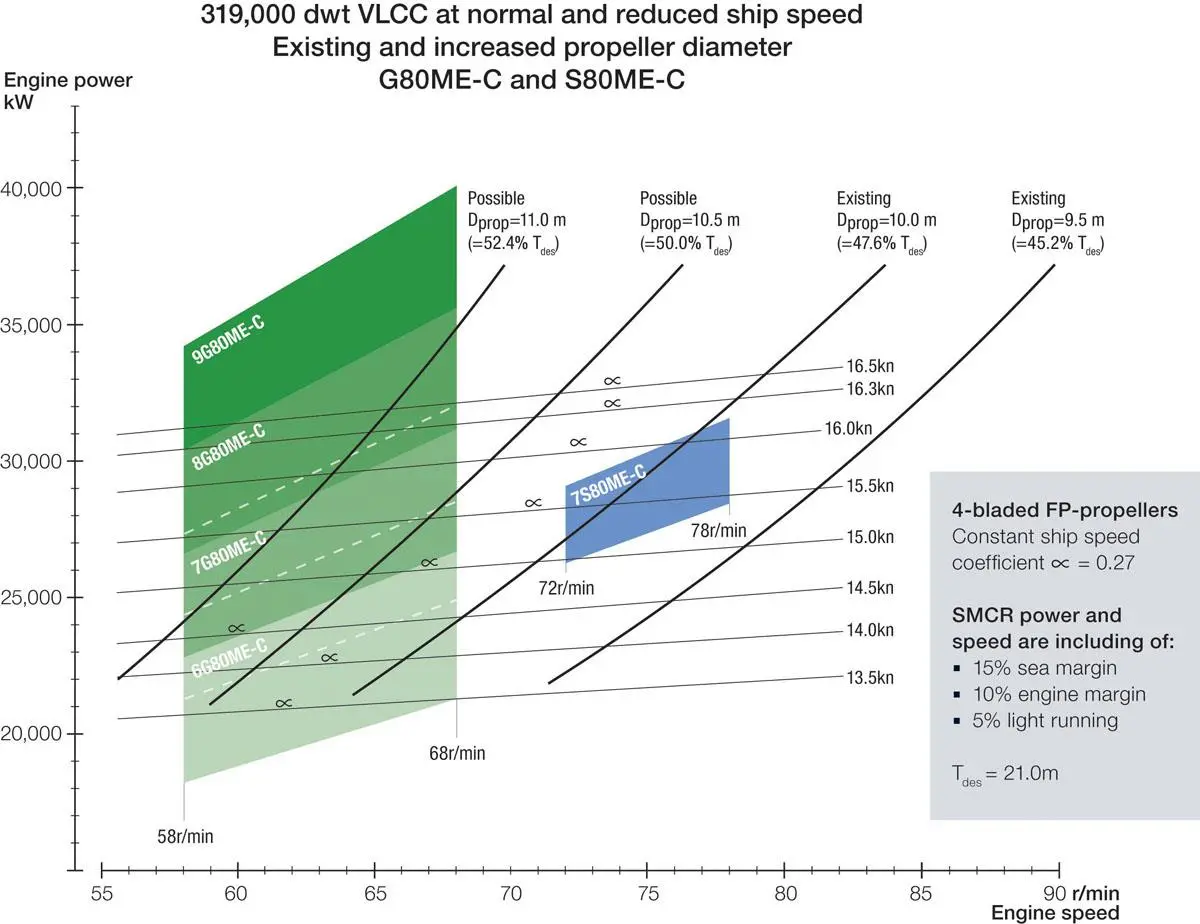
The engine design, designated the G-type, follows the principles of the large-bore Mk-9 engine series that MAN introduced in 2006. The G-type is designed with a longer stroke to reduce engine speed, thereby paving the way for ship designs with unprecedented high-efficiency. The first design produced has an 80cm cylinder bore, and will be known as the G80ME-C.
According to Ole Grøne, senior vice president low-speed sales and promotions: “MAN Diesel & Turbo always follows developments in the shipping market closely and we have kept a close eye on the trend for fuel optimisation in recent years. As such, we have experienced great interest in the G-type engine during extensive consultation with industry partners and are currently working on a variety of projects with shipyards and major shipping lines. As a result, we have reached the conclusion that the introduction of the G-type engine programme is both viable and timely.”
Grøne added: “The G-type is an ultra-long-stroke engine and represents the biggest development within our engine portfolio since the successful introduction of the ME electronic engine within the last decade.”
G-type rationale
MAN says that tankers and bulk carriers have traditionally used MAN B&W S-type engines with their long stroke and low engine speed as prime-movers, while larger container vessels have tended to use the shorter-stroke K-type with its higher engine speed.
Larger container vessels, in recent years, have been specified with S80ME-C9 and S90ME-C8 engines because of the opportunity they offer to employ larger propeller diameters. Following efficiency optimisation trends in the market, MAN Diesel & Turbo has also evaluated the benefits of large propellers, and found that projected efficiency benefits can arise from the use of even larger propellers for tankers and bulk carriers, so therefore lower engine speeds can be specified.
The new generation of efficiently-designed ships are expected to be compatible with propellers with larger diameters than current designs, which will facilitate higher efficiencies following adaptation of the aft-hull design to accommodate the increase in propeller size. The company estimates that such new designs offer potential fuel-consumption savings of some 4%-7%, and a similar reduction in CO2 emissions. Simultaneously, the engine itself can achieve a higher thermal efficiency using the latest engine process parameters and design features. Typically, an overall saving of 4.6% is expected – 3.6% as a result of the higher propulsion efficiency and 1% engine savings.
Design progress
The company reports that design work for the first G-type has been in progress for several months, and subject to order confirmation being received before the end of 2010, is looking to have final drawings for the structure, moving parts and fuel equipment ready for delivery in mid-2011. The delivery of piping and gallery drawings is scheduled to follow in the second half of 2011.
MAN Diesel & Turbo confirms that other G-type engines of different cylinder diameter can be introduced according to market demands.
Table –comparison of S-type and G-type engines
Engine data S80ME-C9 G80ME-C9
Power kW/cyl 4,510 4,450
Engine speed rpm 78 68
Stroke mm 3,450 3,720
MEP bar 20 21
Mean piston speed m/s 8.97 8.43
Length mm (7 cylinder) 12,034 12,500
Dry mass ton (7 cylinder) 910 960
SFOC, L1 (g/kWh) 168 167
Related Articles
 PROPULSION
 GENERAL NEWS
 GENERAL NEWS