



Unwrapping the FuTube package
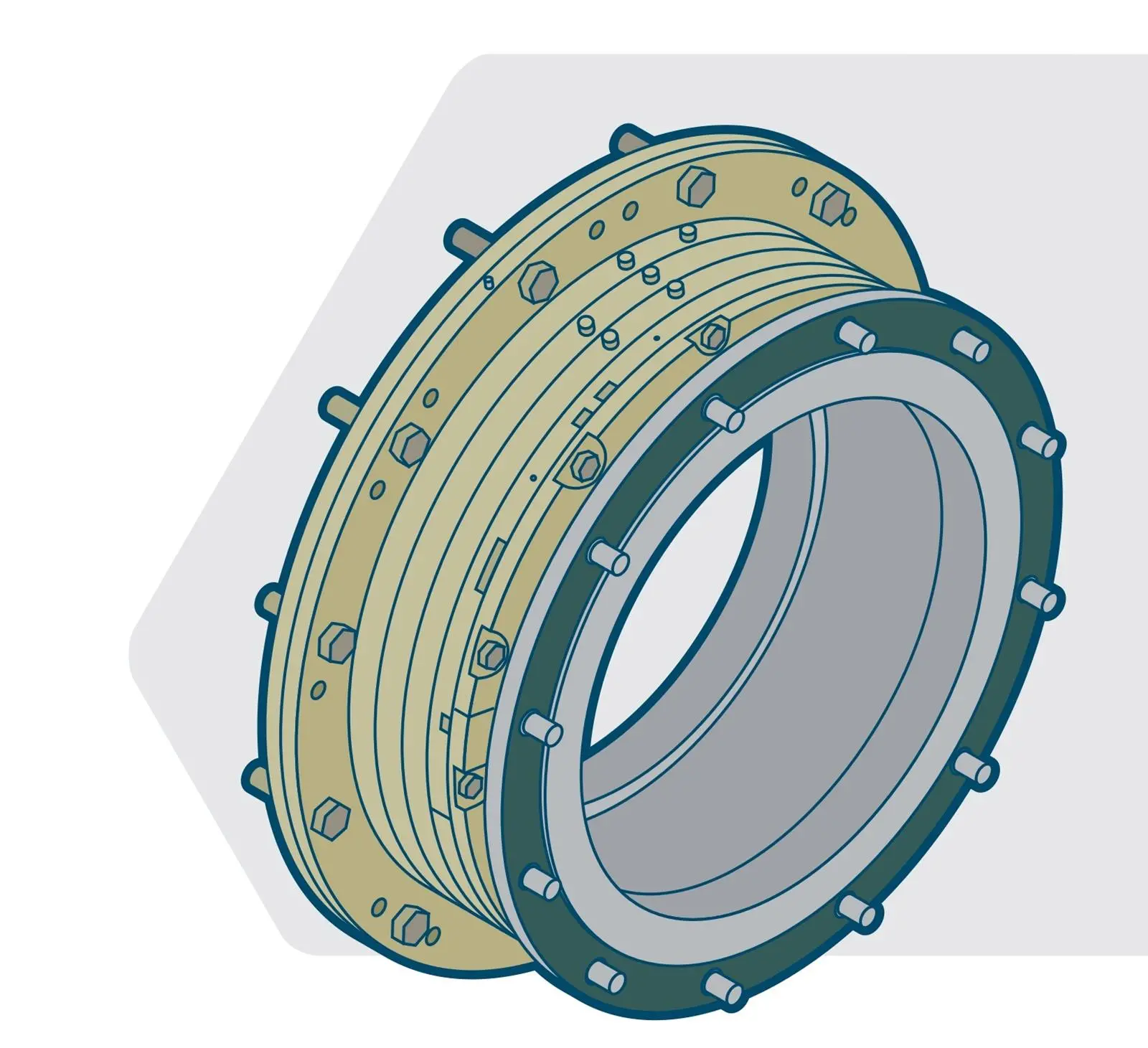
Among the innovations he highlighted is an enhanced version of the company’s long-established Airguard seal, which it claims now offers a 10-year service interval. This saves operational costs, said SLS General Manager Thomas Pauly, not only because the seal does not need servicing at every five-year drydock, but checks can be carried out using a cherry-picker rather than scaffolding. This benefit alone will save 1.5 days from a typical 10-day drydock visit, he said.
This life extension has been achieved by using a new sealing material that is effectively a combination of the two products previously used; one for sealing against water and one for oil. It was developed as a result of experiments in 2020-21 specifically to find a way extend seal life and reduce repair and maintenance costs, rather than the shipyard-driven focus on the capital costs.
Forward of this seal is an EvoTube, which was launched in December 2023 and described in The Motorship that month. Its name reflects the notion that it marks an evolution from normal sterntubes, thanks to its shorter length, which contains the shaft line’s aft bearing.
This is a simpler system than with a conventional longer sterntube, SLS Technical Manager, Engineering, Jose Antonio Vazquez, said. In addition, the EvoTube is about 8m shorter than a conventional sterntube, which provides an opportunity to have a shorter engineroom and create more cargo space, he noted.
Inside the EvoTube is an IntelliSafe bearing, which has been designed to address a startling statistic: in conventional sterntube arrangements 90% of shaft line breakdowns are caused by friction wear in the aft bearing. SLS sees the practical reality of this, since its workshop repairs about 200 aft bearings every year, each of which represents a ship being taken by tug to drydock for the bearing to be removed and, quite possibly, an oil spill from the sterntube. “This is very expensive for owners and operators,” Mr Vazquez said.
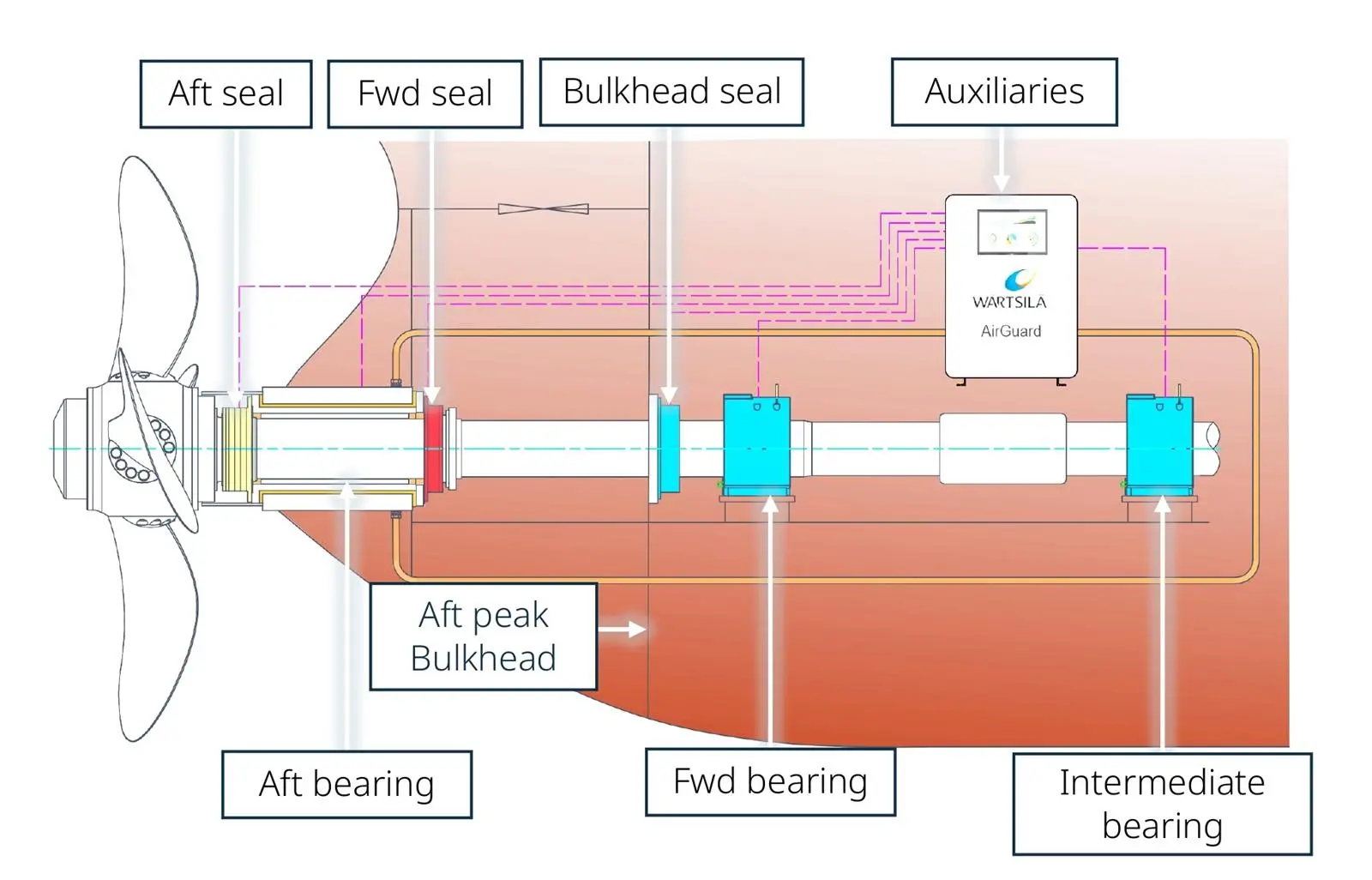
Ship crews are under a lot of pressure during a voyage and cannot be expected to be experts about shaft bearings, he said, so “they should not have to care about is going on in the sterntube,” with the bearing system adapt to operational demands, he believes. This ambition led to the design ideas that lie behind the IntelliSafe bearing (see box).
Finally, a continuous shaft monitoring system monitors the entire shaft system. It is based on portable equipment that Wärtsilä has used for more than 20 years as a troubleshooting aid, but now it has been incorporated into a permanent control unit as part of the FuTube concept.
Jens Hyrup, Manager of Alignment Services at SLS, said that data from all the various sensors is stored simultaneously, so that if an event occurs, its impact would be seen in each sensor at the same time. Both raw and processed date will be retained, in separate databases. It is a complex system that generates a huge amount of data, he said, which can be exported and sent ashore for further analysis in case, for example, a class society asked to see it.
It uses proximity sensors to monitor the shafting – Mr Hyrup prefers these over accelerometers since those devices would be affected by background noise – and one of the critical parameters measured is bearing wear-down, which enables a prediction of a bearing’s lifetime; something that is especially relevant in water-lubricated systems.
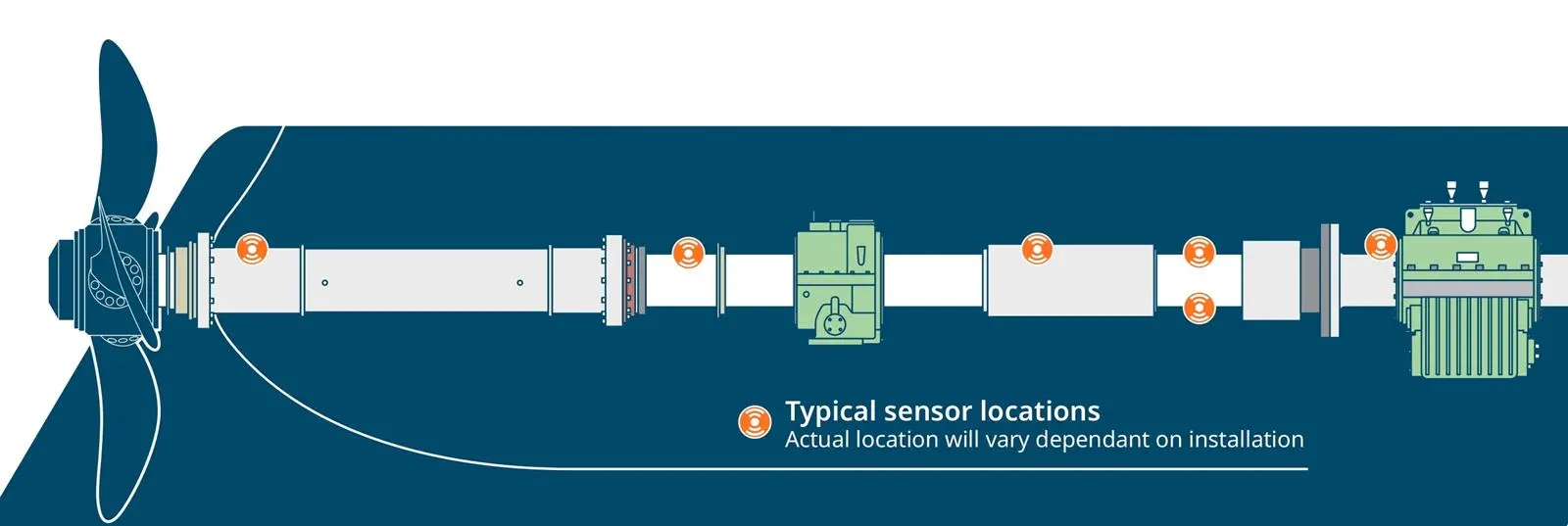
Sensors are positioned in pairs – one making vertical measurements and the other horizontal – including one pair as close as possible to the propeller. That is straightforward to arrange in a newbuilding but not as easy in a retrofit installation, he said. Other locations include the forward seal and regions of the shaft that have the highest mass, since that is where the highest amplitudes would be seen, for example in the event of propeller damage.
Although the IntelliSafe bearing also relies on sensors, there is no direct connection between that and the shaft monitoring system, but the shaft monitoring system will notice any performance changes as a result of the IntelliSafe’s lubrication processes. There might also be cybersecurity implications if the two systems were connected, he said, “so we tried to keep them apart.”
Related Articles
 PROPULSION
 GENERAL NEWS
 GENERAL NEWS