



Van der Velden reveals efficiency innovations
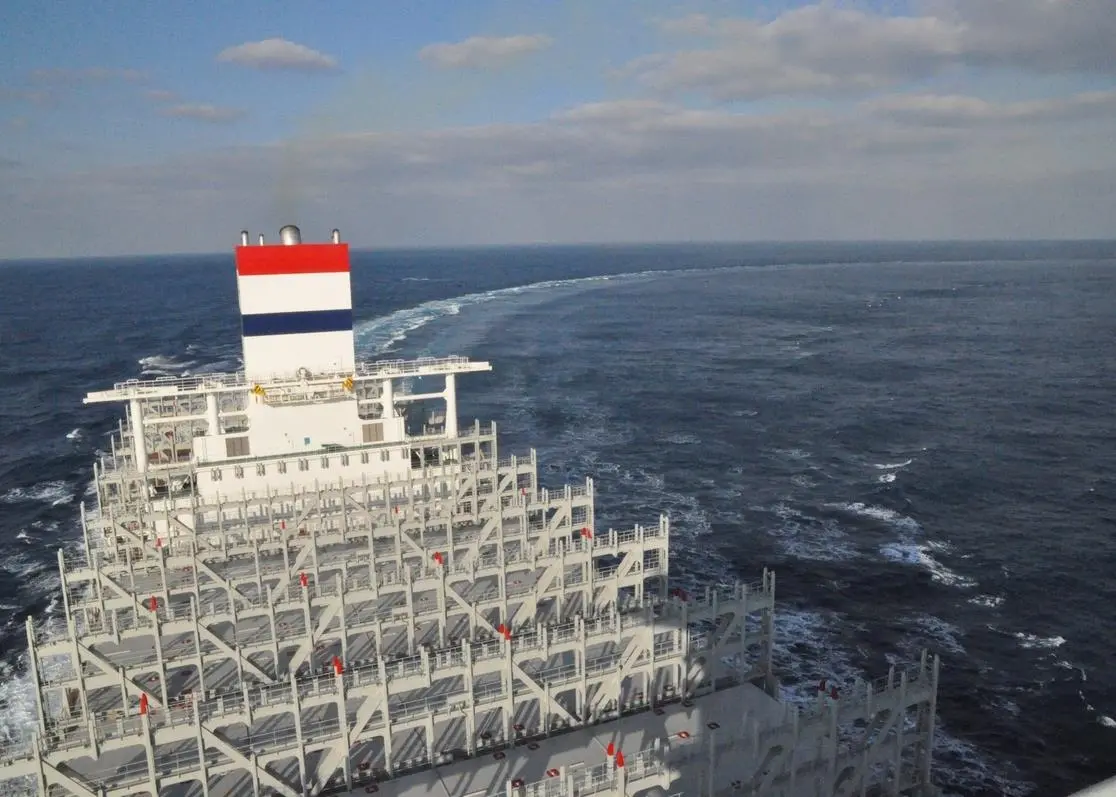
The company is working with German propeller manufacturer Mecklenburger Metallguss (MMG) to build a 97m2 Energy Saving Package (ESPAC) system for three 18
,
000 teu vessels under construction for CMA CGM at Shanghai Waigaoqiao Shipyard in China. The package combines a fixed-pitch propeller with an asymmetric leading edge rudder featuring a propulsion bulb
and
adapted hubcaps.
“These are the largest rudders we have ever built
and
,
by putting them together with 10-metre MMG propellers
,
the whole package will minimise fuel consumption
,
cavitation
,
vibration
and
maintenance
,
” said Edwin van Buren
,
director R&D at Van der Velden.
Another new system provides direct feedback to helmsmen about forces acting on their rudders. The Barke Optimised Steering System (BOSS) displays force measures on an LCD panel on the bridge
,
and
can transfer the data to the ship’s navigational system.
“It is important to know how much stress is placed on the rudder
,
” said van Buren. “The greater the resistance
,
the more fuel is consumed. Fewer steering corrections reduces overshoots
and
shortens the distance travelled. This quickly delivers significant fuel savings.”
The company can install measurement sensors on rudder stocks with a view to installing the whole system at a later date. “This pre-installation avoids costly dry-docking in the future
,
” noted van Buren.
BOSS has been installed on CMA CGM’s ultra large container vessels
Ural
and
Volga
,
and
Van der Velden has carried out commissioning
and
sea trials in partnership with Damen’s R&D team. During IMO manoeuvring
and
endurance tests
,
Van de Velden recorded BOSS data
and
synchronised with the vessel’s dynamics.
A third system is designed primarily for coastal
and
inl
and
ships. The retractable FLEX tunnel system is said to improve manoeuvrability
,
speed
and
fuel efficiency by around 10%. It was developed in collaboration with the German Development Centre for Ship Technology
and
Transport Systems
,
and
combined with an optimised hull design is said to ensure optimal water flow at all depths
and
load conditions.
“We developed a retractable tunnel because for about 85% of the time
,
loaded
inl
and
barges sail in deeper water
,
” explained van Buren. “In these situations
,
tunnels are unnecessary. In fact
,
they only decrease propulsion capacity
and
increase fuel consumption.”
Related Articles
 PROPULSION
 GENERAL NEWS
 GENERAL NEWS