



Wärtsilä research to eliminate problem of ‘singing’ propellers
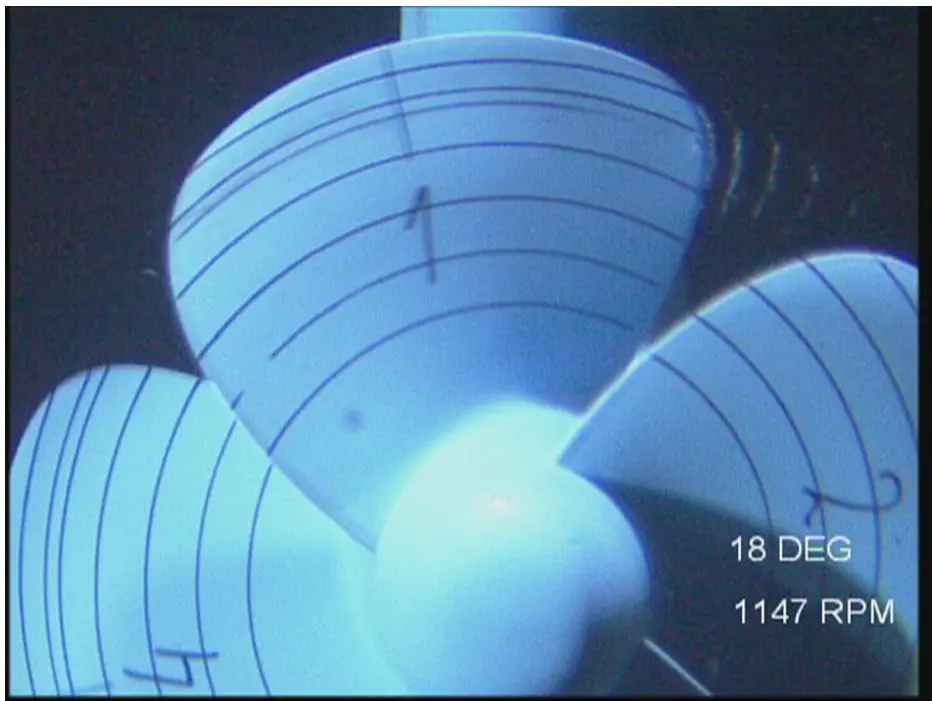
This was identified through a joint research project carried out with City University London.
Although rare, the problem occurs with a strong tonal noise from the propeller, this causes a negative effect to onboard comfort levels.
Arto Lehtinen, vice president of propulsion, Wärtsilä Marine Solutions, said: “Our research has shown that the ‘singing’ phenomenon can be controlled by selecting the proper main parameters of the propeller blades, by careful attention to the flexural modes of the propeller blades, and by careful attention to the specific geometry at the trailing edge of the blades.”
He added: “It has shown that all these aspects are interacting and can prevent the ‘singing’ of propellers”
Finite Element Method (FEM) analysis tools have been used in the identifying of the risk indicators related to main propeller design parameters.
It adjusted the parameters to see the response and if risks can be minimised.
The results indicate that a proper design of the trailing edge details reduces the shedding and, therefore, also the excitation forces. Wärtsilä has used CFD in its hydrodynamic design processes for some 20 years.
The research programme reached its conclusions in December 2015.
Wärtsilä has existing propeller design features but the avoidance of ‘singing’ has now been added as a standard design feature.
The findings from the research have been incorporated into the company’s design concept (OPTI-Design) which was first introduced in 2014.
The problem of ‘singing’ propellers has long been recognised in the marine industry. There was a general perception has been that the frequency of the propeller blades’ vibration mode coincides with the frequency of the hydrodynamic excitation forces at the trailing edge of the blades.
University City London and Wärtsilä’s research collaboration was able to prove there is more complexity and sensitiveness to this hypothesis.
Related Articles
 PROPULSION
 GENERAL NEWS
 GENERAL NEWS