



Wärtsilä stakes claim in ‘smart marine ecosystem’
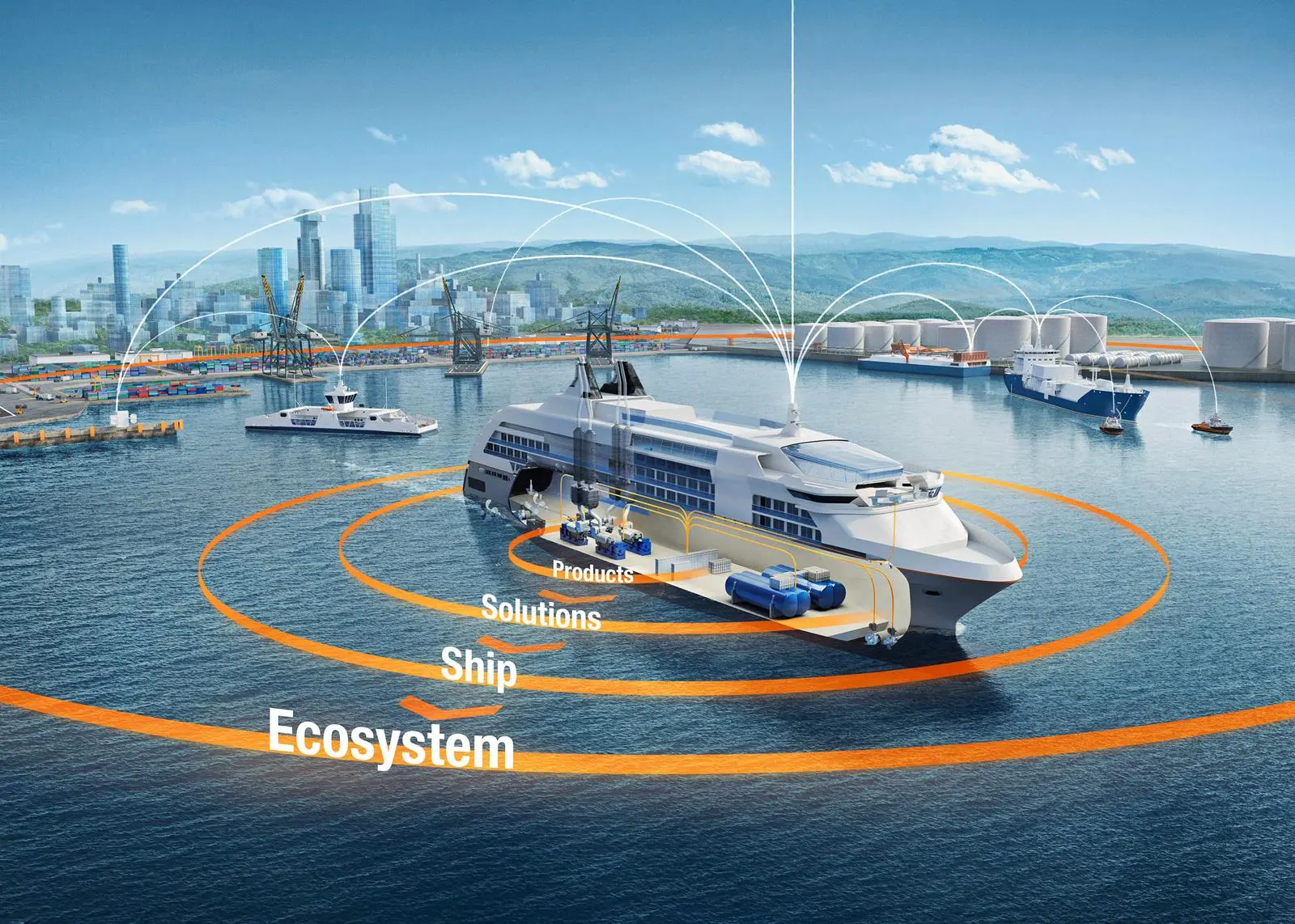
In the war on waste, the latest weapons are digital. And the companies battling for control of this emerging digital market – from segments as diverse as propulsion, navigation systems, satellite communications and classification – each hold their own view on how the transformation will reshape shipping. Last week Finnish technology group Wärtsilä gathered journalists in London to present it ideas of how that future may look.
Wärtsilä outlined a new strategy with digital not just included, but at the core. Specifically, the company sees its digital offering evolving to target three key areas of waste: overcapacity in the market; fuel consumption; and waiting time at terminals. Targeting these inefficiencies will be developments in four main directions. Shared capacity to improve fill rates and reduce unit costs; big data analytics to optimise operations and energy management; intelligent vessels with automated and optimised processes; and smart ports delivering smoother and faster port operations.
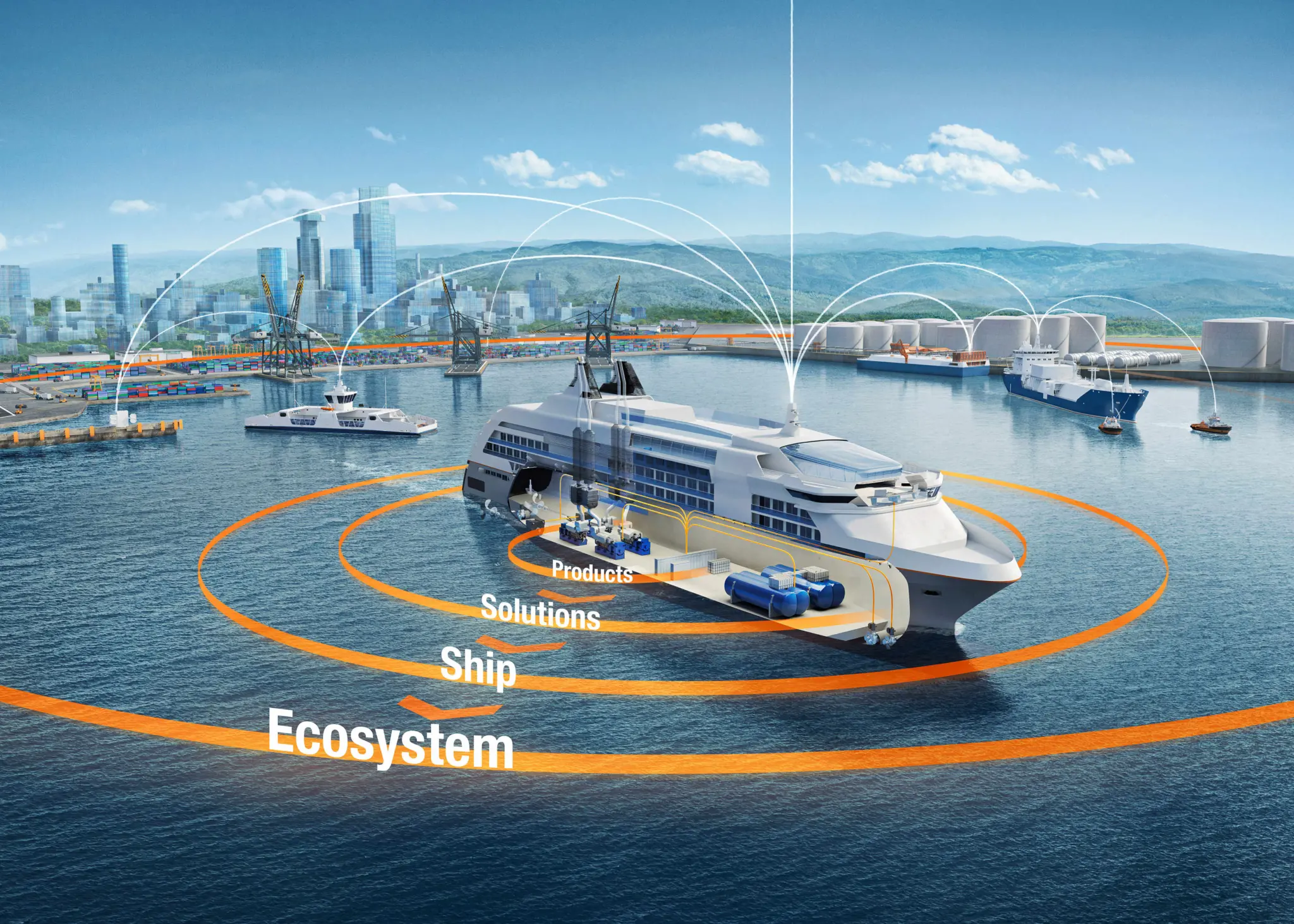
The key to the future, according to Wärtsilä, lies in connecting these technologies and in working with partners to unlock further efficiencies – what the company calls a ‘smart ecosystem’ approach.
Wärtsilä has already staked its claim in the digital business. The company is a big supplier of ship equipment across multiple segments, giving it the scale to make an impact with a digital offering. It appointed chief digital officer Marco Ryan to lead the way in June and recently opened the first in a planned global network of digital acceleration centres, where it will work with other stakeholders to develop technologies.
“Wärtsilä is ideally positioned, together with our customers and partners, to lead the transformation into a new era of shipping,” says Roger Holm, president, Wärtsilä Marine Solutions.
DIGITAL BUILDING BLOCKS
Mauro Sacchi, director of strategy and business development, delved deeper into the building blocks of the Wärtsilä’s emerging approach to digitalisation. The launch of its hybrid engine and energy storage system Wärtsilä HY in June this year was an important first step. “Hybrid propulsion will play a big role in the future, and it would not be possible without the smart energy management system between the engine and the battery,” says Sacchi.
Other key steps include the HY tug, a vessel design incorporating the hybrid propulsion system that Wärtsilä is toting to ports and harbours. Sacchi says this exemplifies the company’s ability to make business more efficient for multiple stakeholders across the maritime industry. The first digital acceleration centre in Helsinki was another important project, and the centre soon to open in Singapore will extend this cooperative programme. This year the company has also conducted its first remote control tests – controlling Gulfmark Offshore platform supply vessel ‘Highland Chieftain’’ dynamic positioning and manoeuvring from 5,000 miles away – and acquired vessel positioning technologist Guidance Marine.
Further milestones in the development of Wärtsilä’s ‘smart ecosystem’ thinking include its landmark 72-ship performance-based contract with Carnival Corporation. This is only made possible by smart monitoring and control systems and was developed through collaboration with Carnival. According to Holm it is something that the industry will see more of as the concept of ‘vessel as a service’ takes hold.
‘Vessel as a service’ is the shipping version of ‘transport as a service’, whereby automation and electrification are expected to alter how people own cars. Instead of the vehicles being owned by private individuals – and thus the vast number of cars being unused for most of the time – automation and the application of big data analytics to vehicle utilisation will mean that vehicles can leased by users only when needed. The model is like that of traditional car hire companies but far more effective, seamless and widely available.
VESSEL AS A SERVICE
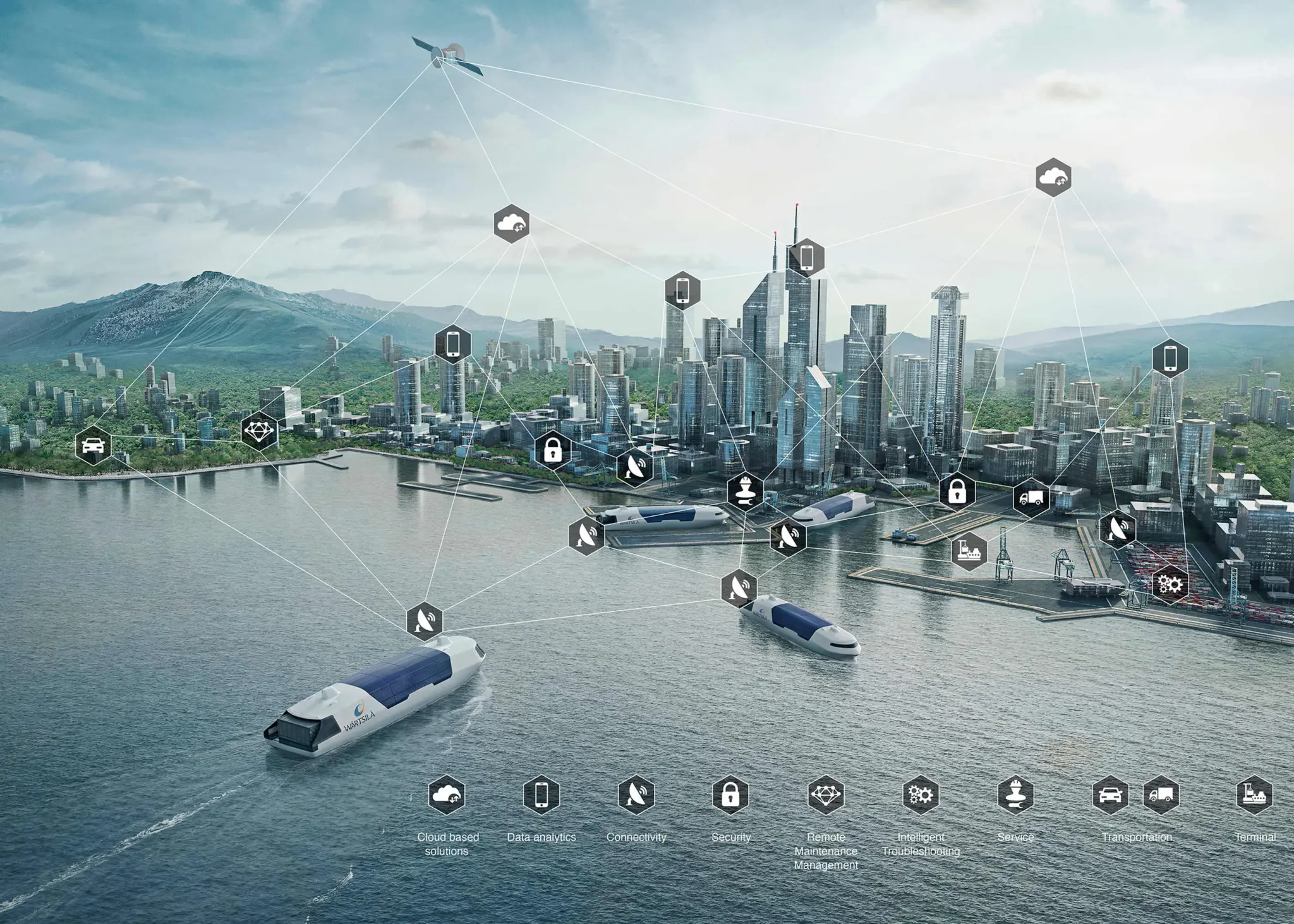
Holm acknowledges that this vision may be some way into the future for shipping. The first steps, he believes, will be to offer various systems around the vessel as a service. Rather than ship owners buying systems, they could rent them from Wärtsilä, which could charge the ship owner based on use and availability, for example.
This resembles the ‘power by the hour’ model that is standard in the aviation market, whereby manufacturers effectively lease their engines to airlines. But Holm is quick to point out that such a scheme is unlikely for marine engines. If airlines don’t like an engine or the deal they are getting, they can unattach the engine and pick a new one – an option that is unavailable for ship owners given how integrated engines are into hulls. Rather, the ‘vessel as a service’ model is likely to apply to more easily changeable systems, such as navigation or communications.
The company’s investments in monitoring, remote diagnostics and control will help make individual vessels more efficient. When that data is shared across an operator’s fleet, with alliance partners and with relevant ports it will enable effective fleet utilisation, capacity sharing and smooth, just-in-time port operations. Then the idea of ‘vessels as a service’ begins to emerge as a reality.
Whether the shipping market will ever entirely become the harmonious, cooperative and smart ecosystem that Wärtsilä envisions is debatable. It seems hard to imagine ultra-competitive ship owners wanting to share data or capacity outside of tight-knit alliances, while ports will always have to manage the unexpected. Holm himself acknowledges that the company has yet to consider the thorny issue of how it will work with competitors. This needs to be resolved or the companies leading digitalisation could steer shipping into a version of the Apple-Samsung problem, with competing and incompatible software and hardware making life tricky for owners.
Wärtsilä’s ‘smart marine ecosystem’ may be many years off, or it may not emerge in the form envisioned at all. But in a market where digital solutions are all too often adopted piecemeal, the value of the vision lies in setting out one version of how systematic and systemic implementation could transform shipping. If that helps to reduce waste, increase efficiency and grow profits for ship owners, it is an ideal worth aiming for.
Related Articles
 ALTERNATIVE FUELS & LUBRICANTS
 GENERAL NEWS
 GENERAL NEWS