



Why Hull Coatings Have Become One of Shipping’s Most Immediate Efficiency Gains
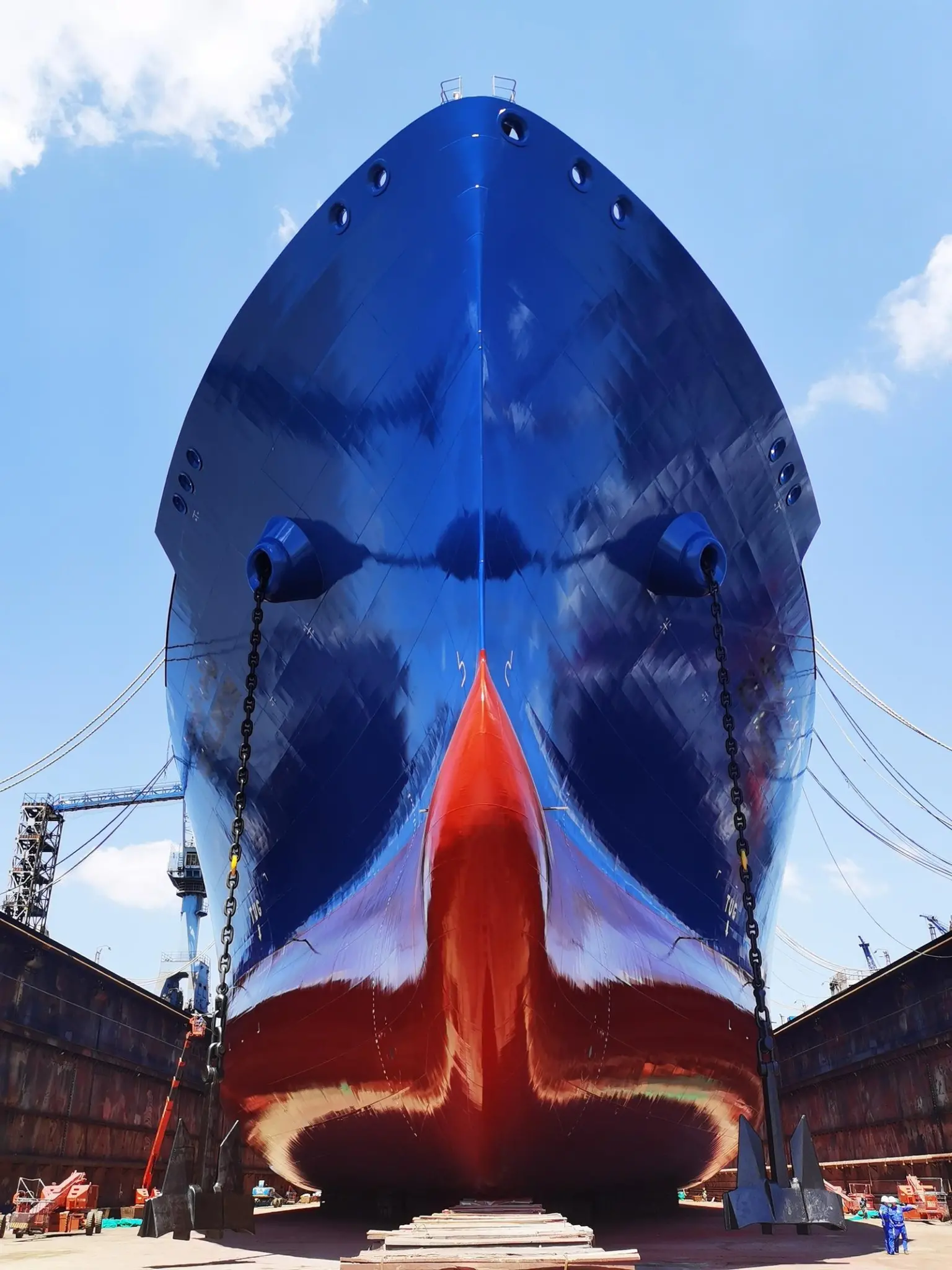
For many years, the underwater hull was treated as a fixed variable in ship operations. Its influence on resistance and fuel consumption was understood, but rarely interrogated with the same urgency as engine performance or voyage optimisation. However, as emissions and environmental regulations have strengthened in recent years, that approach is no longer viable. Today, hull efficiency sits squarely at the forefront of regulation, operating cost and technical performance, and is receiving a level of attention not seen for decades, but very much deserves.
This shift has been driven by a combination of economic reality and regulatory frameworks rather than by any single technological breakthrough. Measures such as EEXI and CII have forced operators to scrutinise every source of inefficiency that contributes to fuel burn and emissions intensity. Hull condition, once tolerated as an incremental loss, now feeds directly into ratings that influence charter rates and long-term asset value.
Trevor Solomon, Business Development Manager for International®, AkzoNobel’s marine coatings brand, has seen this change reflected clearly in customer behaviour. “There was a very noticeable inflection point around 2021,” he says. “That coincided with CII coming into force, and we saw a dramatic escalation in demand for higher-performing coating systems. Owners could clearly see the benefits of good quality paint jobs through fuel efficiency leading to regulatory compliance gains.
The reason is straightforward. Even relatively light fouling can increase hydrodynamic resistance enough to affect fuel consumption and speed. Under today’s efficiency metrics, those losses are no longer abstract. “CII and EEXI have made performance much more visible,” Solomon explains. “Things that may previously have been accepted as normal are now directly linked to compliance and operating cost.”
At the same time, the coatings sector itself is operating under increasingly tight constraints. Manufacturers must comply not only with maritime regulations, but also with chemical and environmental legislation that governs what can be produced, applied and sold. According to Solomon, this has fundamentally reshaped how coatings are developed. “We’re responding to customer-driven legislation, but we also have our own legislative obligations,” he says. “Biocides, in particular, are under much closer scrutiny than they were historically.”
That scrutiny extends beyond environmental impact alone. “A lot of the focus today is on human health,” Solomon notes. “It’s about the people working in factories and shipyards, applicators, blasters, painters, and ensuring that the products being used are safer across the whole value chain.” As a result, the range of substances available to coatings manufacturers has narrowed, forcing greater sophistication in formulation.
This has driven a clear evolution away from persistence as a design principle. “Historically, effectiveness was often linked to how long a substance remained active,” Solomon explains. “Modern systems behave very differently. Active components are designed to break down much more quickly, but that doesn’t reduce overall performance. It just means you need a much more balanced formulation to achieve the same result.”
Alongside this chemical evolution, biocide-free foul-release coatings have moved from niche applications into mainstream consideration. Rather than preventing fouling through toxic action, these systems focus on surface engineering. By creating extremely smooth, low-energy surfaces, they reduce the ability of organisms to adhere in the first place. “If anything does settle, it doesn’t bond strongly,” Solomon says. “That makes it much easier to remove.”
This approach delivers several operational advantages. Weakly adhered growth can often be removed through normal vessel movement or with minimal cleaning effort, helping to maintain hydrodynamic efficiency over time. “From an efficiency point of view, the key is maintaining surface condition in service,” Solomon explains. “If you can keep the hull smooth, you protect fuel performance.”
Durability has become a critical part of that equation. Coatings that retain their properties over long periods reduce the need for frequent recoating and aggressive surface preparation. “We see vessels operating for extended intervals before major intervention is required,” Solomon says. “In many cases, our International® coatings are refreshed rather than fully removed, which has clear benefits in terms of downtime, cost and overall environmental impact.”
However, Solomon is careful to stress that no single coating technology is suitable for every vessel or operating profile. “Different areas of the hull experience different mechanical demands,” he says. “You have to consider abrasion, operating environment and vessel type. There will always be applications where harder systems are more appropriate.” The emphasis, he suggests, should be on matching the coating to the duty rather than seeking a universal solution.
Looking ahead, regulatory developments around biofouling management are expected to further influence coating strategy. The International Maritime Organisation’s biofouling guidelines are being revised, with the ambition of becoming a mandatory instrument later in the decade. Increased inspection frequency and more regular in-water cleaning are widely anticipated outcomes.

“The direction of travel is clear,” Solomon says. “There will be more focus on inspection and cleaning, and that brings coating compatibility into sharp focus.” One of the key issues is how different coatings behave during underwater cleaning. “If you clean a traditional antifouling coating, no matter how carefully you do it, you are removing the active layer,” he explains. “That inevitably means releasing material into the water.”
By contrast, biocide-free systems can be cleaned repeatedly without releasing chemicals, an attribute that is becoming increasingly relevant as ports introduce stricter controls on cleaning operations and the use of capture systems. “That compatibility with cleaning is going to matter more and more,” Solomon adds.
Hull coatings are also being considered within a broader efficiency framework. Improvements in hull smoothness enhance the effectiveness of other technologies, including air lubrication and wind-assisted propulsion. “These measures aren’t competing with each other,” Solomon says. “They’re complementary. If you improve the hull, everything else you add works better.”
This integrated view reflects a wider shift in how sustainability is framed within the maritime sector. While emissions reduction remains a central objective, there is growing recognition of the importance of efficiency-driven resource management. “Sustainability is really about doing more with less,” Solomon observes. “Making systems last longer, reducing consumption, and buying time while affordable alternatives continue to develop.”
That philosophy extends to AkzoNobel’s wider corporate objectives. The company has set targets to significantly reduce its carbon footprint across the value chain by 2030, with product longevity and lifecycle optimisation forming key elements of that strategy. For shipowners, this translates into coatings designed not only to protect steel, but to deliver stable, predictable performance over time.
For operators navigating tightening efficiency requirements and rising operating costs, the implications are increasingly clear. Hull performance can no longer be treated as a secondary consideration or deferred until the next docking cycle. Advanced hull coatings offer something rare in the decarbonisation debate: an immediate, measurable improvement that does not depend on new fuels, new engines or new infrastructure. Beneath the waterline, shipowners have one of their most reliable efficiency tools, and its strategic importance is only growing.
Related Articles
 EMISSIONS REDUCTION TECHNOLOGY
 EMISSIONS REDUCTION TECHNOLOGY
 EMISSIONS REDUCTION TECHNOLOGY