



Wind as a viable future propulsion technology
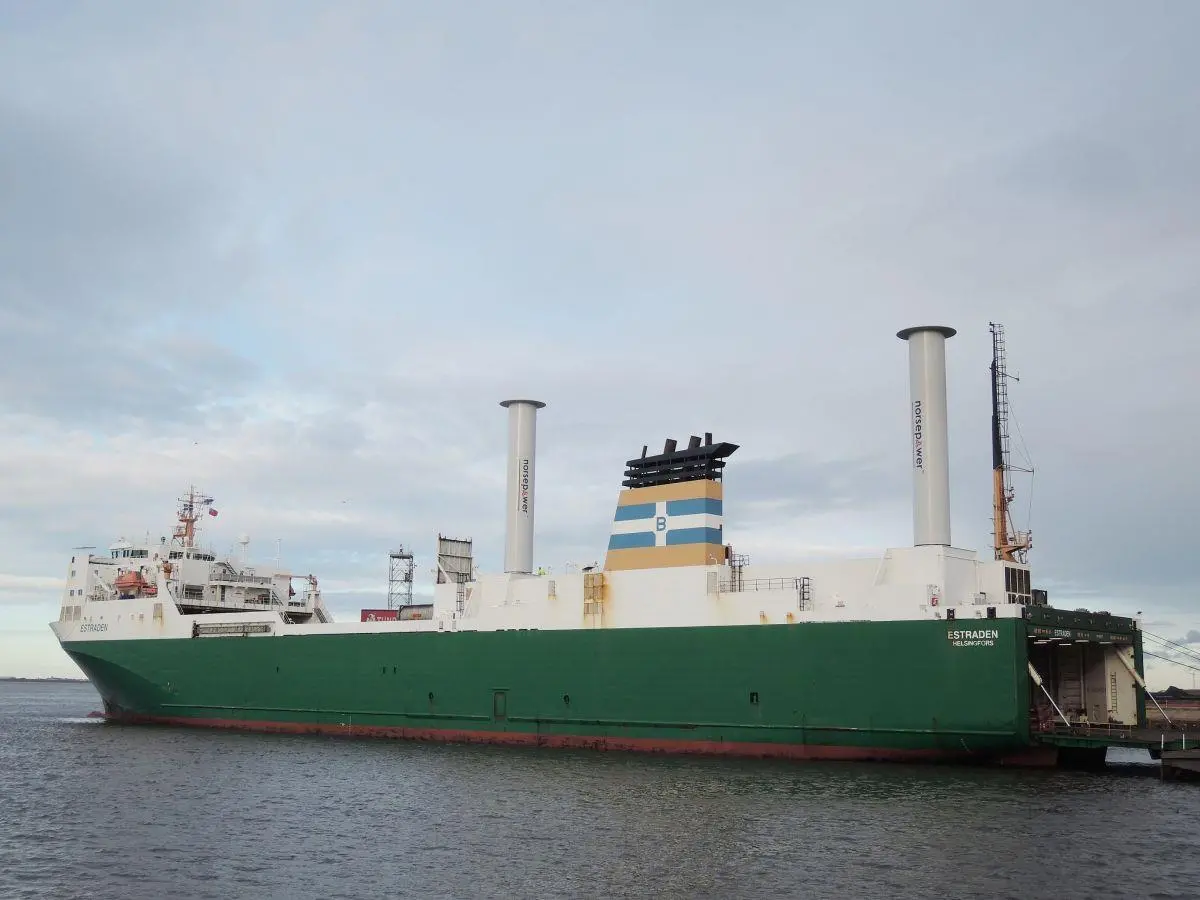
Flettner rotors are an example of a growing wind propulsion trend in the industry, with four new vessels outfitted with rotors in the last 12 months.
“Norsepower’s mission is to reduce the environmental impact of shipping by providing efficient, easy to use and reliable auxiliary wind propulsion for ships. Auxiliary wind propulsion is one of the key technologies for shipping to achieve the demanding fuel and emissions reduction requirements,” said Tuomas Riski, CEO, Norsepower.
Wind focus
Marigreen, a Dutch-German joint industry project partnership of 15 maritime companies and research institutions, has recently fitted it’s Ecoflettner rig for sea trials on the MV Fehn Pollux, a 4,200 dwt general cargo vessel.
Norsepower meanwhile, has installations on M/V Estraden, a Bore Ro-Ro and general cargo service operating between the UK and Belgium and the Viking Grace, a Viking Line cruise-ferry operating in the Baltic.
It is also currently installing Rotorsails on board a Maersk Tankers 109,647 dwt Long Range 2 (LR2) product tanker.
The IWSA said that an EU commissioned report has outlined the potential wind propulsion market by 2030, which could amount to 3,700 to 10,700 installed systems on bulkers and tankers, associated with approx. 3.5 to 7.5 Mt CO2 savings.
At SMM 2018, delegates will be able to see some of the wind propulsion solutions which are helping to drive the reintroduction of clean, predictable maritime wind propulsion systems.
Related Articles
 PROPULSION
 GENERAL NEWS
 GENERAL NEWS