



Wind for Goods 2025 underscores wind propulsion’s readiness to scale up
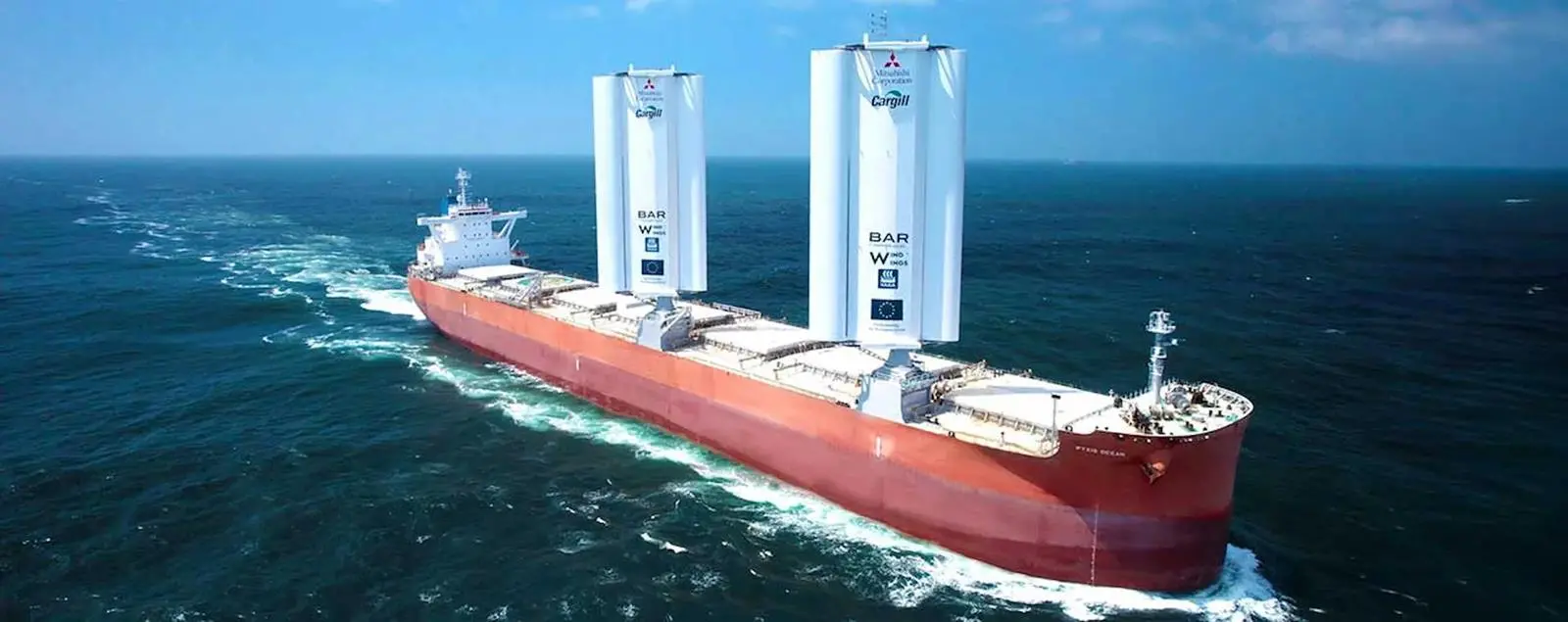
Organised by Nantes Saint-Nazaire Développement and supported by local and regional authorities, the event showcased technological progress and industrial commitment, positioning wind as a vital component in the industry’s decarbonisation strategy.
With maritime transport responsible for around 3% of global CO₂ emissions, the sector faces mounting pressure to reduce its carbon footprint. The IMO’s regulatory targets, due to be enforced in April 2025, set an ambitious course toward net-zero emissions by 2050. Wind propulsion is increasingly viewed as a viable solution, offering a clean and renewable energy source at a time when shipping is seeking alternatives to fossil fuels.
The transition from pilot projects to full industrialisation is now underway. As of 2025, around 100 wind-assisted or wind-powered vessels are either in service or on order. Forecasts suggest that by 2030, this number could rise to 400 retrofits and 1,200 newbuilds. By mid-century, wind technology could feature on 45% of the global fleet—some 40,000 ships—with France projected to supply up to a third of this growing market.
The Pays de la Loire region, home to a dense maritime industrial fabric, is playing a central role in this transition. Recent announcements include Neoline’s Neoliner Origin, a cargo ship currently under construction in Nantes; Airseas’ successful kite-wing trials in Morocco; and Wisamo’s selection to equip a new generation of French maritime patrol vessels. Chantiers de l’Atlantique continues development of its SolidSail rigid wing, while Computed Wind Sail, launched in Saint-Nazaire last year, has secured its first order from Windcoop. Farwind Energy, meanwhile, is constructing a rotor prototype for ship propulsion at Centrale Nantes.
Nantes Saint-Nazaire Port has also been preparing for the sector’s growth, offering dedicated facilities for sail assembly and logistics. CWS is already operating from a 4,800 m² site near the Saint-Nazaire bridge, with additional land earmarked for future development.
Despite this momentum, industry leaders used the event to call for more decisive political and regulatory support. A bill currently before the French National Assembly seeks to formally recognise wind-propelled cargo ships and provide a legal foundation for the sector. Stakeholders argue that this framework is essential to accelerate the adoption of wind technology and ensure competitiveness.
Wind for Goods itself has grown into a key international meeting point, welcoming around 80 exhibitors and participants from ten countries, including the Netherlands, UK, Norway, Germany and Japan. Regional leaders reaffirmed their commitment to positioning the area at the forefront of maritime decarbonisation, with backing for initiatives such as MEET2050 and VENFFRAIS aimed at scaling up green maritime solutions.
Local officials, including David Samzun, Mayor of Saint-Nazaire, and Anthony Descloziers, vice-president for the economy at Nantes Métropole, highlighted the importance of innovation and collaboration in the energy transition. Claire Hugues, vice-president of the Pays de la Loire Region, stressed the region’s readiness to lead, citing the strength of its industrial and academic ecosystem.
Launched in 2021, Wind for Goods is now firmly established as the world’s first international event dedicated to sustainable wind transport of goods and passengers. With scaling-up firmly on the agenda, this year’s edition marked a turning point for a sector poised to make a significant impact on the future of maritime trade.
Related Articles
 NEWS
NEWS
 ALTERNATIVE FUELS & LUBRICANTS
 ALTERNATIVE FUELS & LUBRICANTS