



WinGD partnership to advance engine diagnostics
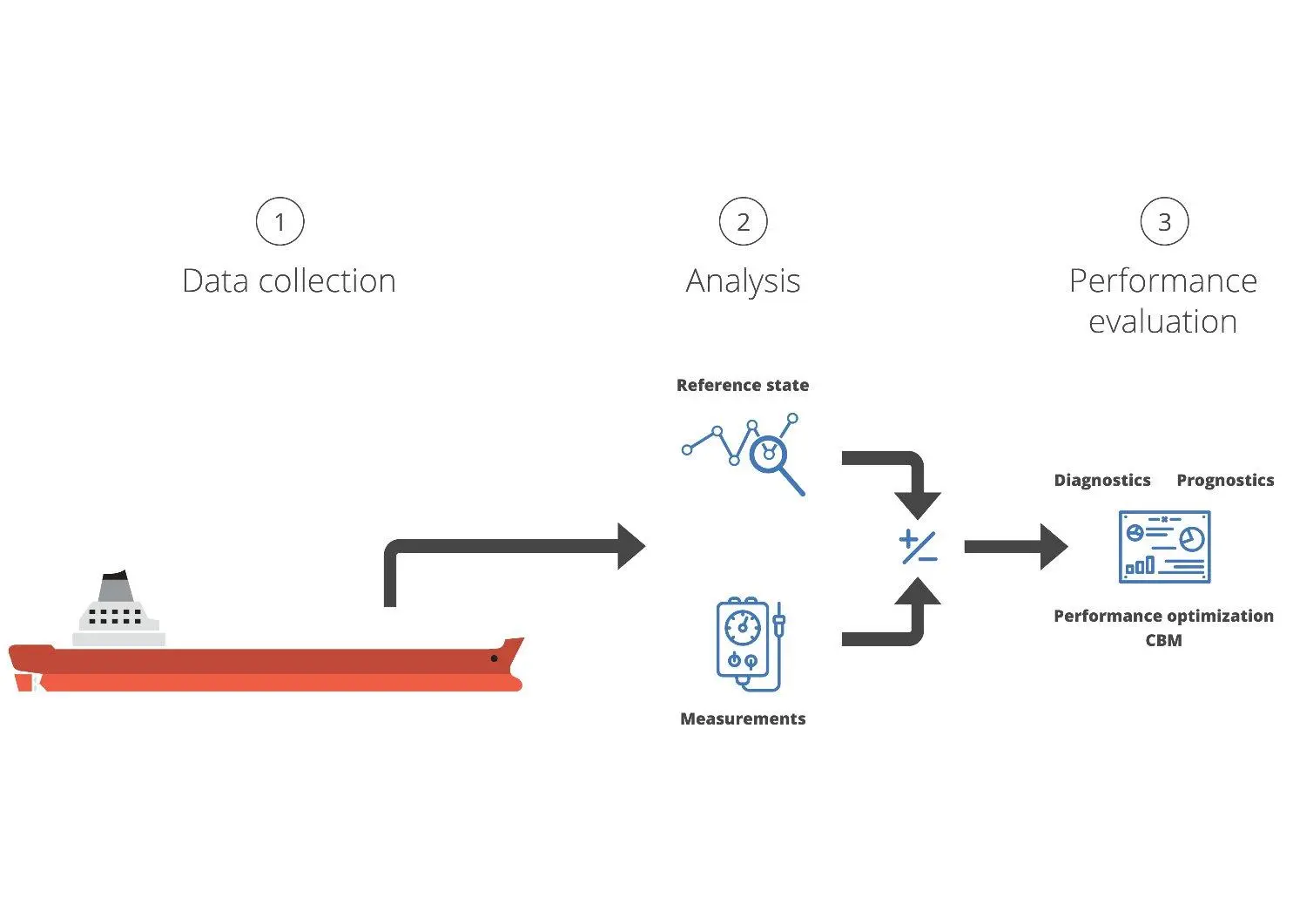
The jointly developed system will acquire and analyse data on the performance and condition of engines and subcomponents in real time and provide live troubleshooting and diagnostic advice to the crew. The data will be used to improve performance based on load profiles acquired over complete voyages, as well as enabling ship owners to diagnose and troubleshoot abnormalities and integrate maintenance planning and spare parts purchasing.
The system will be capable of connecting to shore-based stakeholders, with securely held data enabling fleet comparisons if required. It will also offer a virtual and interactive tuition tool for shipping companies and crew.
Andrew Stump, vice president operations, WinGD, noted: “With real-time data collection and exchange across a shipping company’s vessels, WinGD’s new engine diagnostic system will be the first advanced product on a two-stroke engine that will not only optimise and monitor performance but will also track the condition of key engine components. It will be able to predict future malfunctions and provide troubleshooting support to shipping companies to prevent failures and fix technical problems faster and more economically.”
Dominik Schneiter, vice president research & development, WinGD, added: “The collaboration with Propulsion Analytics will help us realise our ambition to lead innovation in the field of shipping digitization, focusing first on the two-stroke engine – our core expertise – and then enlarging it to the whole ship machinery and smart ship.”
Vessel monitoring specialist Propulsion Analytics will develop software for processing and evaluating data gathered from on-engine sensors in a digital controlling, monitoring and diagnostic system.
“The engine diagnostic system is something that the industry has been expecting for a long time,” said Panos Theodossopoulos, CEO, Propulsion Analytics.
A prototype of the system is expected to be running in the field by mid-2017, with full release across the WinGD range forecasted for 2018.
Related Articles
 PROPULSION
 GENERAL NEWS
 GENERAL NEWS