



WinGD unveils high-pressure LNG dual-fuel engine for ULCV
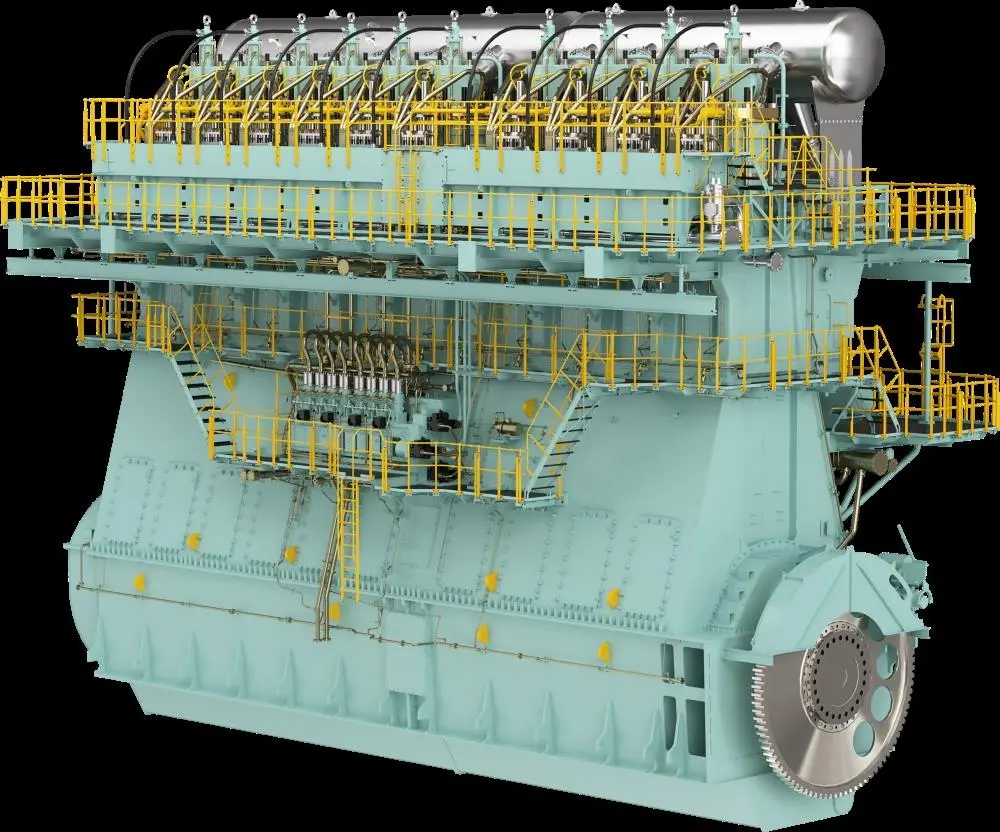
The engine, shown for the first time at Marintec China 2025, arrives as shipowners weigh fleet investment decisions against an uncertain regulatory landscape and growing interest in LNG-fuelled newbuilds.
Offered in X82 and X92 bore sizes, the X-DF-HP is aimed at the power and load requirements typical of the largest container ships. First deliveries are planned for 2028. WinGD expects the high-pressure dual-fuel concept to achieve higher efficiency than comparable dual-fuel designs, drawing on performance comparisons with its existing diesel engines.
According to Benny Hilström, vice president, market development at WinGD, large container ships require significant power, high efficiency and flexibility for future fuel transitions. He said the new engine is intended to meet these demands for vessels at the upper end of the container segment.
The engine shares auxiliary system requirements, including fuel supply pressure, with established concepts, a point that may ease installation for shipyards. It meets Tier III emissions limits in both gas and diesel modes with the use of a standard SCR system.
Sebastian Hensel, vice president R&D at WinGD, noted that the design is based on the high-pressure Diesel X92-B platform, which has been widely applied in the container ship sector. The company reports that tests and simulations indicate improvements in fuel consumption and greenhouse gas performance over current high-pressure dual-fuel alternatives.
The X-DF-HP expands WinGD’s portfolio of high-pressure multi-fuel engines, which also includes methanol/ethanol-capable and ammonia-fuelled variants. Existing engines such as the X92-B can be retrofitted for high-pressure LNG, methanol, ethanol or ammonia as fuel strategies develop.
LNG is expected to remain compliant with FuelEU Maritime requirements for an extended period, while uncertainty persists around future IMO measures. Both the X-DF low-pressure and X-DF-HP engines can operate on renewable methane blends, offering a pathway to reduced emissions without major mechanical modifications or substantial retrofit expenditure.
Hilström said the high-pressure option is suited to ULCVs pursuing an LNG-based decarbonisation route, while the low-pressure X-DF platform remains appropriate for a wide range of other vessel types.
Related Articles
 ALTERNATIVE FUELS & LUBRICANTS
 ALTERNATIVE FUELS & LUBRICANTS
 ALTERNATIVE FUELS & LUBRICANTS