



WinGD’s advances in VCR, alternative fuels and methane slip reduction

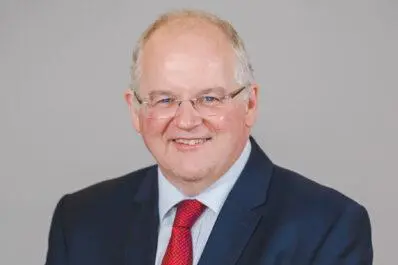
Initially rolled out on the X-DF LNG dual-fuel engine series in June 2023, VCR brings notable efficiency benefits across fuel modes. “We see the biggest impact of VCR on LNG lean-burn engines,” explained Marcel Ott (pictured), head of strategic marketing at WinGD. “There’s a twofold performance improvement. Firstly, a clear fuel consumption benefit when operating in diesel mode—traditionally, Otto-cycle dual-fuel engines suffered a fuel consumption penalty in diesel mode due to compression ratio limitations. VCR allows us to achieve compression ratios similar to pure diesel engines, eliminating that penalty and achieving up to 5–8% fuel consumption reduction.”
In gas mode, VCR enables optimised efficiency especially at part load. “At full load, performance is similar to conventional engines,” Ott noted, “but at part load, we can dynamically adjust compression to exploit available combustion margin and minimise fuel use as well as further reduce methane slip.”
As the shipping industry transitions to alternative fuels, WinGD is also at the forefront of developing ammonia-capable engines. Ott clarified that the ammonia engine is not a complete redesign but builds on existing diesel engine platforms with an additional ammonia injection system. “This allows us to maintain similar efficiency in both diesel and ammonia modes, and our testing even suggests potential for higher efficiency on ammonia,” . Ott adds that this concept ensures simple upgrade of a conventional diesel engine to ammonia in the future retrofit.
Addressing emissions challenges, Ott highlighted NOₓ, N₂O (nitrous oxide), and ammonia slip as focal points. “The use of diesel-cycle combustion means we require SCR (Selective Catalytic Reduction) systems to meet Tier III NOₓ limits, just as with our diesel engines. For ammonia slip and N₂O—both critical from a health or environmental standpoint—we’ve achieved very promising results in testing, with single-digit PPM values without additional aftertreatment.”
These ammonia-fuelled engines, covering the 52 to 82 cm bore range, are already part of WinGD’s active portfolio. “We have around 30 engines contracted. The first delivery to shipyard will be at the end of this month.”
The X-DF platform, originally designed around LNG, has expanded to support methanol, ammonia, and now LPG with the X-DF-P version. Ott acknowledged the ongoing regulatory evolution from IMO, particularly around greenhouse gas intensity. “Compliance is increasingly about fuel choice—methanol and ammonia, for instance, will need to be renewable to meet long-term GHG targets. Our job is to ensure our engines extract maximum efficiency from these fuels.”
Collaborative efforts have played a key role in WinGD’s approach. Working with different industry partners such as classification societies, shipyards and equipment suppliers on ammonia-fuelled vessel designs has yielded important lessons. Ott said: “Handling ammonia’s toxicity and ensuring system-wide integration—fuel supply, monitoring, alarms—requires tight coordination. These partnerships show that industry collaboration is essential. Decarbonisation is too important for us to work in isolation.”
Methane slip, a key issue in LNG propulsion, remains a priority for WinGD. Ott confirmed ongoing work beyond VCR. “Yes, we are continuing to develop and implement technologies to further reduce methane emissions from our dual-fuel engines. It’s a major area of innovation, and we’re committed to staying ahead of the curve.”
With a wide portfolio of engines including ammonia and methanol adapting to the demands of the energy transition, WinGD looks on course towards aiding a cleaner and more efficient future for shipping.
Related Articles
 ALTERNATIVE FUELS & LUBRICANTS
 ALTERNATIVE FUELS & LUBRICANTS
 ALTERNATIVE FUELS & LUBRICANTS