3D printed offshore crane hook passes load testing
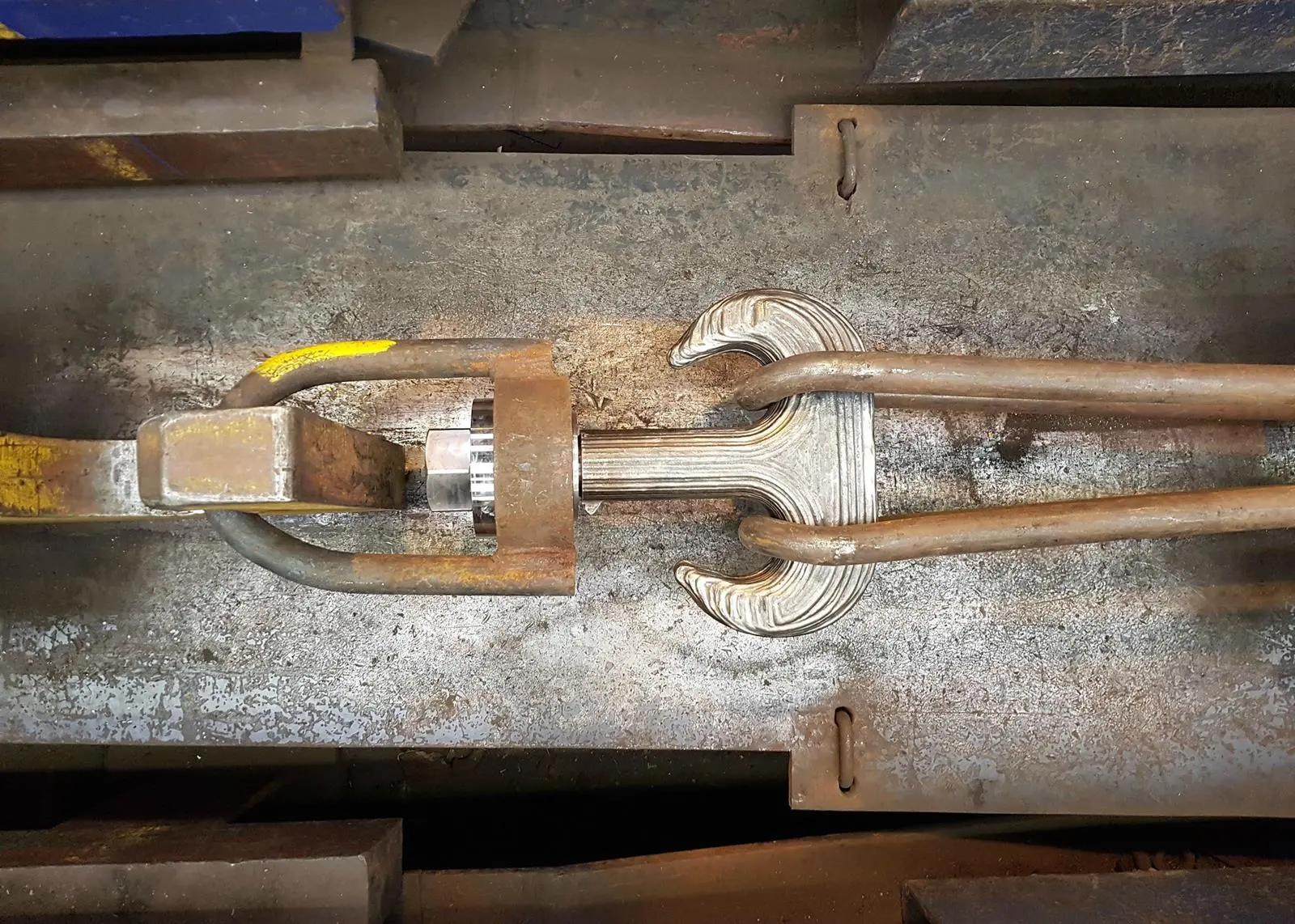
Huisman said that this is the first 3D printed crane hook of its kind to undergo such rigorous load testing. Crane hooks are typically manufactured by casting or forging techniques.
The company says that 3D printing technology could easily become the “new future manufacturing technology.” 3D printed components can provide a significant reduction in delivery time at a cost that competes with forgings and castings, but with a more consistent level of quality.
Future potential
Huisman actively employs the 3D printing technique ‘Wire & Arc Additive Manufacturing’ (WAAM) to produce mid-size to large components with high grade tensile steel, including a large four prong hook, with an own printed weight close to 1,000kg.
WAAM can be used for crane hooks, but also allows Huisman to manufacture other components with complex shapes, short delivery times or local alternative material properties, to improve for example, wear and corrosion resistance.
The company said that the positive WAAM test results will enable Huisman to manufacture reliable components that were physically impossible or commercially infeasible to produce before.
In the near future, Huisman aims to further improve the WAAM process by reducing the cost price for this technique and to increase manufacturing capabilities up to items of 2,500kg.
Huisman is a global supplier of technical solutions to the world’s leading companies in the oil and gas, renewable energy, entertainment and civil markets.