Approvals highlight Jiangnan gas expertise
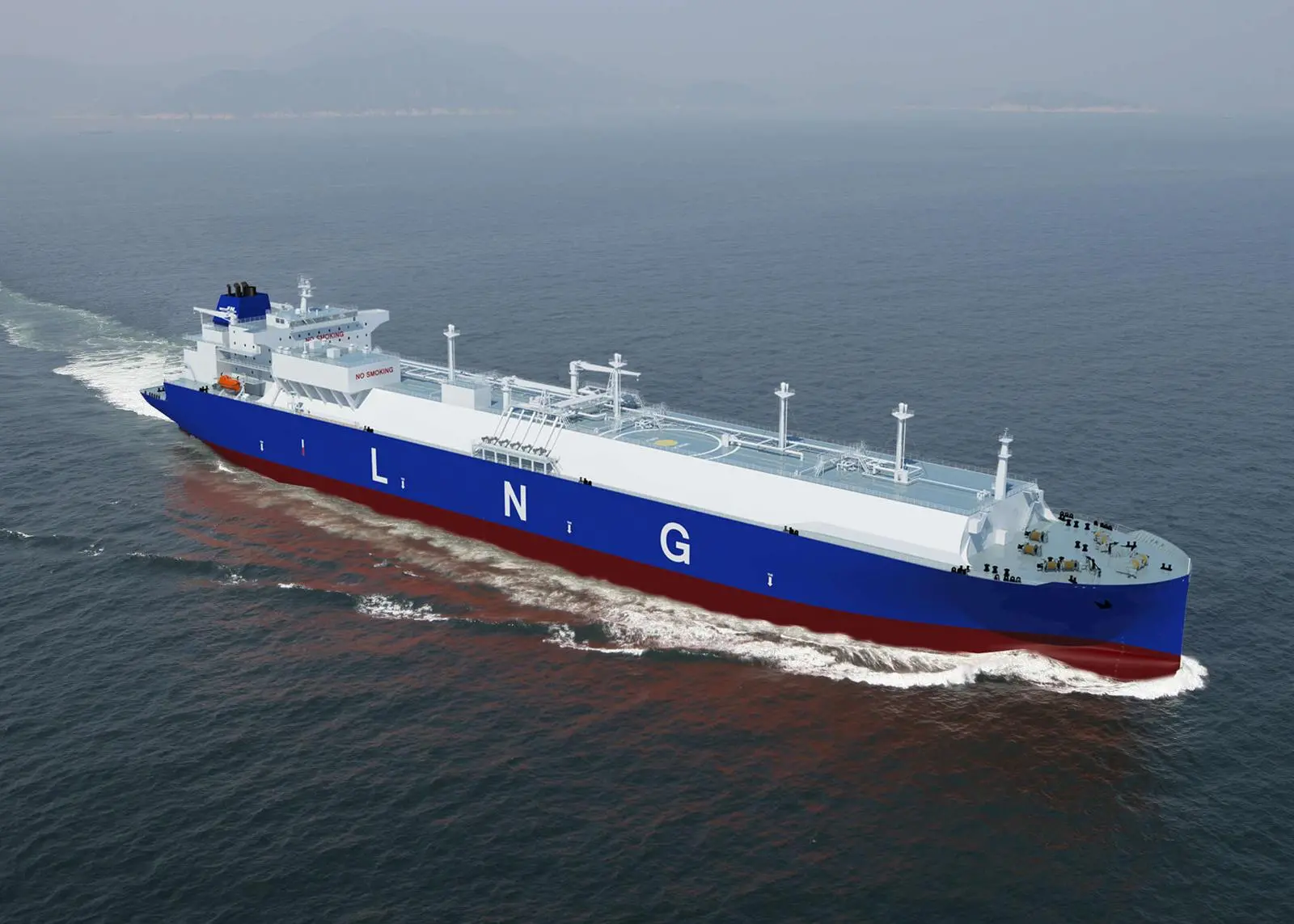
China’s longest established shipbuilder has received approvals in principle (AiP) from three class societies for several concepts over the past month – among them a 175,000m3 LNG carrier, a 93,000m3 very large ethane carrier (VLEC), a 210,000dwt Newcastlemax bulk carrier and a 7,500m3 LNG bunker vessel.
LNG JUMBO
Both DNV GL and ABS have approved a new LNG carrier design known as the ‘LNG Jumbo’ – a 175,000m3 capacity vessel that features WinGD X-DF dual-fuel propulsion and a MK III Flex Cargo Containment system from GTT. The proposed propulsion arrangement is said to offer higher propulsion efficiency and lower fuel consumption in combination with an optimised twin skeg design and additional energy saving devices.
The design was developed by Jiangnan Shipyard in cooperation with ship designer MARIC, GTT, class and major equipment manufacturers. The ship’s shore connection is flexible and compatible with most shore facilities, and it can pass through the Panama Canal.
PANDA E
DNV GL has also granted an AiP for Jiangshan’s new VLEC design, known as Panda E. The vessel will also use GTT’s reinforced Mark III cargo containment system and boasts four standard cargo holds capable of carrying ethane, ethylene and liquid petroleum gas (LPG), with a capacity of 93,000m3.
The proposed dual-fuel (ethane and fuel oil) main propulsion system with selective catalytic reduction meets IMO’s Tier III NOx requirements. Further innovative features are a deck tank, shaft generator and an “LNG Ready” concept.
NEWCASTLEMAX
Lloyd’s Register has issued an approval for an LNG-fuelled Newcastlemax bulker design created specifically for bulk carriers being converted for LNG dual-fuel propulsion to meet the IMO’s 2020m sulphur limit. The concept rests on what is described as an LNG dual-fuel package with ‘piggybacked’ Type C tanks.
Included in this set up are a MAN B&W ME-GI or WinGD X-DF dual-fuel main engine, dual-fuel auxiliary engines, a fuel gas system, cylindrical IMO Type C LNG tank (or tanks) and an LNG related safety system. Type B tank and GTT membrane containment solutions could also be deployed.
BUNKER VESSEL
Finally, Jiangnan has developed a 7,500m3 LNG bunker vessel (LBV) design to supply gas for ships using LNG as fuel in support of the rapid growth of LNG fuel demand in the marine market, connected to the approaching global sulphur 2020 limit.
The LBV has a compact design for compatibility with quays and ships. It features a dual-fuel diesel-electric propulsion system, two azimuth thrusters and a bow thruster to provide manoeuvrability and safety while in port. Two IMO type C LNG tanks and a cargo handling system provide flexible solutions for cargo handling, boil-off gas management and ship-to-ship transfer.
The design is a member of the yard’s ‘LNGRelay’ family, which include LBVs with a capacity of 5,500m3, 7,500m3, 10,000m3, 12,000m3, and 20,000m3.