



Successful first steps for Stena battery project
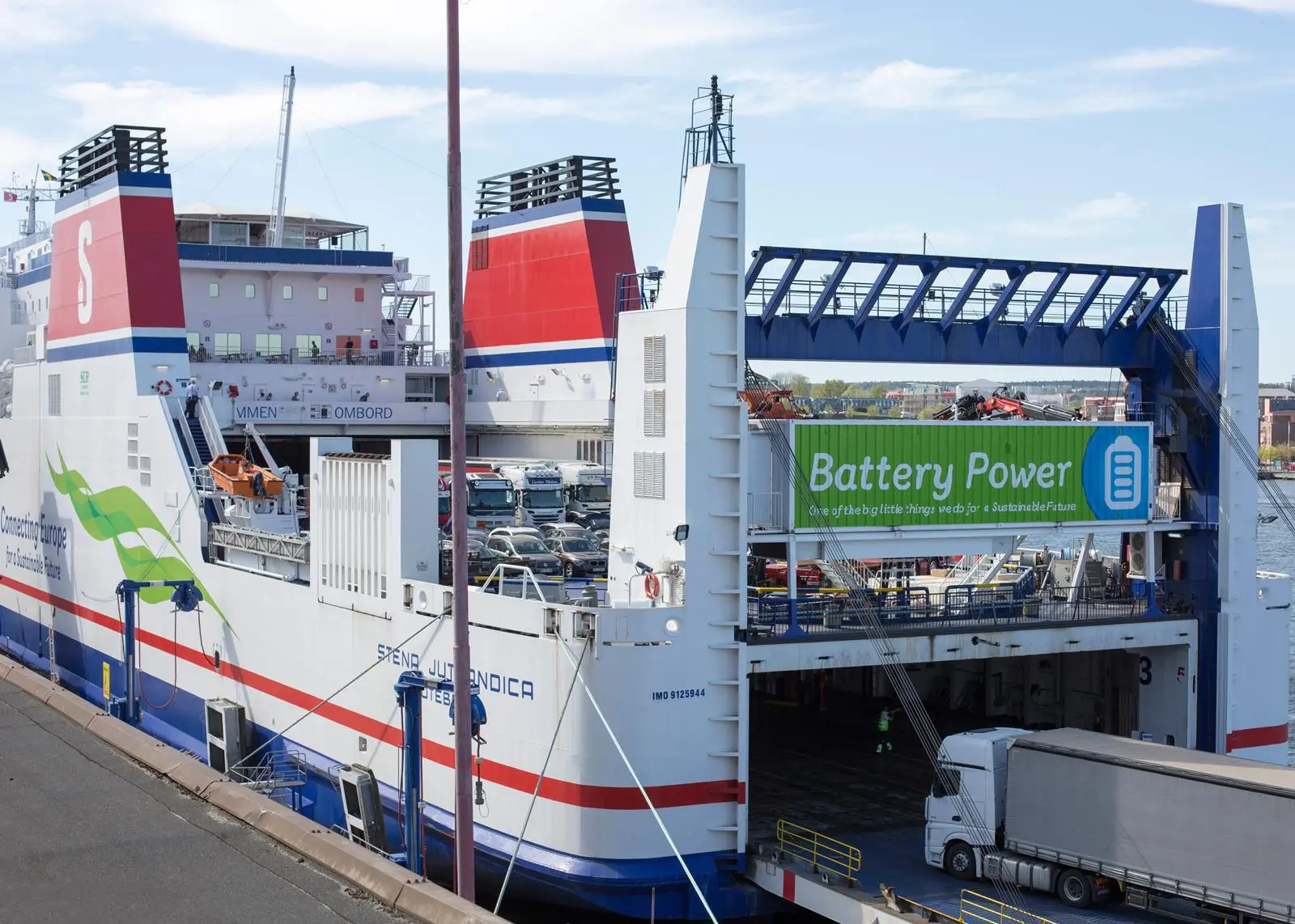
The ship, which sails between Gothenburg and Frederikshavn, is in the first of three planned phases of battery operation. At present the crew switches to electrical operation to reduce the use of auxiliary engines, including during manoeuvres and while the ship is at port.
According to Johan Stranne, senior chief engineer on the Stena Jutlandica, positive effects have already been noted. “We’ve been able to reduce our use of the diesel generators and now only need to use one instead of three,” he said. “Another positive effect concerns safety; by having constant access to electricity, we minimize the risk for power outages.”
Technical solutions in the first step have been developed by Stena Teknik and Callenberg Technology Group. The Swedish Transport Administration and the EU have covered half of the funding. Environmental savings of 500 tonnes of fuel and 1,500 tonnes a year are expected.
In the second step, battery power will be connected to two of the four main engines, which means that the ship will be able to run on electrical power for about 10 nautical miles inside the Gothenburg archipelago. In step three, all four main engines will be connected to the batteries and the ship will be able to cover the 50 nautical miles between Sweden and Denmark solely on electrical power.
If the project is successful, Stena Line said battery power could be considered for other vessels within its fleet.
“This project is an important part of our focused efforts to find ways of reducing our impact on the environment,” said Erik Lewenhaupt, head of sustainability, Stena Line. “As both the size and cost of batteries decrease, battery operation is becoming a very attractive alternative to traditional fuel for shipping since it should be possible to eliminate emissions in the future.”
Related Articles
 ELECTRIFICATION AND BATTERY HYBRIDS
 ELECTRIFICATION AND BATTERY HYBRIDS
 ELECTRIFICATION AND BATTERY HYBRIDS