



Maritime fuel cell market grows in 2018
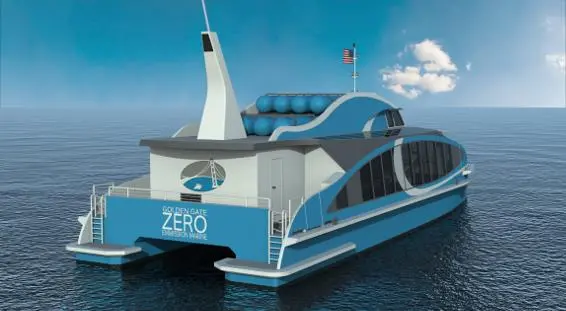
E4 Tech, an international strategic consultancy on sustainable energy, published an annual overview of the fuel cell industry in 2018, including a section focused on the nascent marine fuel cell sector.
Fuel cell technology converts hydrogen-rich fuel into electrical and thermal energy by electrochemical oxidation. The direct nature of this conversion achieves high electrical efficiency and offers broad potential as a ship propulsion technology and the promise of meeting IMO’s CO2-busting target.
The report noted continuing progress in fuel cells and hydrogen application, identifying falling fuel cell costs, and growing manufacturing capacity as signs of progress. The report notes that California-based shipyard Bay Ship and Yacht will deliver a large-scale hydrogen fuel cell passenger vessel by mid-2019, featuring dual 300 kW electric motors from BAe Systems powered by 360 kW Hydrogenics PEM fuel cells plus Li-ion battery packs.
In addition to focusing on fuel cells for propulsion, and for co-generation of power and heat on board, the report covers developments in quayside power projects, such as FCH-JU’s BIG HIT project in Orkney, which is examining fuel cells for quayside power for ferries in Kirkwall.
The report recognises that fuel cells remain expensive, are not available in the quantities or sizes required for many shipping applications, and require a not-yet available fuelling infrastructure.
The report noted progress was made in the development of regulatory standards for fuel cells in 2018, citing Yanmar’s three-year project verifying the safety requirements of fuel cells and hydrogen on ferries, and Norwegian-based Hyon received approval-in-principle from DNV GL for its module-based fuel cell solutions, adapted for maritime use.
Commenting on the state of fuel cells, report lead author Professor David Hart, E4tech says: “There’s a real tangible interest in deployment, scale-up and sustainable business propositions. Governments are indicating that fuel cells are a genuine contender in driving economic and industrial growth, beyond having clear environmental benefits.
“The next two years are key and we fully expect to see increased investment, innovation, sector growth and adoption.”
The increasing range of fuel cell and hydrogen products available are enabling new business models. Large corporations are starting to invest in fuel cells and hydrogen as part of their strategy with some linking their interests in infrastructure, logistics, supply chain, energy and other forms of transport beyond shipping.
Related Articles
 ELECTRIFICATION AND BATTERY HYBRIDS
 ELECTRIFICATION AND BATTERY HYBRIDS
 ELECTRIFICATION AND BATTERY HYBRIDS